Meat Product Making Machines
Source industrial-grade meat product making machines directly from vetted manufacturers and suppliers. Designed for importers, wholesalers, distributors, and brands seeking reliable OEM production, our network delivers high-capacity processing equipment built to strict food safety and operational standards.
Sourcing industrial meat processing equipment requires balancing high-yield throughput with uncompromising sanitation standards. For bulk buyers, distributors, and procurement managers, the challenge is not just finding a factory that can assemble a machine—it is verifying that the equipment uses genuine food-grade materials, continuous-duty motors, and sanitary welds capable of withstanding aggressive daily washdowns.
Critical Specifications for Meat Processing Machinery
When evaluating manufacturers, the technical specifications dictate both the lifespan of the machine and its compliance with regional health regulations (such as CE, NSF, or local FDA equivalents).
- Material Grades: True food-grade machinery must utilize SUS304 or SUS316 stainless steel for all food-contact surfaces. Lower-tier suppliers often substitute SUS201, which is prone to rust in high-moisture, high-salinity meat processing environments.
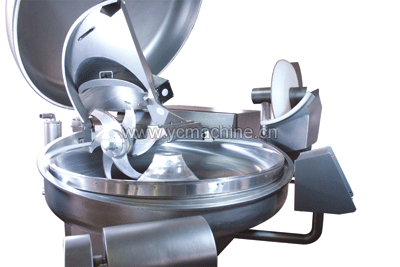
- Motor and Drive Systems: Meat processing requires high torque. Specify copper-wire, continuous-duty motors. Gearboxes should be properly sealed to prevent lubricant from contaminating the processing chamber.
- IP Ratings: Because meat facilities require daily high-pressure washdowns, electrical cabinets and control panels must be rated IP65 or higher.
| Component | Standard Market Build | Export-Grade Build |
|---|---|---|
| Frame & Contact Parts | SUS201 or thin-gauge SUS304 | Heavy-gauge SUS304 or SUS316 |
| Electrical / PLC | Domestic generic brands | Siemens, Schneider, or Omron |
| Welding Quality | Spot welded, visible seams | Continuous sanitary TIG welding, polished |
| Waterproofing | IP54 (Splash resistant) | IP65+ (Washdown ready) |
Manufacturing Quality and Supplier Verification
The visual appearance of a machine often masks underlying quality issues. A supplier's capability is best judged by their metal fabrication processes and component sourcing. Sanitary welding is non-negotiable; any pits, crevices, or unpolished seams will harbor bacteria, rendering the machine unsellable in regulated markets.
Before committing to a bulk order, conducting comprehensive Factory Audits is essential to verify the manufacturer's metalworking equipment (e.g., laser cutters, CNC bending machines) and their quality management systems.
Pre-Production Supplier Verification Checklist
- Verify material test reports (MTRs) for SUS304/316 steel authenticity.
- Confirm international certifications (CE, UL, NSF) are valid and match the factory name.
- Check the origin of critical wear parts (blades, extrusion dies, seals).
- Ensure electrical configurations can be customized for your target market (e.g., 220V/380V, 3-phase, 50/60Hz).
Ensure your meat processing machinery meets strict international food safety standards with our on-the-ground supplier vetting.
Talk to our teamCustomization and OEM Capabilities
Distributors and brands often require modifications to standard machinery to suit specific regional products (e.g., specific sausage casing diameters, meatball sizes, or patty shapes). Many manufacturers offer robust OEM/ODM Services, allowing you to customize extrusion dies, blade configurations, and even the software interfaces on PLC-controlled equipment. When negotiating custom tooling, ensure the IP ownership of custom molds or dies is clearly defined in your manufacturing agreement.
Pricing, MOQs, and Lead Times
Industrial meat machinery is highly capital-intensive, which is reflected in the purchasing structure. Unlike consumer goods, MOQs are low, but the emphasis on pre-shipment quality assurance is high.
Pricing is heavily dictated by the current cost of raw stainless steel and the origin of the electrical components. Upgrading from a generic motor and PLC to internationally recognized brands (like Siemens or SEW-Eurodrive) will typically increase the unit cost by 15 to 25 percent, but drastically reduces after-sales warranty claims for distributors.
Need accurate pricing, custom tooling estimates, and lead times for your next machinery order?
Get a free consultationFrequently Asked Questions
Successful procurement of meat product making machines relies on looking past the exterior polish to evaluate the engineering, material integrity, and electrical reliability. Because these machines are heavy and bulky, efficient Shipping & Freight consolidation is just as critical to your landed cost as the factory price. Structuring your sourcing process around rigorous technical specifications and on-site verification protects both your margins and your end-users.
Get Sourcing Help for Meat Product Making Machines
Tell us your requirements and our experts will connect you with verified manufacturers.