Excavators
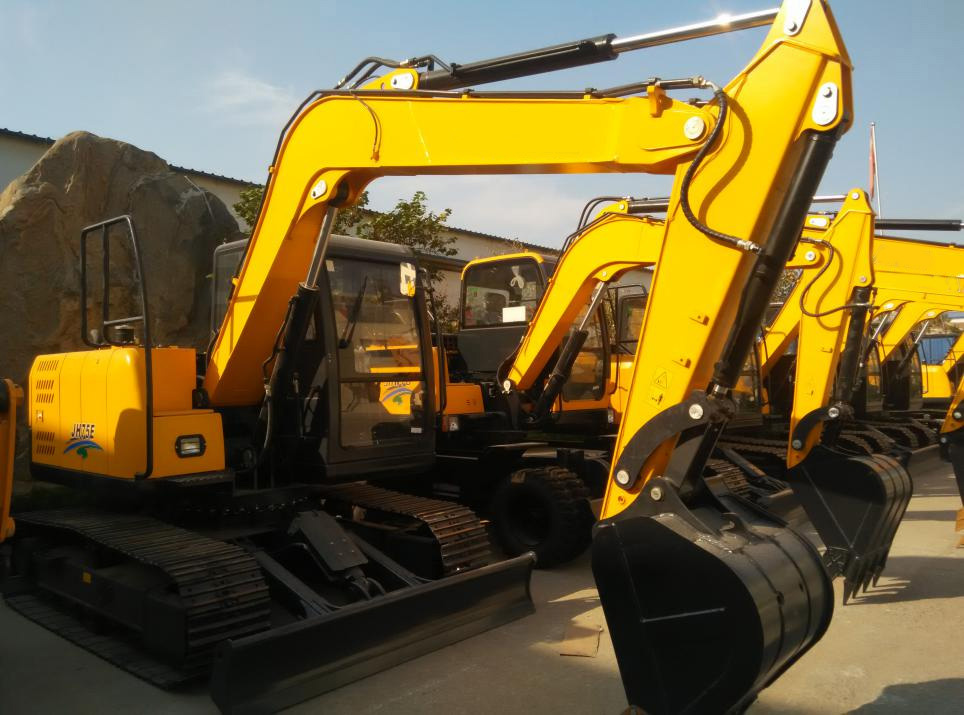
Source commercial-grade excavators directly from vetted manufacturers and wholesale suppliers. Designed for heavy machinery importers, distributors, and procurement managers, our catalog offers reliable earthmoving equipment ready for bulk orders and custom OEM production.
Sourcing excavators overseas allows equipment distributors and fleet buyers to significantly reduce capital expenditures, but it requires navigating a complex landscape of component authenticity, structural integrity, and regional emission compliance. The difference between a high-performing asset and a maintenance liability lies entirely in the manufacturer's supply chain management, welding standards, and hydraulic system integration.
Core Specifications and Component Selection
When evaluating an excavator manufacturer, the focus must immediately shift from the machine's exterior to its core powertrain and hydraulic architecture. Leading Chinese manufacturers offer tiered configurations, allowing buyers to specify critical components based on their target market's regulatory requirements and performance expectations.
Engines and Emission Compliance
The engine dictates market access. For North American and European markets, engines must meet EPA Tier 4 Final or EU Stage V standards. Manufacturers typically offer a choice between premium imported engines (e.g., Yanmar, Kubota, Cummins) and domestic alternatives (e.g., Laidong, Changchai). Specifying imported engines increases the unit cost but ensures regulatory compliance and simplifies aftermarket servicing for the end-user.
Hydraulic Systems
An excavator's breakout force and cycle times depend entirely on the hydraulic pump, main control valve, and swing motor.
- Premium Configurations: Utilize closed-center load-sensing systems with components from Rexroth, Kawasaki, or Eaton. These offer superior multi-function operability and longevity.
- Standard Configurations: Utilize open-center gear pumps from domestic brands. These are highly cost-effective for mini excavators used in landscaping or light trenching but may lack the precision required for heavy civil construction.
| Machine Class | Typical Operating Weight | Common Engine Power | Primary Application |
|---|---|---|---|
| Mini / Compact | 1 to 6 Tons | 10 to 45 kW | Urban construction, landscaping, indoor demolition |
| Midi | 7 to 10 Tons | 45 to 80 kW | Utility work, residential construction |
| Standard / Heavy | 15 to 50+ Tons | 90 to 300+ kW | Heavy civil, mining, mass excavation |
Manufacturing Standards and Factory Verification
Heavy machinery manufacturing requires substantial capital investment in fabrication and testing facilities. Relying solely on spec sheets is dangerous; verifying the factory's structural fabrication capabilities is critical. We strongly recommend conducting comprehensive Factory Audits before finalizing any heavy equipment supplier.
Critical Manufacturing Evaluation Points
- Welding Automation: Are booms, arms, and X-frames welded using robotic systems to ensure consistent penetration and ultrasonic testing compliance?
- Component Authenticity: Does the factory have verifiable supply chain records for imported engines and hydraulic pumps?
- Hydraulic Cleanliness: What is the ISO cleanliness code of the factory's hydraulic fluid filling station?
- Testing Protocols: Are machines subjected to dynamic load testing, hydraulic pressure spike tests, and thermal imaging before sign-off?
Navigating heavy machinery manufacturers requires deep technical vetting. Let us verify factory capabilities, component authenticity, and production standards for your next equipment order.
Talk to our teamPricing, MOQs, and Production Realities
The pricing of excavators is highly volatile, driven by global steel indices and the specific brand of powertrain components selected.
Minimum Order Quantities (MOQs)
MOQs vary drastically by machine size. For 1-ton to 3-ton mini excavators, manufacturers typically require a minimum order of 3 to 6 units (often optimized to fill a 20ft or 40ft High Cube container). For standard and heavy excavators (15 tons and above), the MOQ is almost universally 1 unit. Buyers utilizing OEM/ODM Services for custom paint, branded decals, and specific cabin configurations may face slightly higher MOQs or setup fees for the initial run.
Lead Times
Standard configurations for mini excavators often have lead times of 20 to 35 days. Heavy excavators or units requiring imported Tier 4 Final engines can extend lead times to 45 to 75 days, heavily dependent on the engine supplier's delivery schedule to the assembly plant.
Logistics and Shipping Challenges
Moving heavy machinery internationally requires specialized freight handling. While mini excavators can be driven into standard shipping containers (often requiring the removal of the ROPS/canopy to fit through the doors), larger machines require Flat Rack containers, Open Top (OT) containers, or Roll-on/Roll-off (RoRo) vessels. Coordinating this requires precise dimensional planning and robust Shipping & Freight management to avoid exorbitant oversized cargo surcharges at the port of loading.
Protect your capital investment. Our team manages the entire process, from factory floor quality control to complex oversized freight logistics.
Get a free consultationFrequently Asked Questions
Sourcing excavators effectively means looking past the initial unit price and evaluating the total cost of ownership, which is dictated by component reliability and structural integrity. By treating the procurement process as an exercise in rigorous technical verification rather than simple purchasing, importers can secure commercial-grade machinery that performs reliably in the field.
Get Sourcing Help for Excavators
Tell us your requirements and our experts will connect you with verified manufacturers.