Product Development: From Prototype to Mass Production
#Introduction
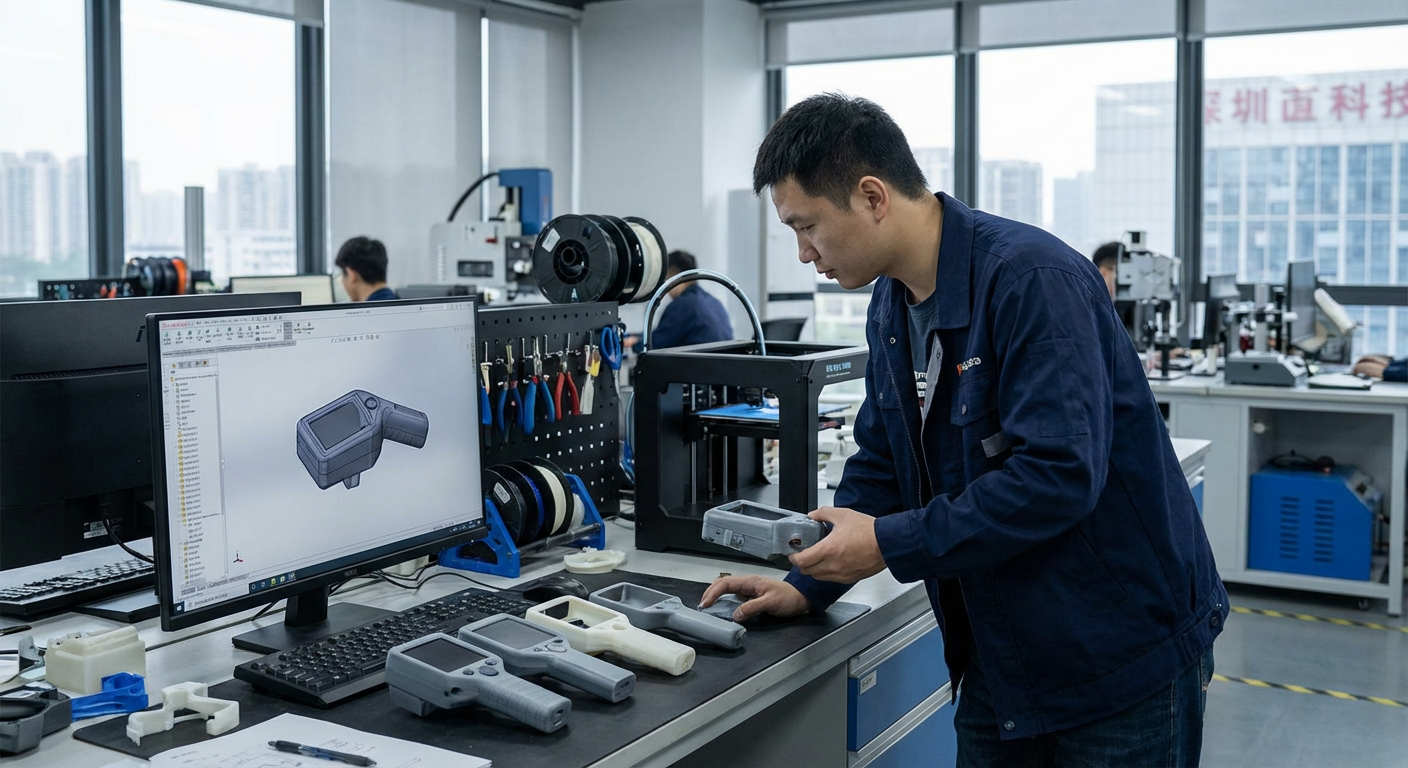
Turning an idea into a physical product is one of the most exciting—and risky—business journeys. The "Valley of Death" for hardware startups often lies between the prototype and mass production.
A 3D printed prototype is easy. Making 10,000 units reliably and profitably is hard. This guide bridges that gap.
#The Product Development Lifecycle
Concept & Design
Industrial Design (ID) and Mechanical Engineering (ME). Output: CAD files.
Prototyping
Proof of Concept (POC), Looks-Like, and Works-Like prototypes.
DFM (Design for Manufacturing)
Optimizing the design for mass production efficiency.
Tooling
Creating molds (steel/aluminum) for plastic/metal parts.
EVT/DVT/PVT
Engineering, Design, and Production Validation Tests.
Mass Production
Full scale manufacturing.
#Design for Manufacturing (DFM)
DFM is the most critical step. Your prototype might work, but can it be made by a machine?
DFM Goals:
- Reduce part count.
- Simplify assembly steps.
- Use standard materials.
- Relax tolerances where possible.
Cost Impact
70% of a product's final cost is determined during the design phase. Smart DFM saves money forever.
#Tooling and Costs
#Prototyping in China
Should you prototype locally or in China?
Prototyping Location
Advantages
- Local: Fast iteration (days)
- Local: Better communication
- China: Cheaper for complex assemblies
- China: Use actual production materials
Disadvantages
- Local: Expensive per unit
- China: Shipping time (3-5 days)
- China: IP risk with new ideas
#Protecting Your IP During Development
- NNN Agreement: Signed before sharing files.
- Compartmentalization: Have one factory make the housing, another the PCB. Assemble yourself or at a third trusted facility.
- Black Box: Keep the core code/firmware in-house until the last moment.
Need Engineering Support?
Get expert guidance on your sourcing journey. Our team has helped over 200 companies successfully source products from Asia.
Contact Us#Moving to Mass Production (MP)
Do not jump from Prototype to 5,000 units.
The Ramp Up:
- EVT (20-50 units): Does it work?
- DVT (50-100 units): Is it durable?
- PVT (100-200 units): Is the process reliable?
- Pilot Run (500 units): Market test.
- Mass Production: Go!
#Ready to Build?
Product development is a marathon. You need a partner who understands engineering, not just a factory that takes orders.
Bring Your Product to Life
Our engineering team specializes in taking concepts to mass production with full DFM support.
Contact UsRelated Resources:
Share this article
Tagged with:
Related Articles
OEM vs ODM Manufacturing: Which Model Is Right for Your Business?
Understand the key differences between OEM and ODM manufacturing to make the right choice for your product development needs, budget, and timeline.
Private Label Manufacturing: A Complete Guide to Launching Your Brand
Learn how to build a profitable brand using private label manufacturing. A step-by-step guide to finding suppliers, customization, and launching products.
Product Packaging Design: Protection, Branding, and Cost
A complete guide to manufacturing product packaging. Learn how to balance protection, branding, and shipping costs for retail and ecommerce success.