OEM vs ODM Manufacturing: Which Model Is Right for Your Business?
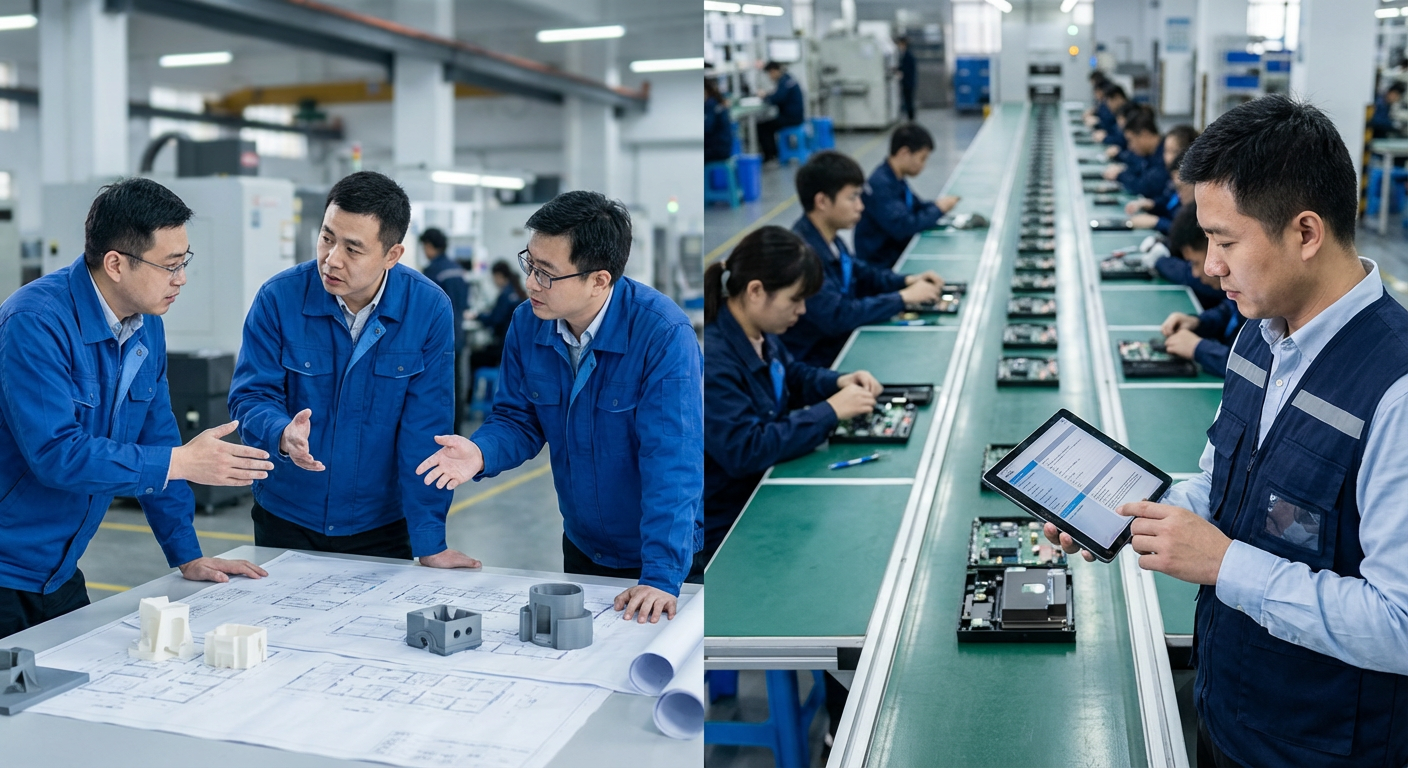
#Introduction
If you're exploring manufacturing options in Asia, you've likely encountered the terms OEM and ODM. These acronyms represent fundamentally different approaches to product manufacturing, and choosing the wrong model can cost you time, money, and competitive advantage.
This guide clarifies the differences between OEM (Original Equipment Manufacturer) and ODM (Original Design Manufacturer), helping you make an informed decision based on your specific business needs, budget, and product requirements.
#What is OEM (Original Equipment Manufacturer)?
#Definition
OEM manufacturing means you provide the complete product design, and the manufacturer produces it according to your exact specifications. You own the design, and the manufacturer simply executes your vision.
Your Role: Create product design, provide technical drawings, define materials, and specify quality standards. You own all intellectual property.
Manufacturer's Role: Source materials, set up production processes, manufacture to specifications, and handle quality control.
#When OEM Makes Sense
OEM is ideal when you have a unique product design that differentiates your brand. It requires in-house design capabilities and a willingness to invest more upfront for exclusivity. If IP ownership is critical for your business strategy, OEM is the way to go.
OEM Example
A tech startup designs a unique smart home device with proprietary features. They create detailed CAD files, circuit diagrams, and specifications, then partner with a Chinese manufacturer to produce it exclusively for their brand.
#Advantages of OEM
Full Design Control: Every aspect is customized to your vision, allowing for unique product features and brand-specific design elements that drive competitive differentiation.
IP Ownership: You own all design rights, giving you an exclusive product in the market and protection from direct competition.
Quality Specifications: You define exact quality standards, choose specific materials, and control manufacturing processes to ensure brand consistency.
#Disadvantages of OEM
Higher Upfront Costs: Requires design expenses, prototyping costs, and significant tooling fees ($5,000-50,000+), leading to a longer payback period.
Longer Development Time: The design, prototyping, and tooling phases can take 5-13 months before you get to market.
Requires Expertise: You need in-house design and engineering capabilities, plus the technical knowledge to manage complex specifications.
#What is ODM (Original Design Manufacturer)?
#Definition
ODM manufacturing means the manufacturer has existing product designs that you can customize with your branding. You're essentially selecting from their catalog and adding your brand identity.
Your Role: Select from existing designs, specify minor customization (colors, logos), and define branding.
Manufacturer's Role: Provide product designs, offer customization options, handle technical aspects, and manufacture the product.
#When ODM Makes Sense
ODM is ideal when you want to launch products quickly with a limited budget. It works well for established product categories where minor customization meets your needs and you lack in-house design capabilities.
ODM Example
An e-commerce brand wants to sell wireless earbuds. Instead of designing from scratch, they select an existing ODM design, customize the colors and packaging, add their logo, and launch within 2-3 months.
#Advantages of ODM
Faster Time to Market: Since there's no design phase and tooling already exists, you can launch in 2-4 months.
Lower Development Costs: No design fees, no prototyping costs, and shared tooling costs make this a budget-friendly option.
Manufacturer Expertise: You benefit from proven designs and optimized manufacturing processes, reducing the risk of design flaws.
#Disadvantages of ODM
Limited Differentiation: It's harder to build a unique brand identity when competitors might be selling similar products based on the same design.
Less Customization: You are restricted to available options and cannot make major design changes.
Shared IP Concerns: The manufacturer owns the design, meaning they can sell it to your competitors, limiting your exclusivity.
#OEM vs ODM: Side-by-Side Comparison
| Factor | OEM | ODM |
|---|---|---|
| Development Cost | $10,000-100,000+ | $2,000-10,000 |
| Time to Market | 5-13 months | 2-4 months |
| Customization Level | 100% custom | 20-40% custom |
| IP Ownership | You own everything | Manufacturer owns design |
| MOQ | Higher (1,000-5,000+) | Lower (500-2,000) |
| Tooling Costs | $5,000-50,000+ | $0-5,000 (shared) |
| Design Control | Complete | Limited |
| Market Exclusivity | High | Low to Medium |
Explore our OEM/ODM manufacturing services
#Hybrid Approaches: The Best of Both Worlds
#Semi-Custom ODM Solutions
Many manufacturers offer "semi-custom" ODM options where you start with a proven base design but customize key features. This adds unique elements like materials or functions, balancing cost, time, and differentiation.
Benefits: Faster than full OEM (3-6 months), more affordable than custom design, and reduced technical risk.
#Starting with ODM, Transitioning to OEM
A smart strategy for many businesses is to launch with ODM in Phase 1 to test market demand and generate revenue quickly. Then, in Phase 2, invest profits into custom OEM design to differentiate and build a stronger brand identity.
Ready to Start Sourcing?
Get expert guidance on your sourcing journey. Our team has helped over 200 companies successfully source products from Asia.
Contact Us#White Label vs. Private Label
White Label is pure ODM—taking a standard product and just adding your logo. It's the fastest and cheapest option.
Private Label is enhanced ODM, offering more customization options and exclusive designs (limited exclusivity). It sits as a middle ground between ODM and OEM.
#How to Choose the Right Model
#Decision Framework
Ask yourself these critical questions about budget, product uniqueness, capabilities, timeline, and IP importance.
Budget: Can you afford $20,000-50,000 in upfront costs? Product: How unique does your product need to be? Capability: Do you have in-house design expertise? Timeline: How quickly do you need to launch? IP: How important is exclusive ownership?
#Decision Matrix
Choose OEM if:
- Budget > $50,000 for development
- Timeline allows 6-12 months
- Product requires unique features
- You have design capabilities
- IP ownership is critical for my business
- I'm building a premium brand
Choose ODM if:
- Budget < $20,000 for development
- Need to launch in 2-4 months
- Standard products with branding are sufficient
- I lack in-house design capabilities
- I'm testing market demand first
- Speed to market is more important than uniqueness
Consider Hybrid if:
- Budget $20,000-50,000
- Timeline 3-6 months
- Need moderate customization
- Want balance of cost and differentiation
#Industry-Specific Considerations
#Electronics and Tech Products
OEM is recommended for unique features, proprietary software, or patent-protected innovations. ODM works well for accessories like cables and chargers, or standard peripherals like mice and keyboards.
#Consumer Goods and Homewares
OEM is best for signature design aesthetics and unique functionality. ODM is suitable for kitchen gadgets, storage solutions, and basic home accessories where value is key.
#Apparel and Textiles
OEM allows for fashion brands with unique designs and technical apparel with proprietary features. ODM is great for basic apparel like t-shirts and hoodies, or for testing new product lines quickly.
#Working Successfully with OEM/ODM Partners
#Finding the Right Manufacturer
For OEM Partners, look for strong R&D capabilities, engineering support, prototyping facilities, and experience with custom projects.
For ODM Partners, look for an extensive product catalog, customization options, quality certifications, and reasonable MOQs.
Our product development services support both OEM and ODM approaches
#Contract Negotiation Tips
OEM Contracts must include IP ownership clauses, exclusivity agreements, and confidentiality provisions (NDA).
ODM Contracts should specify customization scope, branding requirements, and exclusivity terms (if negotiated).
#Quality Control Measures
Quality Control Focus
Advantages
- OEM: Pre-production samples critical
- OEM: During-production inspections
- OEM: First article inspection
Disadvantages
- ODM: Sample evaluation
- ODM: Customization verification
- ODM: Pre-shipment inspection
#Real-World Examples
#Case Study 1: Successful OEM Partnership
Company: Premium fitness equipment brand
Product: Smart resistance bands with app integration
Model: OEM
Result: Successfully launched unique product, secured patents, and built sustainable competitive advantage despite higher initial investment.
#Case Study 2: ODM Product Launch
Company: E-commerce startup
Product: Wireless phone chargers
Model: ODM
Result: Quick market entry, validated demand, generated revenue to fund future OEM projects. Later transitioned to semi-custom design after proving market fit.
#Common Mistakes to Avoid
#Choosing Based Solely on Cost
Selecting ODM only because it's cheaper can be a mistake if your product needs differentiation. You risk competing on price in a crowded market. Consider the total cost of ownership and the value of differentiation.
#Unclear IP Agreements
Not clarifying IP ownership can lead to manufacturers selling your design to competitors. Always get everything in writing, use NDAs, and register trademarks.
#Insufficient Quality Control
Assuming ODM products are "proven" and don't need inspection is dangerous. Quality issues can damage your brand. Always inspect before shipment.
Critical Consideration
Whether you choose OEM or ODM, never skip quality control inspections. Even established ODM products can have quality variations between production runs.
#Ready to Choose Your Manufacturing Model?
Understanding the differences between OEM and ODM manufacturing is the first step toward making the right decision for your business. Whether you need complete design control or want to leverage existing designs for faster market entry, the key is aligning your choice with your business strategy, budget, and timeline.
Need Help Deciding Between OEM and ODM?
Our manufacturing experts can assess your product requirements and recommend the best approach for your business goals and budget.
Contact UsRelated Resources:
- OEM/ODM Decision Matrix Template
- Manufacturing Partner Evaluation Checklist
- Contract Template for OEM/ODM Agreements
Share this article
Tagged with:
Related Articles
Private Label Manufacturing: A Complete Guide to Launching Your Brand
Learn how to build a profitable brand using private label manufacturing. A step-by-step guide to finding suppliers, customization, and launching products.
Product Development: From Prototype to Mass Production
A step-by-step guide to developing a new product in China. Learn about prototyping, tooling, and the transition to mass production.
Product Packaging Design: Protection, Branding, and Cost
A complete guide to manufacturing product packaging. Learn how to balance protection, branding, and shipping costs for retail and ecommerce success.