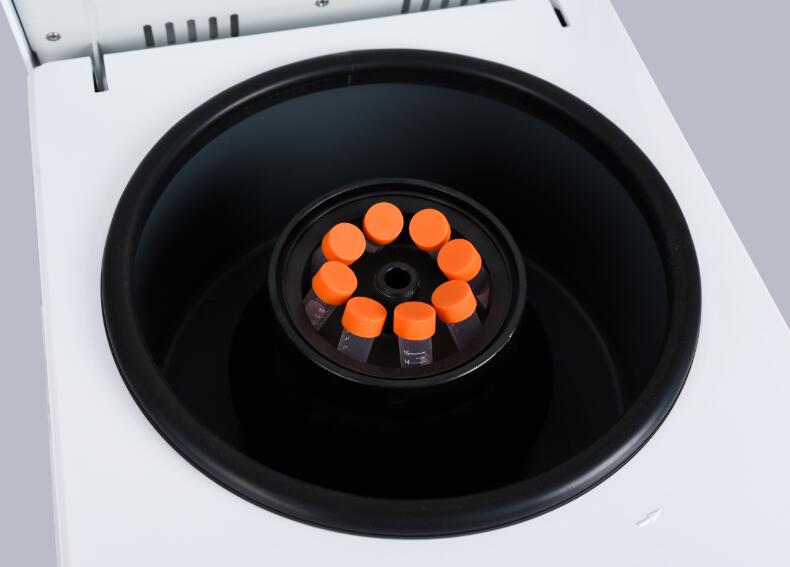
Laboratory Centrifuges
Source high-performance laboratory centrifuges from vetted suppliers and manufacturers across Asia. Designed for wholesalers, distributors, and medical equipment brands, our catalog supports bulk importing and custom OEM/private-label production. Partner with reliable factories for clinical and research applications.
Sourcing laboratory centrifuges at scale requires navigating a complex matrix of motor reliability, rotor metallurgy, and stringent safety standards. For medical and research equipment distributors, the difference between a high-margin asset and a costly liability lies in the factory's engineering tolerances and quality management systems. When buying in bulk or developing private-label lines, evaluating a manufacturer's technical capability is just as critical as negotiating the unit price.
Critical Specifications and Component Engineering
A centrifuge's longevity and performance are dictated by its core components: the motor, the rotor, and the control board. When evaluating suppliers, look beyond the basic RPM (Revolutions Per Minute) claims and focus on RCF (Relative Centrifugal Force) and continuous-run durability.
Motor and Drive Systems
Standard clinical and research centrifuges should utilize brushless DC motors. These eliminate carbon brush wear, reduce particulate emissions in cleanroom environments, and require significantly less maintenance. Ensure the factory uses frequency conversion motors for high-speed or refrigerated models, as these provide the precise speed control and rapid acceleration/deceleration profiles required in advanced protocols.
Rotor Metallurgy and Machining
Rotors endure immense stress. A minor structural flaw can lead to catastrophic failure at high speeds.
- Aluminum Alloy: The industry standard for fixed-angle and swing-bucket rotors. It must be forged and precision-machined, not simply cast, to ensure uniform density.
- Carbon Fiber: Increasingly common in premium high-speed models due to its lighter weight, which reduces motor strain and improves acceleration times.
| Rotor Type | Typical Application | Sourcing Consideration |
|---|---|---|
| Fixed-Angle | Pelleting, DNA/RNA separation | Requires rigorous dynamic balancing at the factory level. |
| Swing-Bucket | Blood separation, cell culture | Check pivot pin metallurgy and bucket weight-matching tolerances. |
| Microplate | PCR, high-throughput screening | Verify aerodynamic design to minimize noise and air friction heating. |
Need help matching your performance specifications to the right factory tier? Our engineering sourcing team can help you identify manufacturers capable of meeting exact RCF and temperature control tolerances.
Discuss your technical requirementsManufacturing Quality and Safety Standards
Laboratory centrifuges are high-kinetic-energy devices. Safety mechanisms are non-negotiable, and compliance with international standards like IEC 61010-2-020 (particular requirements for laboratory centrifuges) is mandatory for most Western markets. Verifying these claims often requires rigorous Compliance & Testing before you commit to a large order.
Essential Safety Mechanisms to Verify
Factories cutting corners will often use inferior sensors or bypass redundant safety systems. Your specification sheet must explicitly demand:
- Electronic Lid Locks: The lid must not open while the rotor is in motion, and the motor must not start if the lid is unlatched.
- Imbalance Detection: Highly sensitive gyroscopic or vibration sensors that automatically shut down the drive if rotor imbalance exceeds safe thresholds (typically a few grams).
- Over-Speed and Over-Temperature Protection: Redundant thermistors and tachometers that cut power if primary control boards fail.
Factory Assessment Checklist for Centrifuges
- Does the facility have a dedicated dynamic balancing machine for rotors?
- Are they ISO 13485 certified (if producing for the medical device market)?
- How do they age-test control boards (burn-in testing duration)?
- Can they provide valid, third-party CE or UL test reports for the specific model?
Relying solely on supplier-provided certificates is risky. Conducting independent Factory Audits ensures the manufacturer actually possesses the specialized balancing and calibration equipment required for safe production.
OEM Customization, MOQs, and Pricing Mechanics
For brands looking to establish their own equipment lines, the centrifuge market offers robust opportunities for private labeling and structural modifications. Most top-tier factories in hubs like Guangdong and Jiangsu offer comprehensive OEM/ODM Services, allowing you to customize everything from the HMI (Human-Machine Interface) touchscreen software to the exterior housing design.
Pricing Drivers
Unit costs vary dramatically based on functionality. A basic low-speed clinical centrifuge for blood tubes can cost a fraction of a high-speed refrigerated microcentrifuge. The primary cost drivers are:
- Refrigeration Systems: Adding CFC-free compressors (often using R134a or R404a refrigerants) increases unit cost and complexity.
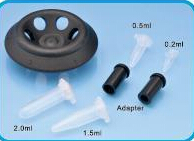
- Rotor Inclusions: Units sold "without rotor" appear cheaper. Always specify which rotors and adapters must be included in your FOB price.
- Interface: Transitioning from membrane keypads and LED screens to full-color capacitive touchscreens increases the BOM (Bill of Materials) cost.
Planning a bulk order or developing a custom lab equipment line? Let us handle the factory negotiation and quality assurance.
Get a sourcing consultationImplementing strict Quality Control & Inspection protocols is vital before the container is sealed. In-line inspections should verify temperature calibration accuracy, while pre-shipment inspections must include functional run-tests at maximum RPM to check for vibration and noise levels (which should remain under 65 dB for standard models).
Frequently Asked Questions
Successfully sourcing laboratory centrifuges requires bridging the gap between commercial negotiation and strict engineering oversight. By partnering with vetted manufacturers and enforcing rigorous quality control standards, you can secure reliable, high-performance equipment that meets the exacting demands of modern laboratories.
Get Sourcing Help for Laboratory Centrifuges
Tell us your requirements and our experts will connect you with verified manufacturers.