Gas Generation Equipment
Source industrial gas generation equipment in bulk directly from vetted manufacturers and suppliers. Designed for importers, distributors, and procurement managers, our catalog offers reliable on-site generation systems for nitrogen, oxygen, and hydrogen. Partner with us for secure OEM production and competitive wholesale pricing.
Sourcing industrial gas generators—whether for nitrogen, oxygen, or hydrogen—requires balancing upfront capital expenditure with long-term operational stability. The core challenge when buying these systems from overseas manufacturers is not simply securing a favorable price; it is ensuring the system can sustain its rated purity and flow rate after thousands of hours of continuous operation under heavy industrial loads.
Core Technologies and Specifications
Selecting the right generation technology dictates the factory you should partner with, as manufacturers typically specialize in either adsorption, membrane, or electrolysis processes. Your specifications must clearly define flow rate (Nm3/h), required purity, output pressure, and acceptable dew point.
| Technology | Best For | Max Purity | Maintenance Focus |
|---|---|---|---|
| PSA (Pressure Swing Adsorption) | High purity requirements | Up to 99.9995 percent | Valve lifespan, Sieve replacement |
| Membrane Separation | Lower purity, robust environments | Up to 99.5 percent | Filter replacement, Membrane degradation |
| Water Electrolysis (Hydrogen) | Green hydrogen, high purity | Up to 99.999 percent | Electrolyte management, Cell stack health |
Component Quality and Manufacturing Traps
The longevity of a gas generation system is won or lost in the quality of its internal components and the precision of its assembly. When sourcing from China, you will find a wide variance in component sourcing among factories.
Molecular Sieve Integrity
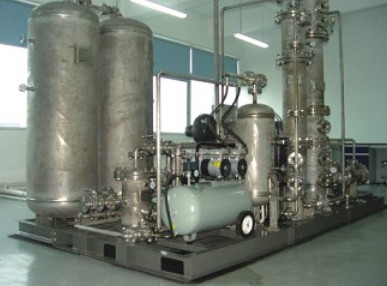
For PSA systems, the Carbon Molecular Sieve (CMS) for nitrogen or Zeolite Molecular Sieve (ZMS) for oxygen is the heart of the machine. Inferior packing techniques at the factory lead to sieve powdering—where the friction of pressurized gas grinds the sieve into dust, rapidly destroying the machine's efficiency. Premium manufacturers use specialized vibration filling and pneumatic pressing devices to ensure maximum sieve density.
Valves and Control Systems
PSA systems rely on pneumatic valves that cycle millions of times a year. Specifying internationally recognized valve brands (like Burkert or SMC) or top-tier domestic equivalents is critical. Similarly, the PLC (Programmable Logic Controller) must be robust. A poorly programmed PLC will fail to optimize the pressure equalization steps, wasting compressed air and increasing power consumption.
Verifying a factory's engineering capabilities and pressure vessel welding certifications requires rigorous factory audits before placing an order.
Need to verify a manufacturer's pressure vessel certifications and engineering capabilities? We can evaluate their facilities on the ground.
Talk to our technical teamQuality Control and Factory Acceptance Testing
Never ship a gas generator without comprehensive testing at the facility. A standard visual inspection is insufficient for pressurized, automated equipment.
Critical Inspection Points for Gas Generators
- Sieve packing density: Ensure vibration filling techniques are documented and verified.
- Valve cycle testing: Verify pneumatic valves are rated for at least 3 million cycles.
- PLC programming: Check that the control system properly manages pressure equalization steps.
- Dew point measurement: Confirm integrated sensors are accurately calibrated before shipment.
- Continuous run test: Operate the system for 24 to 48 hours to monitor purity stability.
Implementing strict quality control & inspection protocols ensures that issues like minor air leaks, sensor calibration errors, or underperforming compressors are caught before the equipment is crated.
Pricing, MOQs, and Lead Times
Gas generation equipment is heavily customized to the buyer's required flow rate and purity, meaning off-the-shelf inventory is rare for industrial-scale units.
Pricing is highly dependent on the origin of the core components (e.g., a system using an Atlas Copco compressor and Siemens PLC will cost significantly more than one using domestic equivalents). Because these systems are typically skid-mounted, bulky, and heavy, coordinating shipping & freight requires expertise in handling Out of Gauge (OOG) cargo or optimizing standard container space.
Shipping heavy, skid-mounted gas equipment requires precise logistics. Let us handle the factory negotiation and international freight.
Get a freight and sourcing quoteFrequently Asked Questions
Sourcing gas generation equipment is an exercise in Total Cost of Ownership. Saving capital on an under-specced system often leads to inflated energy bills, premature sieve replacement, and production downtime. By enforcing strict component specifications and rigorous pre-shipment testing, you can secure highly reliable generation systems at competitive global pricing.
Get Sourcing Help for Gas Generation Equipment
Tell us your requirements and our experts will connect you with verified manufacturers.