Bushings
Source high-quality bushings from vetted suppliers and manufacturers across Asia. Designed for importers, wholesalers, and brands seeking reliable OEM production, our network delivers precision-engineered components for demanding power transmission applications.
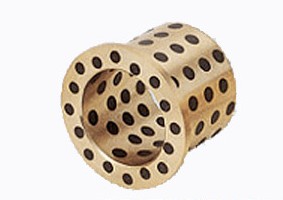
Bushings are foundational components in power transmission, absorbing friction, guiding motion, and bearing loads in everything from heavy agricultural machinery to precision robotics. Sourcing these plain bearings in bulk requires strict attention to material composition, dimensional tolerances, and the manufacturer's quality management systems. A fraction of a millimeter in out-of-roundness or a slight deviation in alloy composition can lead to premature wear, catastrophic failure, and costly equipment downtime.
For professional buyers, the sourcing challenge is rarely finding a factory that can produce a bushing; it is finding a partner capable of maintaining exact metallurgical standards and machining tolerances across production runs of tens or hundreds of thousands of units.
Critical Specifications for Bulk Procurement
When negotiating with manufacturers, specifying the correct parameters is essential to ensure the final product meets your application's demands. Ambiguity in your RFQ will result in inconsistent batches.
- Load and Speed (PV Value): The Pressure-Velocity limit is the most critical metric for any bushing. It dictates the maximum combination of load and surface speed the bearing can handle before generating excessive heat.
- Dimensional Tolerances: Specify exact inner diameter (ID), outer diameter (OD), and length tolerances. High-precision applications typically require ISO tolerance grades of IT5 to IT7.
- Clearance and Press Fits: Clearly define the required interference fit for the housing and the running clearance for the shaft.
- Surface Finish: The internal surface roughness (Ra) directly impacts the wear rate of both the bushing and the mating shaft.
| Material Type | Typical Applications | Performance Characteristics |
|---|---|---|
| Sintered Bronze | Electric motors, light machinery | Self-lubricating, excellent for high speeds and low loads. |
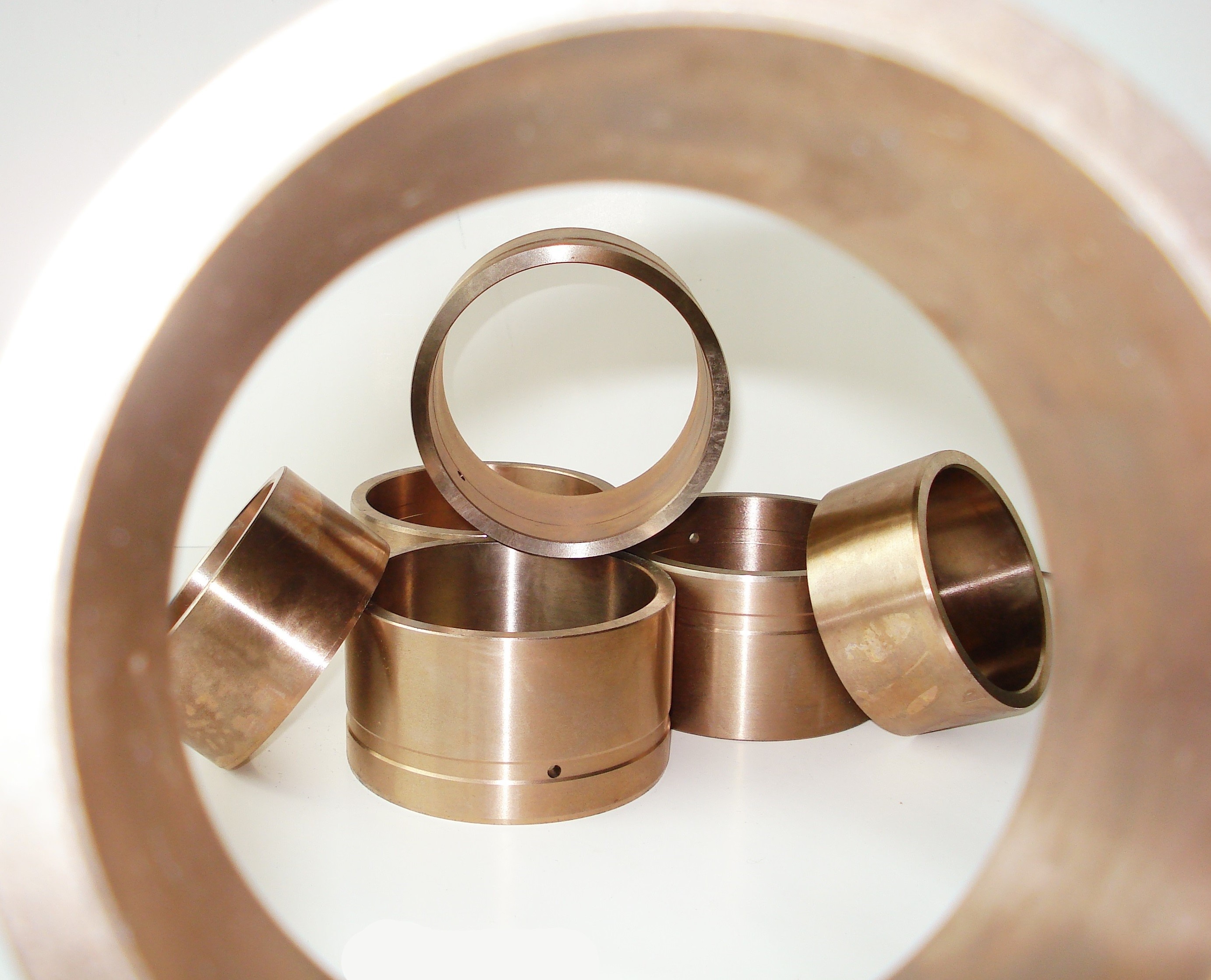
| Cast Bronze (e.g., C93200) | Heavy equipment, hydraulic cylinders | High load capacity, requires external lubrication, highly durable. |
| PTFE-Lined Composite | Valves, automotive suspensions | Maintenance-free, low friction, handles heavy loads at low speeds. |
| Hardened Steel | Excavators, mining linkages | Extreme impact resistance, requires regular greasing. |
Struggling with inconsistent dimensional tolerances across your bushing shipments? Let us help you establish robust quality standards.
Talk to our teamManufacturing Processes and Quality Vulnerabilities
Different bushing types require distinct manufacturing processes, each with its own specific failure points on the factory floor. Understanding these helps in evaluating a supplier's capabilities.
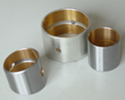
For wrapped composite bushings (steel backing, porous bronze interlayer, and PTFE/POM overlay), the critical failure point is delamination. If the factory's sintering temperature or bonding pressure is poorly controlled, the wear layer will strip away under load.
For machined cast bronze bushings, the primary risks are metallurgical defects like porosity or inclusions, and machining errors such as poor concentricity. When utilizing Factory Audits, it is vital to verify that the supplier has in-house spectrometers for material analysis and coordinate measuring machines (CMM) for dimensional verification.
Pre-Shipment Inspection Focus Areas for Bushings
- Verify metallurgical composition against the specified standard (e.g., ASTM, DIN) using spectrometer reports.
- Check concentricity and wall thickness uniformity to prevent uneven wear.
- Inspect chamfers and oil grooves for burrs or sharp edges that could score the shaft.
- Measure ID and OD using precise plug and ring gauges to confirm press-fit tolerances.
- For self-lubricating sintered bushings, verify oil impregnation rates by weight.
Thorough Quality Control & Inspection at the factory level prevents defective batches from entering your supply chain and causing downstream assembly issues.
MOQs, Lead Times, and Tooling Costs
Understanding the economic realities of bushing manufacturing helps in planning your procurement cycles and negotiating effectively.
Standard catalog sizes (like common metric DU or DX style bushings) often have lower barriers to entry because the manufacturer already holds the tooling. However, custom sizes, proprietary oil groove patterns, or specific alloy requests will require custom production runs.
If your brand requires custom dimensions or proprietary material blends, leveraging professional OEM/ODM Services ensures that the factory correctly interprets your engineering drawings and produces accurate first-article samples before mass production begins.
Need to source custom-engineered bushings at scale? We can match you with the right manufacturing partner.
Get a free consultationFrequently Asked Questions
Procuring bushings in high volumes is an exercise in risk management. The unit cost of a bushing is negligible compared to the cost of replacing it in the field after a premature failure. By partnering with vetted manufacturers who maintain strict metallurgical controls and precise machining standards, you protect your product's reputation and your bottom line. If you need assistance navigating supplier selection or implementing rigorous quality control for your bearing components, our team is ready to support your supply chain.
Get Sourcing Help for Bushings
Tell us your requirements and our experts will connect you with verified manufacturers.