Bolt & Screw Extractors
Source professional-grade bolt & screw extractors from vetted manufacturers and suppliers. Designed for wholesalers, distributors, and hardware brands seeking bulk importing or custom OEM production, our network delivers reliable extraction tools built to rigorous metallurgical standards.
Bolt and screw extractors are high-stress consumables. A failed extractor does not just waste a tool; it traps hardened steel inside the workpiece, multiplying the end-user's problem. For volume buyers, sourcing reliable extraction tool sets requires strict oversight of a supplier's metallurgy, flute geometry, and heat-treatment processes.
Material Selection and Heat Treatment
The fundamental challenge in manufacturing an extractor is balancing hardness with toughness. The tool must be hard enough to bite into a seized, hardened fastener without rounding off, but tough enough to withstand massive torsional stress without snapping.
Most consumer-grade extractors fail because they are improperly tempered—leaving them brittle—or made from inferior carbon steel that deforms under torque. Professional-grade extractors are typically forged from Chrome Molybdenum (Cr-Mo) or high-grade High-Speed Steel (HSS).
| Material Grade | Typical Hardness (HRC) | Best Suited For | Cost Profile |
|---|---|---|---|
| High-Carbon Steel (HCS) | 50-55 | Light-duty consumer screw extraction | Low |
| High-Speed Steel (HSS) | 60-63 | General purpose bolt extraction | Medium |
| Chrome Molybdenum (Cr-Mo) | 58-62 | High-torque, impact-rated professional use | High |
Achieving the correct Rockwell Hardness (HRC) is entirely dependent on the factory's heat-treatment capabilities. Inconsistent furnace temperatures or improper quenching leads to batch variations where one extractor performs perfectly while the next shatters. Conducting thorough Factory Audits before committing to a supplier is the most effective way to verify their thermal processing controls and equipment calibration.
Struggling with inconsistent tool hardness from your current suppliers? Let us vet and manage manufacturers with proven metallurgical controls.
Talk to our teamFlute Geometry and Machining Precision
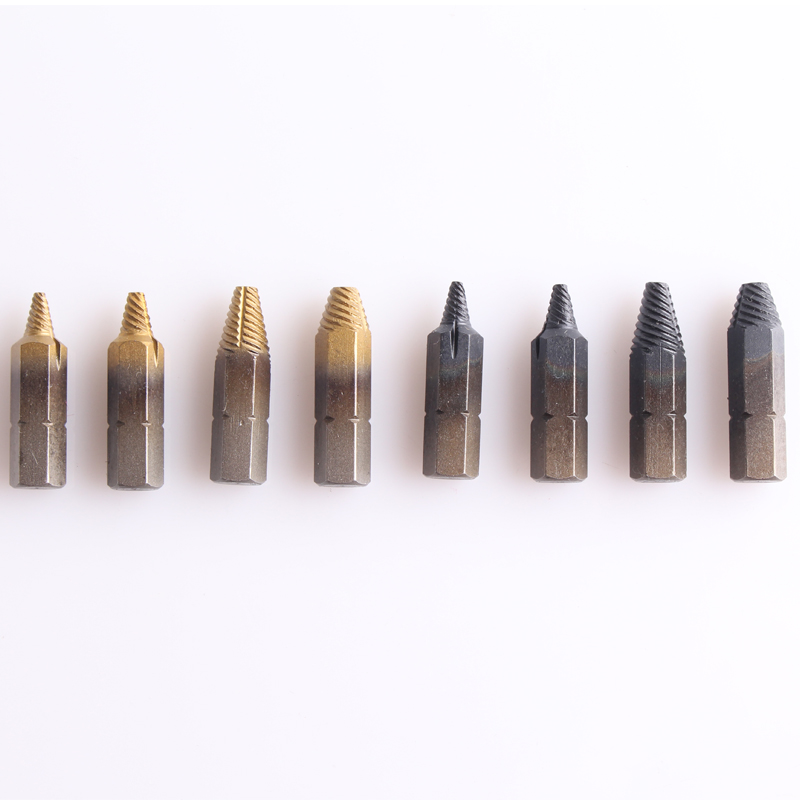
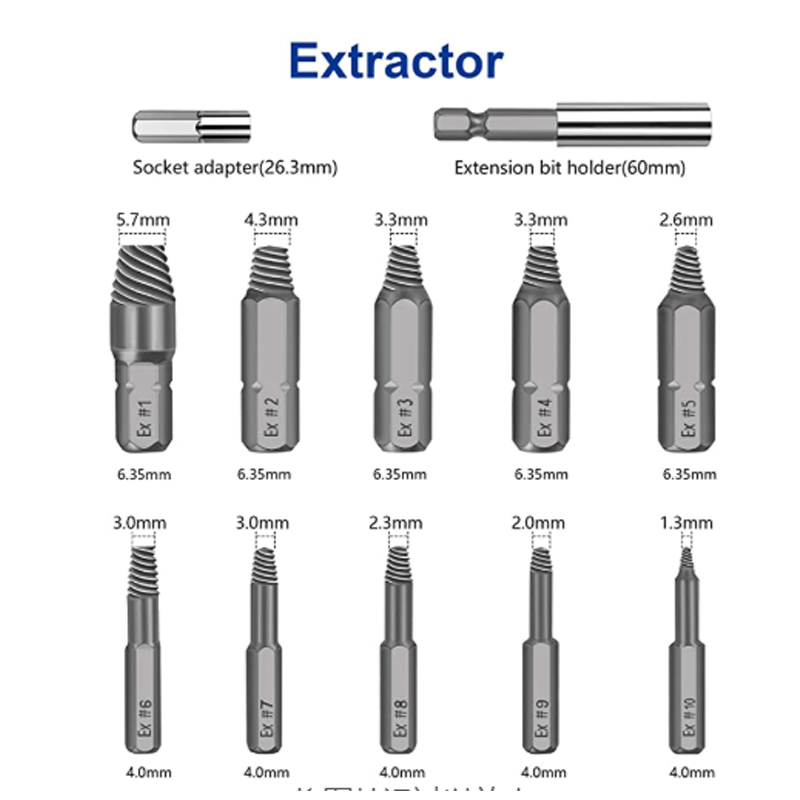
Extractors generally fall into two geometric categories: spiral flute (aggressive left-hand twist for deep bite) and straight flute (multi-spline designs that avoid expanding the broken bolt). The precision of these machined flutes dictates the tool's effectiveness.
If the taper angle is off by even a fraction of a degree, the extractor will bottom out before achieving a secure grip. Poorly machined drive heads (whether square or hex) will also cause the turning tool to slip, leading to uneven torque application and premature failure.
Critical Factory-Level QC Checks
- Destructive torque testing to establish failure limits
- Hardness (HRC) verification on both the core and the surface
- Dimensional accuracy and consistency of the flute taper angle
- Concentricity of the drive head relative to the extraction flute
- Corrosion resistance validation (salt spray testing for black oxide finishes)
Implementing rigorous Quality Control & Inspection protocols at the factory level ensures that dimensional inaccuracies and tempering failures are caught before the tools are packed and shipped.
Buying Mechanics: MOQs, Packaging, and Lead Times
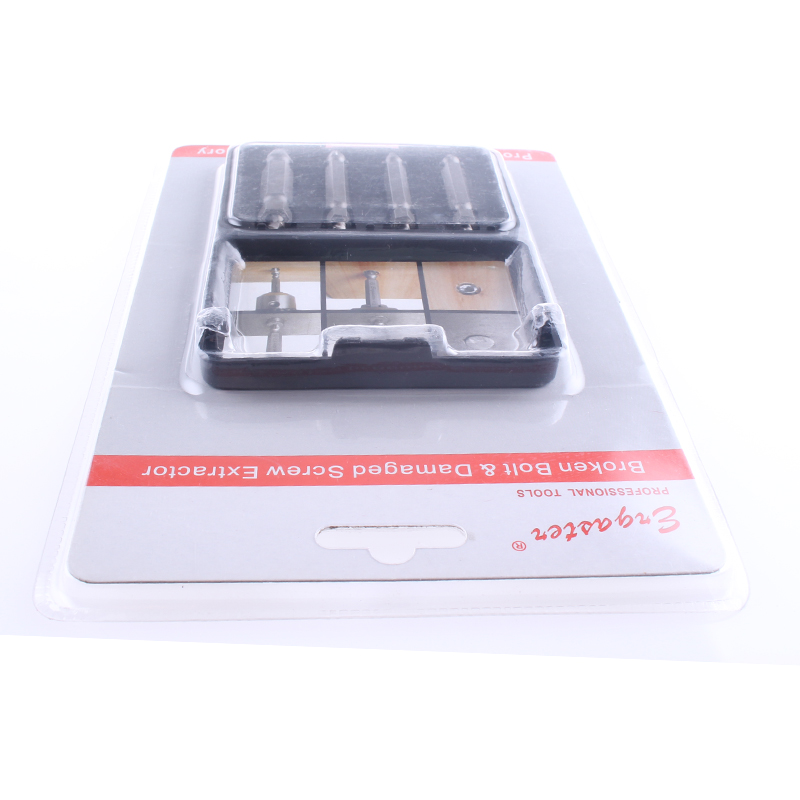
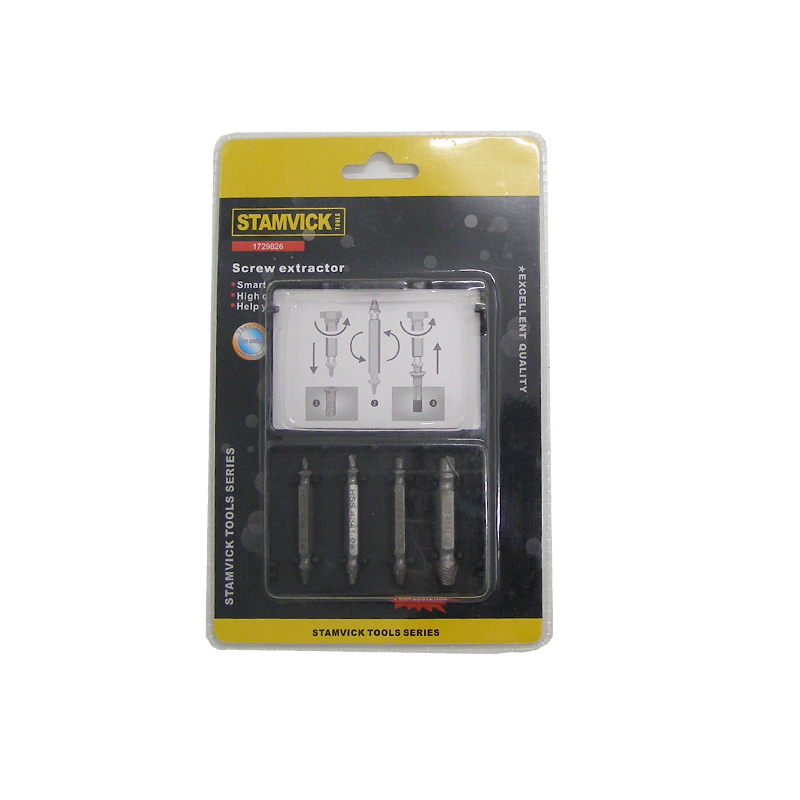
Bolt and screw extractors are rarely sourced as individual loose pieces by bulk buyers; they are typically purchased in sets ranging from 5-piece screw extractor kits to comprehensive 35-piece master extraction sets.
Packaging plays a major role in the sourcing process. Blow-molded cases, metal indices, and high-density EVA foam trays are standard. If you are leveraging OEM/ODM Services to launch a private-label line, the tooling for custom blow-molded cases will often dictate your initial order volumes.
Pricing is driven primarily by the raw material index (steel costs), the complexity of the heat treatment, and the packaging materials. Surface finishes, such as sandblasting or black oxide coating, add marginal cost but significantly improve shelf appeal and rust prevention.
Ready to optimize your hand tool supply chain? We negotiate MOQs, manage packaging tooling, and oversee production from end to end.
Get a free consultationFrequently Asked Questions
Sourcing reliable bolt and screw extractors requires looking past the surface finish and focusing heavily on a manufacturer's material science and thermal processing consistency. Partnering with a team that understands the factory-level realities of tool manufacturing ensures your brand delivers high-torque reliability to the end user.
Get Sourcing Help for Bolt & Screw Extractors
Tell us your requirements and our experts will connect you with verified manufacturers.