Boilers
Source industrial and commercial boilers from vetted suppliers and manufacturers across Asia. Designed for importers, wholesalers, and facility procurement managers, our network provides reliable, high-capacity heating solutions. Partner with us for competitive bulk pricing and stringent quality assurance.
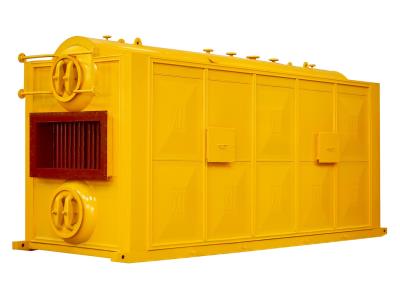
Sourcing industrial boilers requires strict adherence to international safety standards, precise thermal engineering, and rigorous factory evaluation. Whether you are procuring high-capacity steam boilers for manufacturing plants or hot water boilers for commercial facilities, the stakes for material integrity and pressure vessel compliance are absolute. Navigating the Asian manufacturing landscape for these complex systems demands deep technical oversight.
Need expert support vetting boiler manufacturers and ensuring compliance?
Talk to our teamCritical Specifications and Thermal Engineering
When specifying boilers for bulk import or custom manufacturing, buyers must define exact operational parameters. Misalignment in capacity or pressure ratings can lead to catastrophic system failures or severe energy inefficiencies.
Key parameters to define include:
- Evaporation Capacity / Thermal Output: Measured in tons per hour (t/h) for steam or megawatts (MW) for hot water.
- Design Pressure: Operating pressure requirements dictate the steel thickness and welding standards. Specify whether the system requires low pressure (under 1.0 MPa) or high pressure (up to 3.8 MPa or higher).
- Thermal Efficiency: Modern gas-fired boilers should achieve thermal efficiencies between 90 and 95 percent, often reaching 98 percent or higher when fitted with condensing economizers.
- Fuel Adaptability: Specify the burner requirements (natural gas, light oil, heavy oil, biomass, or electric).
| Design Type | Typical Capacity | Pressure Range | Primary Application |
|---|---|---|---|
| Fire-Tube | 1 to 25 t/h | Low to Medium | General industrial heating, food processing |
| Water-Tube | 10 to 100+ t/h | High | Power generation, heavy chemical plants |
| Electric | 0.1 to 4 t/h | Low to Medium | Clean environments, hospitals, small batch production |
Manufacturing Standards and Quality Control
Boilers are pressure vessels, making the manufacturing process heavily regulated. The core of boiler quality lies in the metallurgy of the steel plates and the integrity of the welds.
Substandard welding or the use of uncertified steel can result in micro-fractures that expand under thermal stress. To mitigate these risks, professional buyers rely on comprehensive Factory Audits before placing an order to verify the manufacturer's credentials and in-house testing capabilities.
Critical Factory Verification Points
- Valid pressure vessel manufacturing licenses (e.g., ASME U-Stamp, CE PED)
- In-house Non-Destructive Testing (NDT) capabilities including X-ray and ultrasonic testing
- Strict traceability systems for raw materials (steel plates, boiler tubes)
- Documented Welder Qualification Records (WQR) for all shop floor personnel
- Dedicated hydrostatic testing bays with calibrated pressure gauges
During production, third-party Quality Control & Inspection is essential. Inspectors must witness hydrostatic pressure tests—where the boiler is filled with water and pressurized to 1.5 times its design pressure—to ensure zero leakage or deformation before the unit is painted and packaged.
Sourcing Mechanics: Pricing, MOQs, and Lead Times
Because industrial boilers are high-value, capital-intensive equipment, the sourcing mechanics differ significantly from standard commercial goods.
Cost Drivers
Pricing is highly variable and depends on several core factors:
- Material Costs: The grade of carbon steel or stainless steel used for the pressure vessel and tubes.
- Burner Brand: Many buyers specify internationally recognized burner brands (such as Riello or Baltur) integrated into Chinese-manufactured boiler bodies. This increases the unit cost but ensures local serviceability in the destination market.
- Control Systems: Integration of advanced PLC touch-screen controls (e.g., Siemens) and IoT monitoring capabilities.
- Certifications: Boilers built strictly to ASME or CE standards carry a premium due to the required material traceability and certified third-party inspections. Integrating Compliance & Testing into your sourcing plan is critical to avoid customs rejections.
Optimize your capital equipment procurement and secure reliable production timelines.
Get a free consultationBuyer FAQ
Procuring industrial boilers is a high-stakes investment where engineering precision and regulatory compliance cannot be compromised. Success requires more than just finding a supplier; it demands rigorous technical vetting, continuous production oversight, and expert logistical coordination to ensure the equipment arrives safely and performs to specification.
Get Sourcing Help for Boilers
Tell us your requirements and our experts will connect you with verified manufacturers.