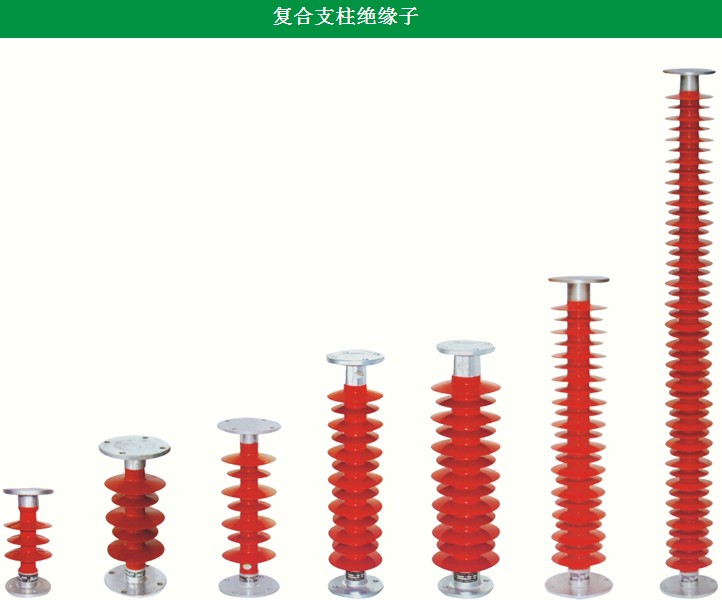
Other MV & HV Products
Source Other MV & HV Products directly from vetted manufacturers and suppliers. Designed for importers, distributors, and procurement managers buying specialized medium and high voltage components in bulk. Find reliable factories for custom OEM/ODM production, wholesale orders, and specialized electrical infrastructure supplies.
Sourcing specialized medium voltage (MV) and high voltage (HV) components outside of standard switchgear and transformer categories requires rigorous attention to material science and factory capabilities. Whether you are procuring custom insulating barriers, specialized fault indicators, unique busbar supports, or proprietary grounding assemblies, the margin for error is zero. In MV and HV applications, a minor material defect or manufacturing inconsistency can lead to catastrophic failure, arc flashes, or severe network downtime.
Critical Material and Performance Specifications
When evaluating manufacturers for non-standard MV and HV products, the conversation must start with material integrity. Specialized components often rely on advanced polymers, epoxy resins, or high-grade ceramics to maintain dielectric strength under extreme electrical stress.
Key performance indicators you must specify include:
- Dielectric Strength: The maximum electric field the material can withstand without breaking down.
- Comparative Tracking Index (CTI): Crucial for components exposed to moisture or contamination, indicating resistance to surface tracking.
- Thermal Endurance: Operating temperature ranges, particularly for components near high-current conductors.
- Partial Discharge (PD) Limits: Essential for cast resin components to ensure there are no internal voids that could degrade insulation over time.
Factory Technical Vetting Checklist
- Verify in-house high-voltage testing equipment (e.g., Faraday cages, PD testing rigs).
- Review raw material sourcing (e.g., Huntsman epoxy or equivalent high-grade resins).
- Check for automated vacuum casting or precision injection molding machinery.
- Request historical type-test reports from recognized third-party labs (KEMA, ASTA, CESI).
If a supplier cannot provide detailed data sheets or relies on outsourced testing for standard production batches, the risk of batch-to-batch inconsistency is high. Conducting thorough factory audits is the most reliable way to verify that a manufacturer actually possesses the specialized equipment required for high-voltage production, rather than simply assembling outsourced parts.
Need to verify a supplier's high-voltage testing facilities before placing a bulk order?
Talk to our teamManufacturing Processes and Quality Control
The production of custom MV and HV components typically involves Automatic Pressure Gelation (APG) for epoxy resins, precision machining for conductive elements, or specialized molding for silicones and polymers.
The primary risk in the APG process is the formation of micro-voids during curing. If the vacuum is insufficient or the curing temperature profile is flawed, internal cavities form. Under medium or high voltage, these cavities cause partial discharge, slowly eroding the insulation from the inside out.
To mitigate this, stringent quality control protocols must be enforced on the factory floor. Inspections should not be limited to visual checks or dimensional verification. Inline testing must include:
- X-ray Inspection: To detect internal voids in cast components before they move to electrical testing.
- Routine PD Testing: Ensuring every piece, or a statistically significant sample, meets the specified discharge limits (often under 10pC depending on the voltage class).
- Power Frequency Withstand Voltage Testing: Applying elevated voltages for a specified duration (e.g., 1 minute) to verify insulation integrity.
Customization and OEM/ODM Production
Many specialized MV/HV products require custom tooling. When engaging a factory for OEM/ODM production, tooling ownership, mold lifespan, and design IP protection are critical negotiation points.
Custom Tooling Approaches for MV/HV Resins
Advantages
- Exact dimensional fit for proprietary switchgear designs
- Optimized creepage distances for specific environmental conditions
- Ability to integrate custom conductive inserts during casting
Disadvantages
- High upfront mold costs (especially for complex APG molds)
- Longer lead times for initial prototyping and type testing
- Requires rigorous third-party validation for new designs
When developing a new component, it must eventually pass rigorous type testing to ensure compliance with IEC or IEEE standards. Coordinating this requires a supplier familiar with international regulatory requirements, or you will need to manage compliance and testing through independent laboratories prior to mass production.
Typical MOQs, Lead Times, and Pricing Drivers
Pricing for specialized MV and HV products is heavily influenced by raw material costs (copper, specialized resins), mold complexity, and the extent of routine testing required per batch.
Because setup times for vacuum casting and high-voltage testing rigs are significant, factories are rarely willing to run small batches without a substantial price premium.
Evaluating tooling costs and unit pricing for a custom MV/HV production run?
Get a free consultationFrequently Asked Questions
Sourcing specialized MV and HV products demands a rigorous approach to supplier selection. Success depends entirely on partnering with a manufacturer whose engineering capabilities and testing infrastructure match the critical nature of the components you are buying.
Get Sourcing Help for Other MV & HV Products
Tell us your requirements and our experts will connect you with verified manufacturers.