Amazon FBA Sourcing Guide: Finding Products That Sell
#Introduction
Sourcing for Amazon FBA (Fulfillment by Amazon) is different from traditional sourcing. You aren't just looking for a product; you're looking for a product that meets Amazon's strict requirements, fits their fee structure, and can compete in a crowded marketplace.
Amazon has specific rules for packaging, labeling, and shipping that, if ignored, can lead to rejected shipments or lost inventory.
This guide covers everything you need to know to source products specifically for the Amazon FBA model.
FBA Fee Awareness
Size Matters: A product that is 1 inch too long can jump to the next shipping tier, doubling your FBA fees. Always source with Amazon's fee tiers in mind.
#Product Research for FBA
Before you contact a single supplier, you must validate the product.
FBA Product Criteria
- High Demand: 3,000+ monthly searches
- Low Competition: Fewer than 500 reviews for top sellers
- Healthy Margin: 30-50% margin after FBA fees
- Small & Light: Fits in a shoebox, under 2 lbs
- Non-Seasonal: Sells year-round
- Not Gated: Avoid restricted categories like hazmat or topicals initially
#Finding FBA-Friendly Suppliers
Not all factories understand FBA. You need a supplier who is willing to:
- Print and apply FNSKU labels (barcodes)
- Follow Amazon's carton packaging requirements
- Ship DDP (Delivered Duty Paid) if possible
Questions to Ask:
- "Have you shipped to Amazon FBA warehouses before?"
- "Can you apply FNSKU labels to each unit?"
- "Do you offer DDP shipping?"
#Packaging and Labeling Requirements
Amazon is extremely strict. Non-compliance leads to "unplanned prep fees" or returned stock.
FNSKU Labeling
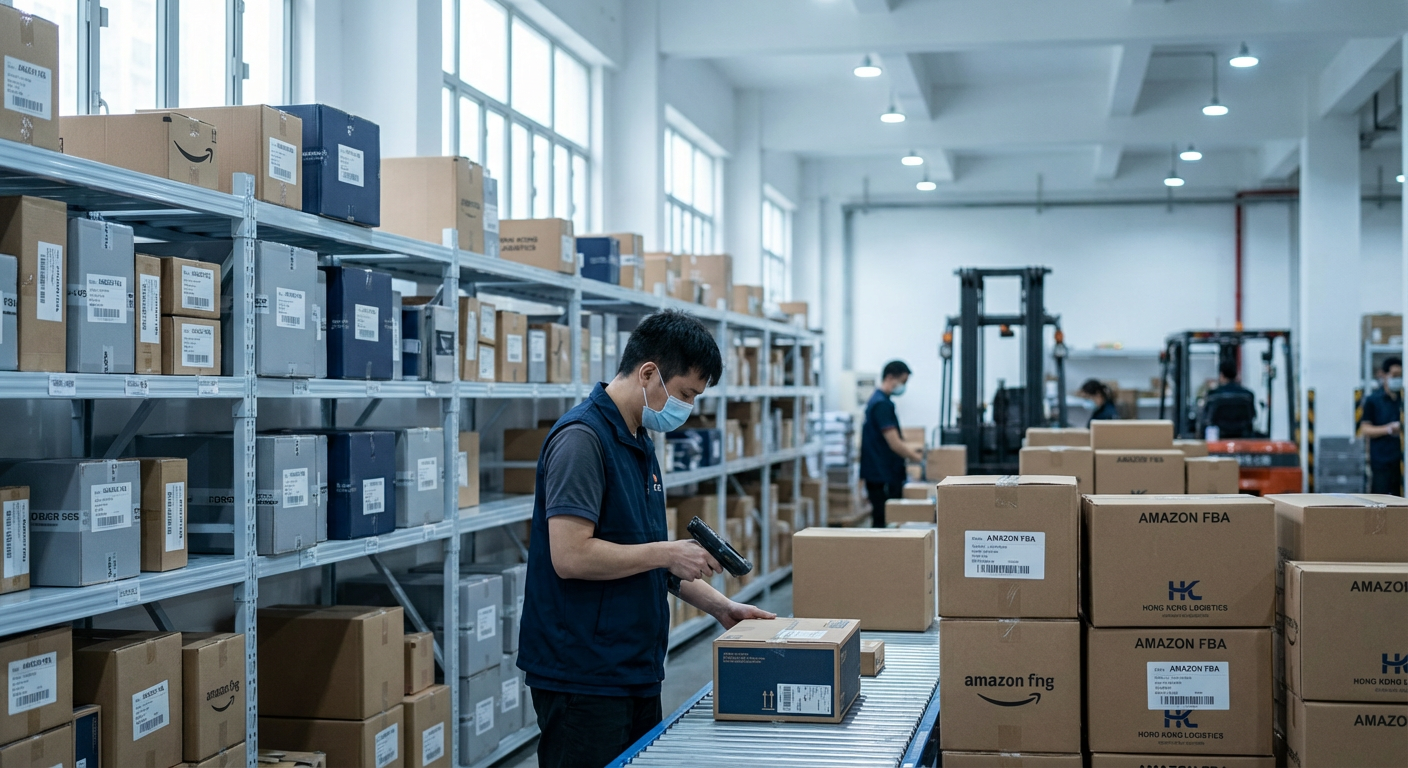
Every unit must have a scan-able FNSKU barcode. Don't use the manufacturer's UPC if you want to avoid commingling inventory.
Poly Bag Warnings
Bags with openings >5 inches must have a suffocation warning printed on them.
Carton Labels
Shipping cartons must have Amazon Shipment ID labels. Weight limit per carton is usually 50 lbs (22.6 kg).
Pallet Standards
If shipping pallets, they must be standard 40x48 inch, 4-way access, wooden pallets.
Need FBA Prep?
Get expert guidance on your sourcing journey. Our team has helped over 200 companies successfully source products from Asia.
Contact Us#Shipping to Amazon: Direct vs. 3PL
Should you ship directly from China to Amazon, or use a middleman?
#Option 1: Direct to Amazon (Factory -> FBA)
Pros: Faster, cheaper. Cons: High risk. If Amazon rejects the shipment, you have no local backup. You rely 100% on the factory for quality and labeling.
#Option 2: Via 3PL (Factory -> 3PL -> FBA)
Ship to a third-party logistics (3PL) warehouse in the destination country first. They inspect, label, and forward to Amazon. Pros: Quality control, drip-feeding inventory (lower storage fees). Cons: Extra shipping leg, higher cost.
Shipping Strategy
Advantages
- Direct: Best for established products with trusted suppliers
- Direct: Lowest landed cost
- 3PL: Best for new product launches
- 3PL: Inspect goods before Amazon sees them
Disadvantages
- Direct: No inspection buffer
- Direct: High storage fees for slow stock
- 3PL: Adds 1-2 weeks to timeline
- 3PL: Handling fees apply
#Quality Control for FBA
Returns kill FBA businesses. If your defect rate climbs, Amazon will suspend your listing.
Strategy:
- Golden Sample: Approve a perfect unit.
- Pre-Shipment Inspection: Inspect 100% or AQL sample in China.
- Packaging Test: Drop-test the product in its retail packaging. It must survive the journey to the customer.
Pro Tip
Ask your inspector to scan the FNSKU barcodes to ensure they are readable. A non-scannable barcode means lost inventory.
#Calculating FBA Profitability
Don't guess. Use the FBA Revenue Calculator with real quotes.
Formula: Selling Price - (Product Cost + Shipping + Duties + FBA Fee + Referral Fee + Ad Spend) = Net Profit
#Launching Your Product
- Create Listing: Get your FNSKU.
- Order Production: Send FNSKU to supplier.
- Shipping Plan: Create shipment in Seller Central.
- Send Inventory: Ship goods.
- PPC Launch: Turn on ads when stock arrives.
Source Your FBA Winner
Our team specializes in finding FBA-ready suppliers who understand labeling, packaging, and quality requirements.
Contact UsRelated Resources:
Share this article
Tagged with:
Related Articles

Alibaba vs Global Sources: Which B2B Platform is Best for Sourcing?
A detailed comparison of Alibaba and Global Sources for finding suppliers. Learn the pros, cons, and best use cases for each platform.

7 First-Time Importer Mistakes to Avoid (And How to Fix Them)
Don't learn the hard way. Avoid these common sourcing mistakes that cost beginners thousands of dollars and months of time.

Sourcing Agent vs. Direct Sourcing: The Definitive Comparison
Should you hire a sourcing agent or go direct to the factory? We analyze the pros, cons, costs, and risks of each model.