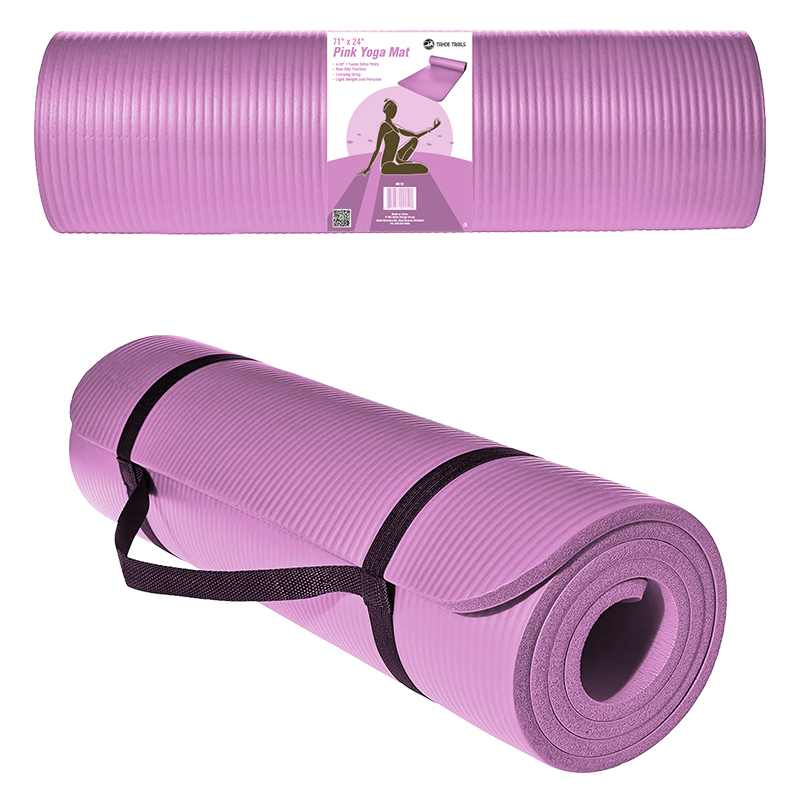
Yoga Mats
Source high-quality Yoga Mats from vetted manufacturers and suppliers across Asia. Designed for bulk importers, fitness distributors, and brands seeking reliable OEM or private-label production, our network delivers consistent quality at scale. Partner with top factories to meet your exact material, thickness, and compliance requirements.
Sourcing yoga mats at scale requires navigating a highly fragmented manufacturing base where unauthorized material substitution and inconsistent foaming densities can quickly derail a product line. For volume buyers, specifying the exact polymer blend, foaming process, and surface treatment is critical to ensuring grip, durability, and profit margins.
Material Specifications & Manufacturing Processes
The foundation of any yoga mat sourcing strategy is the core material. Factories specialize heavily based on the polymers they process, meaning a top-tier TPE (Thermoplastic Elastomer) manufacturer is rarely the right choice for premium PU (Polyurethane) and natural rubber mats.
When establishing your technical specifications with a factory, density and Shore hardness are just as critical as overall dimensions.
| Material Base | Typical Density | Manufacturing Method | Market Segment |
|---|---|---|---|
| TPE (Thermoplastic Elastomer) | 0.10 - 0.15 g/cm³ | Closed-cell thermal foaming | Mid-market retail |
| PU + Natural Rubber | 0.60 - 0.90 g/cm³ | Heat bonding / Lamination | Premium boutique & studio |
| High-Density PVC | 0.20 - 0.30 g/cm³ | Extrusion & foaming | Institutional & gym bulk |
| Cork + Rubber | 0.70 - 0.95 g/cm³ | Adhesive or heat pressing | Eco-conscious premium |
For TPE mats, specify a Shore C hardness of 20 to 25. Anything softer will compress too much under load, leading to joint pain for the end user and a perceived lack of quality. For PU/Rubber mats, the critical specification is the lamination method. Premium factories use high-frequency heat bonding to fuse the PU top layer to the rubber base, whereas lower-tier suppliers rely on toxic adhesives that degrade and peel over time.
Struggling with inconsistent material densities or lamination failures from your current supplier? We vet factories to ensure they have the precision equipment required for strict manufacturing tolerances.
Talk to our teamCustomization and OEM Branding
For brands executing private-label strategies, the customization method dictates both the factory selection and the unit economics. Leveraging OEM/ODM Services requires aligning your design needs with the factory's technical capabilities.
- Laser Engraving: The standard for premium PU mats. It burns away the top layer of polyurethane to reveal the rubber beneath, creating permanent, high-contrast alignment lines.
- UV Printing: Best for full-color, intricate designs on PU or suede-topped mats. Ensure the factory uses flexible, abrasion-resistant inks to prevent cracking when the mat is rolled.
- Screen Printing: The most cost-effective solution for TPE and PVC mats. Requires strict adhesion testing, as poor-quality curing leads to the logo flaking off after a few weeks of use.
Quality Control & Defect Prevention
Yoga mat production is highly sensitive to temperature and humidity, particularly during the foaming and curing stages. Implementing rigorous Quality Control & Inspection protocols before shipment is mandatory to catch dimensional instability and surface defects.
Critical In-Line & Pre-Shipment Inspection Points
- Thickness Tolerance: Must not exceed ±0.5mm variance across the entire surface area of the mat.
- Peel Strength (PU/Rubber): Conduct destructive testing on sample units to ensure the top layer cannot be separated from the base.
- Edge Cutting Precision: Check for frayed or uneven edges, indicative of dull die-cutting blades.
- Odor & Off-gassing: Ensure mats have undergone sufficient post-production ventilation to eliminate volatile organic compound (VOC) smells.
- Surface Tension/Grip: Perform slip tests under both dry and simulated wet (sweat) conditions.
MOQ, Lead Times, and Pricing Dynamics
Pricing in the yoga mat wholesale market is driven by petroleum costs (for TPE/PU/PVC), natural rubber commodity prices, and the complexity of the surface treatment.
If you are requesting custom die-cut shapes (e.g., oversized mats or unique corner radiuses), expect to pay a tooling fee and face higher initial MOQs to justify the setup time.
Need to lock in accurate pricing and production schedules for your next seasonal rollout? Let us map out a customized sourcing and negotiation strategy.
Get a free consultationRegulatory Compliance & Testing
Importing yoga mats into Western markets requires strict adherence to chemical safety standards. Heavy metals, phthalates, and harmful dyes are common in cheap PVC and poorly formulated TPE.
Validating your products through proper Compliance & Testing is non-negotiable. For the EU market, mats must pass REACH SVHC (Substances of Very High Concern) testing. For the US market, particularly California, compliance with Proposition 65 regarding phthalates (like DEHP, DBP, and BBP) and lead content is strictly enforced. Always require your manufacturing partner to provide recent, verifiable test reports from accredited third-party laboratories (like SGS or TÜV) for the specific material batch being used in your production run.
Successfully sourcing yoga mats relies on controlling the unseen variables—polymer density, bonding integrity, and chemical safety—long before the product is packed. By setting rigid specifications and validating them on the factory floor, buyers can secure a reliable supply chain that protects their brand reputation.
Get Sourcing Help for Yoga Mats
Tell us your requirements and our experts will connect you with verified manufacturers.