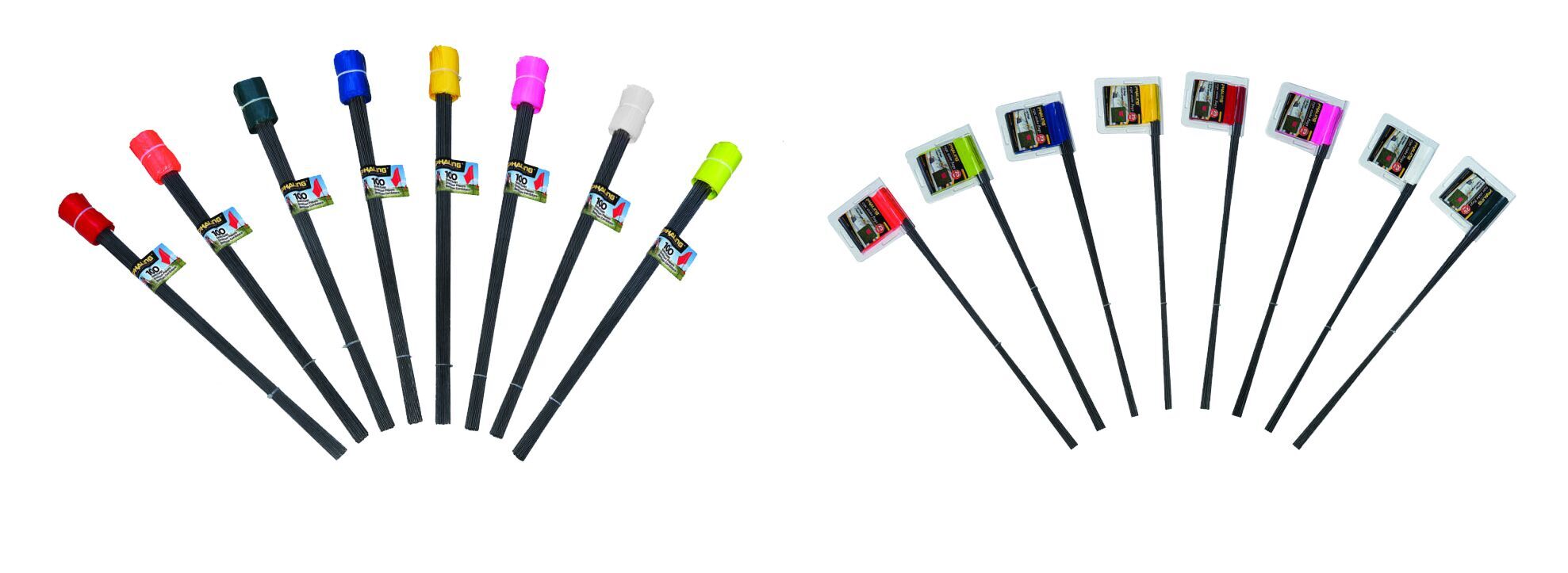
Yard Signs
Source premium Yard Signs from vetted suppliers and manufacturers in China and across Asia. Designed for importers, wholesalers, and brands seeking reliable OEM and private-label production. Ensure high-quality materials, UV-resistant printing, and scalable bulk manufacturing for real estate, events, and retail distribution.
Sourcing yard signs in commercial volumes requires balancing aggressive unit costs with reliable outdoor durability. Whether you are supplying national real estate networks, event management distributors, or retail hardware chains, the margin for error on material degradation and print fading is zero. Success in bulk procurement depends on locking down strict material specifications and ensuring your manufacturing partner has specialized extrusion and printing capabilities, rather than just subcontracting to general print shops.
Defining Core Material Specifications
The foundation of a durable yard sign lies in the substrate and its structural integrity. While visual design is important, the physical specifications dictate how the product will perform in wind, rain, and UV exposure.
Corrugated Plastic (Coroplast) Density
For the vast majority of temporary and semi-permanent yard signs, 4mm corrugated plastic is the standard. However, thickness alone does not guarantee strength. You must specify the GSM (Grams per Square Meter). A 4mm board can range from a flimsy 400 GSM to a rigid 700 GSM. For standard outdoor use with H-stakes, specifying a minimum of 600 GSM prevents the sign from folding in moderate winds.
Flute Orientation
This is a critical, often-missed specification. The internal flutes (the hollow channels inside the plastic) must run vertically if the sign is to be mounted on standard wire H-stakes. If a factory runs the flutes horizontally to optimize their material yield, the signs will be unusable with standard stakes.
| Substrate Material | Typical Thickness | Primary Application | Durability |
|---|---|---|---|
| Corrugated Plastic | 4mm (Standard) to 10mm | Real estate, campaigns, events | Medium (3-6 months outdoor) |
| Aluminum (Standard) | 0.040 to 0.080 inches | Permanent parking, regulatory | High (5+ years) |
| Aluminum Composite (ACM) | 3mm to 6mm | High-end real estate, commercial | Very High (7+ years) |
| PVC / Foamcore | 3mm to 6mm | Indoor events, covered outdoor | Low (Not weather resistant) |
Need to standardize your technical specifications and find a factory capable of meeting them consistently?
Talk to our teamPrinting Techniques and Quality Control
The printing method directly impacts both unit cost and longevity. Factory selection should be based on their in-house printing infrastructure.
- Screen Printing: Ideal for high-volume orders (over 5,000 units) with 1-3 spot colors. It offers excellent ink opacity and durability but requires separate setups for each color.
- UV Digital Flatbed Printing: Best for full-color photographic designs, gradients, or lower volume runs. The UV-cured inks sit on top of the substrate and offer excellent fade resistance.
If you are developing custom die-cut shapes or require specialized branding, utilizing professional OEM/ODM Services ensures the factory’s tooling and cutting machinery can handle complex profiles without fraying the plastic edges.
Critical Quality Checks
Printing on plastics requires specific surface tension. If the corrugated plastic is not corona-treated prior to printing, the ink will easily scratch or peel off.
Pre-Shipment Inspection Checklist for Yard Signs
- Cross-hatch adhesion test: Apply standard tape over a scored printed area to check for ink flaking.
- Flute orientation verification: Ensure flutes run vertically for stake insertion.
- Opacity check: Ensure double-sided signs do not show the reverse print when held up to the sun.
- Stake weld strength: Test the spot welds on galvanized steel H-stakes for snap resistance.
- Dimensional tolerance: Verify cutting precision is within +/- 2mm of the specified size.
Executing rigorous Quality Control & Inspection at the factory level before packaging is finalized is the only way to catch ink adhesion failures before the goods are loaded onto a vessel.
Freight Optimization and Hardware Packaging
Yard signs, particularly corrugated plastic ones, are essentially panels of trapped air. This makes them highly susceptible to volumetric weight charges in freight. Air shipping is generally cost-prohibitive for bulk orders, making sea freight the standard.
When coordinating Shipping & Freight, packaging strategy is vital. Signs should be packed flat in heavy-duty, double-wall corrugated master cartons to prevent edge crushing.
Handling H-Stakes: Standard 9-gauge galvanized steel stakes must never be packed in the same carton as the printed signs. The sharp edges of the steel will inevitably scratch the print or puncture the plastic during transit. Stakes should be bulk-packed in separate, reinforced cartons or wooden crates.
Typical MOQs, Pricing, and Lead Times
Pricing in this category is highly elastic based on volume, material GSM, and the number of printed colors.
Seasonal Production Spikes
Factories producing yard signs often experience severe capacity crunches during major US election cycles or spring real estate seasons. Secure production slots at least 90 days in advance of these peak periods.
Planning a high-volume seasonal order? Let us help you map out the production and freight timeline.
Get a free consultationFrequently Asked Questions
Procuring yard signs at scale is an exercise in strict specification management and logistics optimization. By defining exact material densities, mandating proper flute orientation, and enforcing rigorous pre-shipment ink adhesion tests, buyers can eliminate the most common failure points in this category.
Get Sourcing Help for Yard Signs
Tell us your requirements and our experts will connect you with verified manufacturers.