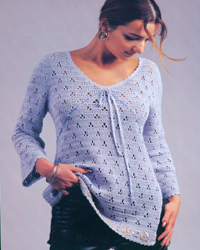
Women's Knit Tops
Source premium Women's Knit Tops from vetted suppliers and manufacturers across Asia. Designed for apparel importers, wholesalers, and fashion brands seeking reliable OEM/ODM production, this catalog connects you with factories capable of delivering high-volume, quality-controlled knitwear on schedule.
Sourcing women's knit tops at scale requires balancing yarn cost, knitting tension, and dimensional stability. The primary challenge in bulk knitwear production isn't simply finding a factory that can execute a design; it is identifying a partner capable of maintaining consistent gauge and sizing across thousands of units without succumbing to variations in yarn lots or machine calibration.
Technical Specifications and Yarn Selection
The foundation of any knit top is the yarn composition and the machine gauge (GG). Buyers must clearly specify these parameters, as they dictate both the hand-feel and the production cost.
- Gauge (GG): Fine knits for lightweight tops typically require 12GG to 16GG machines. Coarser, heavier tops use 3GG to 7GG. Ensure your supplier actually owns the appropriate machinery for your target gauge, rather than subcontracting it out.
- Yarn Composition: Stock yarns (like standard cotton/acrylic or viscose/nylon blends) offer faster lead times and lower MOQs. Custom-spun or dyed yarns (like specific merino wools or sustainable modal blends) require significantly higher minimums.
Struggling to find knitwear factories with the right machinery and yarn access? Let our experts match you with verified manufacturers.
Talk to our teamQuality Control in Knitwear Manufacturing
Knit tops are highly susceptible to manufacturing defects if tension and linking are not strictly controlled. A comprehensive quality control protocol is essential to catch these issues before shipment.
Critical QC Checks for Knit Tops
- Dimensional Stability: Testing for shrinkage or torque (twisting) after washing. Tolerance should be under 5 percent.
- Pilling Resistance: Verifying that the yarn blend withstands standard Martindale or Box Pilling tests.
- Linking Quality: Inspecting the seams where knitted panels are joined. Dropped stitches here lead to unraveling.
- Color Fastness: Ensuring dye lots are consistent and do not bleed, especially in high-contrast striped knits.
- Weight Consistency: Checking the gram weight per square meter (GSM) to ensure the factory hasn't thinned the knit to save yarn.
Conducting rigorous factory audits prior to production ensures the supplier has standard operating procedures for tension calibration and yarn storage—both critical for preventing sizing discrepancies.
Production Mechanics: MOQs, Pricing, and Lead Times
When developing custom knitwear through OEM/ODM services, pricing is driven primarily by yarn cost, knitting time (finer gauges take longer), and finishing processes.
If you require custom-dyed yarns (Lab Dips), expect MOQs to rise to 2,000 pieces or more, as dye houses enforce minimum vat capacities. To negotiate better pricing, consolidate your yarn colors across multiple styles.
Need to optimize your knitwear supply chain? We help negotiate MOQs, manage production schedules, and ensure quality compliance.
Get a free consultationFrequently Asked Questions
Successful knitwear sourcing comes down to controlling the variables before production begins. By locking in yarn specs, enforcing dimensional stability testing, and verifying factory machinery, you protect your margins and your brand's reputation.
Get Sourcing Help for Women's Knit Tops
Tell us your requirements and our experts will connect you with verified manufacturers.