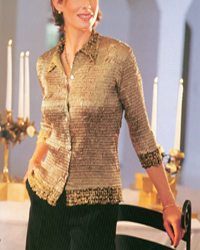
Women's Blouses & Shirts
Source premium Women's Blouses & Shirts from vetted suppliers and manufacturers across Asia. Designed for wholesale distributors, importers, and fashion brands seeking reliable OEM and private-label production, our network delivers scalable manufacturing, strict quality control, and competitive bulk pricing.
Sourcing women's blouses and shirts at scale requires balancing delicate fabric handling with precise garment construction. Whether you are developing complex silk blouses or high-volume cotton poplin workwear shirts, the primary challenge lies in maintaining consistent sizing across grading, managing fabric shrinkage, and ensuring flawless stitching during large production runs.
Technical Specifications and Fabric Sourcing
When issuing tech packs to apparel manufacturers, precision is critical. Blouses often utilize lightweight, fluid fabrics that are notoriously difficult to cut and sew consistently. Relying on generic terms like "polyester" or "cotton" will lead to unacceptable variations between batches. For brands utilizing OEM/ODM services, it is essential to specify yarn count, weave density, fabric weight, and required finishing treatments (such as mercerization or anti-wrinkle coatings) upfront.
| Fabric Category | Common Specifications | Manufacturing Challenge |
|---|---|---|
| Silk & Silk Blends | 12 to 19 momme | Seam slippage, requires specialized sewing machine feed dogs |
| Cotton Poplin | 100 to 130 GSM, 40s to 60s yarn | Dimensional stability (shrinkage), wrinkling during transit |
| Poly Chiffon/Georgette | 50 to 80 GSM | Puckering at seams, static cling during the cutting process |
Navigating fabric minimums and technical grading? Let Merhein manage your sampling and production process to ensure your specifications are met exactly.
Talk to our teamManufacturing Tolerances and Quality Control
The quality of a blouse is won or lost on the cutting table and the sewing line. Lightweight fabrics require sharp blades and careful tension control during cutting to prevent shifting, which otherwise leads to asymmetrical panels. During sewing, improper thread tension or the wrong needle size will cause seam puckering—a common defect in chiffon and silk garments that cannot be ironed out.
Implementing rigorous quality control and inspection protocols is non-negotiable. Standard AQL (Acceptable Quality Limit) inspections should be tailored to the specific vulnerabilities of woven tops.
Critical Inspection Points for Blouses & Shirts
- Seam puckering on lightweight fabrics (side seams and armholes)
- Symmetry of collars, cuffs, and front plackets
- Stitches Per Inch (SPI) verification (typically 12 to 14 SPI for standard shirts, up to 18 for premium)
- Buttonhole stitching density and clean thread trimming
- Dimensional stability after washing (shrinkage tolerance must be under 3 percent)
- Colorfastness to washing and dry rubbing (crocking)
Supplier Vetting and Regional Specialization
Not all apparel factories are equipped to handle lightweight woven tops. A factory specializing in heavy denim or knitwear will likely lack the specialized folders, fine needles, and skilled operators required for a sheer blouse.
In China, Guangdong province (specifically Shenzhen and Guangzhou) is renowned for high-end, complex women's fashion, including silk and delicate woven tops. Zhejiang and Jiangsu provinces offer massive capacity for standard woven shirts and poly-blends. When sourcing in volume, conducting thorough factory audits ensures your chosen supplier has the specific machinery, clean-room environments (crucial for white or light-colored fabrics), and social compliance certifications your market requires.
Buying Mechanics: MOQs, Pricing, and Lead Times
Apparel pricing is highly sensitive to order volume, fabric consumption (yield), and construction complexity. Minimum Order Quantities (MOQs) are usually dictated by the fabric mill rather than the cutting and sewing facility.
Need reliable capacity for your next seasonal collection? Merhein secures competitive pricing and strict QC with vetted apparel manufacturers.
Get a free consultationFrequently Asked Questions
Successfully sourcing women's blouses and shirts requires a deep understanding of fabric behavior and strict oversight on the factory floor. By partnering with experienced sourcing professionals, you can mitigate the risks of poor fit, fabric flaws, and delayed shipments, allowing your team to focus on design and sales.
Get Sourcing Help for Women's Blouses & Shirts
Tell us your requirements and our experts will connect you with verified manufacturers.