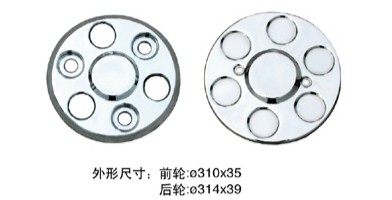
Wheel Dust Shields
Source high-quality wheel dust shields from vetted suppliers and manufacturers across Asia. Designed for automotive parts importers, wholesale distributors, and aftermarket brands looking for reliable bulk production and OEM/ODM manufacturing. Secure competitive pricing on precision-stamped, corrosion-resistant brake backing plates.
Sourcing wheel dust shields (also known as brake backing plates or splash guards) requires balancing high-volume stamping capabilities with strict dimensional tolerances. Because these components sit millimeters away from moving rotors and high-heat brake calipers, minor warping or inadequate surface treatments lead to immediate fitment issues, noise complaints, and premature rust. For bulk buyers, success depends on partnering with factories that maintain rigorous tooling maintenance and advanced coating lines.
Material Selection and Stamping Precision
The vast majority of aftermarket wheel dust shields are produced via deep-draw metal stamping. The material gauge and the precision of the die dictate the structural integrity of the final part. If the material is too thin, it vibrates and resonates at highway speeds; if the stamping die is worn, mounting holes will not align with the steering knuckle or axle housing.
| Material base | Core Characteristics | Typical Aftermarket Use |
|---|---|---|
| Stamped Carbon Steel | Cost-effective, requires robust anti-corrosion coating, excellent heat deflection. | Standard passenger vehicle OEM replacements. |
| Galvanized Steel | Inherent rust resistance, slightly higher raw material cost, durable. | Heavy-duty or winter-climate aftermarket lines. |
| Aluminum Alloy | Lightweight, naturally corrosion-resistant, higher tooling complexity. | Performance and sports vehicle applications. |
When assessing a stamping facility, pay attention to their press tonnage and automated feeding systems. Progressive die stamping is ideal for high-volume runs, but the factory must have a strict schedule for die sharpening to prevent burrs and edge deformation.
Struggling with inconsistent fitment or high tooling costs? Let our team connect you with vetted stamping facilities capable of precision automotive manufacturing.
Discuss your sourcing requirementsSurface Treatment and Corrosion Resistance
Because dust shields are constantly exposed to road salt, moisture, and extreme heat cycles, bare metal is not an option. The quality of the surface treatment is the primary differentiator between a premium aftermarket part and a high-return-rate liability.
Most reputable manufacturers utilize Electrophoretic Deposition (E-coating), often followed by a powder coat finish. E-coating ensures that even the deepest recesses and complex mounting flanges receive a uniform, rust-inhibiting layer.
Critical Quality Control Checks for Dust Shields
- Dimensional verification against OEM CAD data (focusing on mounting points and rotor clearance).
- Salt spray testing validation (minimum 500 hours for standard, up to 1000 hours for premium).
- Coating thickness measurement (using digital mil gauges to ensure uniform E-coat application).
- Flatness and warpage checks on a surface plate to ensure no bending occurred during stamping or cooling.
To prevent defective batches from leaving the factory, implementing strict Quality Control & Inspection protocols before shipment is essential. Verifying salt spray test reports and dimensional accuracy on-site saves significant headaches down the supply chain.
Tooling, MOQs, and Production Economics
The economics of sourcing wheel dust shields hinge heavily on tooling. If you are purchasing existing models for popular vehicle makes (e.g., standard Toyota or Ford replacements), factories often have open molds, allowing for lower Minimum Order Quantities (MOQs). However, if you are developing parts for niche vehicles, classic cars, or specialized performance applications, you will need to invest in custom tooling.
When engaging in custom production, utilizing structured OEM/ODM Services ensures that tooling ownership, maintenance terms, and exclusivity agreements are clearly defined in your manufacturing contract.
Need to develop custom tooling for a new line of dust shields? We manage the engineering, factory negotiation, and quality assurance from concept to container.
Talk to our teamSourcing Hubs and Supplier Verification
The bulk of automotive stamping and metal fabrication in China is concentrated in regions like Zhejiang (especially around Ruian and Ningbo), Jiangsu, and Hebei. While many trading companies list thousands of SKUs, only a fraction actually own the heavy stamping presses and in-house coating lines required for consistent quality.
Relying on comprehensive Factory Audits is crucial to verify whether a supplier is a true manufacturer or simply a final assembly/packaging operation. Audits should specifically target their tooling workshop, press maintenance logs, and environmental compliance for their coating facilities.
Sourcing wheel dust shields at scale requires a firm grip on metal stamping tolerances and coating chemistry. By prioritizing direct relationships with capable, audited manufacturers and enforcing strict dimensional QC, you can build a highly profitable, low-return product category.
Get Sourcing Help for Wheel Dust Shields
Tell us your requirements and our experts will connect you with verified manufacturers.