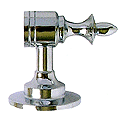
Wardrobe Hardware
Source premium Wardrobe Hardware from vetted suppliers and manufacturers across Asia. Designed for importers, distributors, and furniture brands seeking reliable OEM production and bulk purchasing, our network delivers high-performance components. Secure competitive pricing and consistent quality for your wholesale hardware supply chain.
Wardrobe hardware forms the functional and structural backbone of modern closet systems. From heavy-duty sliding track assemblies and soft-close hinges to extruded aluminum hanging rods and corner connectors, these components must deliver flawless mechanical performance while matching exact interior design aesthetics. For volume buyers, the primary sourcing challenge lies in managing finish consistency across different base materials (zinc, steel, and aluminum) and ensuring mechanical longevity under high-cycle daily use.
Core Material Specifications and Vulnerabilities
Specifying the correct base material and finish is critical. A common pitfall in bulk hardware sourcing is relying on visual samples rather than strict metallurgical and coating specifications. If a factory substitutes a lower-grade zinc alloy or reduces electroplating time, the hardware will suffer from premature oxidation, pitting, or structural failure.
| Base Material | Typical Wardrobe Application | Primary Sourcing Risk |
|---|---|---|
| Cold-Rolled Steel | Concealed hinges, drawer slides | Rusting if plating thickness is under 5 microns |
| Aluminum (6063-T5) | Hanging rods, sliding door tracks | Anodizing color mismatch across batches |
| Zinc Alloy (Zamak 3) | Handles, decorative brackets, connectors | Surface blistering from poor pre-plating polish |
| Stainless Steel (SUS304) | Premium hinges, exposed fasteners | Substitution with SUS201 leading to corrosion |
Struggling with inconsistent hardware finishes or mechanical failures? Let us handle the factory vetting and technical negotiations.
Talk to our teamManufacturing and Quality Control Checkpoints
The difference between premium and budget wardrobe hardware is won or lost in the polishing and plating stages, as well as the assembly of moving parts like hydraulic dampers. When auditing a factory, assess their automated plating lines and in-house testing capabilities.
If you are developing custom handles or proprietary track profiles, utilizing OEM/ODM Services requires strict oversight of the tooling process. Die-casting molds for zinc components degrade over time, leading to flashing and dimensional inaccuracies that ruin the final fit.
Critical Inspection Points
To prevent defective batches from leaving the factory, establish a rigorous Quality Control & Inspection protocol. Do not accept factory-provided test reports at face value.
Pre-Shipment Hardware Inspection Protocol
- Salt Spray Testing (NSS): Verify finishes withstand 24, 48, or 72 hours without red rust, depending on your market.
- Cycle Life Testing: Ensure soft-close hinges and slides pass a minimum of 50,000 open/close cycles.
- Coating Thickness: Measure electroplating or anodizing layers using X-ray fluorescence (XRF) to ensure they meet the specified micron count.
- Dimensional Tolerance: Check aluminum track extrusions against CAD drawings to ensure rolling carriages will not bind.
- Visual Color Matching: Evaluate anodized or powder-coated finishes under standardized lighting (e.g., D65) against signed master samples.
Pricing, MOQs, and Lead Times
Wardrobe hardware pricing is highly sensitive to global metal commodity indices (particularly zinc, aluminum, and steel) and environmental regulations affecting electroplating facilities in major manufacturing hubs like Guangdong and Zhejiang.
When negotiating prices, be aware that factories offering costs significantly below the market average are almost certainly reducing wall thickness (e.g., dropping aluminum rod thickness from 1.2mm to 0.8mm) or skipping critical pre-treatment baths in the plating process. Conducting thorough Factory Audits is the most effective way to verify a supplier's true production capability and quality management systems before placing volume orders.
Need to stabilize your hardware supply chain? We negotiate direct with vetted manufacturers to secure your margins and quality standards.
Get a free consultationFrequently Asked Questions
Consistently sourcing high-quality wardrobe hardware requires looking past the polished samples and digging into the factory's raw material sourcing, tooling maintenance, and plating controls. By defining strict technical specifications and maintaining localized oversight, volume buyers can eliminate costly defect rates and build a resilient hardware supply chain.
Get Sourcing Help for Wardrobe Hardware
Tell us your requirements and our experts will connect you with verified manufacturers.