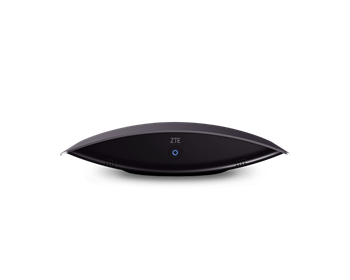
VoIP Products
Source high-performance VoIP Products from vetted suppliers and manufacturers across Asia. Designed for telecommunications distributors, IT hardware wholesalers, and brands seeking reliable OEM/ODM production, our verified factory network delivers enterprise-grade voice over IP solutions built for volume deployments.
Sourcing enterprise-grade VoIP hardware in volume requires navigating a complex intersection of acoustic engineering, network protocol stability, and silicon availability. Whether you are provisioning IP phones for a large corporate deployment or developing a private-label line of analog telephone adapters (ATAs) and SIP gateways, the core sourcing challenge remains the same: ensuring seamless interoperability and consistent audio quality without inflating unit costs.
To build a reliable VoIP supply chain, buyers must look past the external casing and evaluate a manufacturer's chipset partnerships, firmware development capabilities, and acoustic testing infrastructure.
Critical Specifications and Chipset Selection
The heart of any VoIP product is its System on a Chip (SoC) and digital signal processor (DSP). The chipset dictates the device's ability to handle high-definition voice codecs (like G.722 and Opus), manage concurrent SIP lines, and process acoustic echo cancellation (AEC) in real time.
When evaluating factory prototypes, the bill of materials (BOM) should clearly specify the silicon tier. Top-tier manufacturers maintain direct relationships with major silicon providers, ensuring stable supply and access to the latest SDKs for firmware updates.
| Hardware Tier | Target Application | Typical Silicon Focus |
|---|---|---|
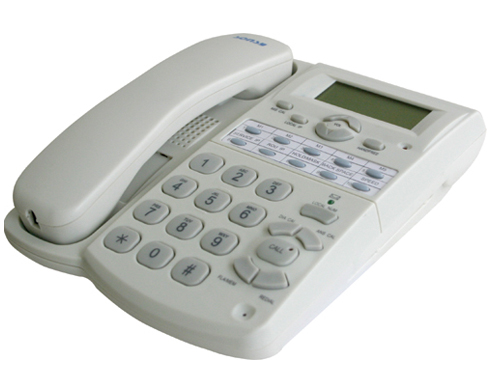
| Entry-Level SIP | Basic office, call centers | Cost-optimized SoCs (e.g., Realtek) |
| Enterprise / Mid-Range | Executive desks, multi-line | High-performance DSPs (e.g., Broadcom, MediaTek) |
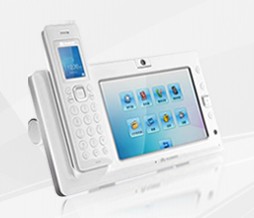
| Video & Android IP | Smart conferencing, video | Quad-core ARM processors (e.g., Rockchip, Qualcomm) |
Beyond the processor, buyers must define network and power specifications early. Specify whether the device requires dual Gigabit Ethernet ports or standard 10/100 Mbps, and ensure the Power over Ethernet (PoE) implementation complies strictly with IEEE 802.3af/at standards to prevent power draw issues during large deployments.
Need help verifying a manufacturer's technical capabilities and component sourcing? We can audit their supply chain before you commit.
Talk to our teamManufacturing and Firmware Customization
VoIP hardware production is not just about assembling plastics and PCBs; it is heavily software-dependent. Many B2B buyers require deep customization to lock devices to specific cloud PBX platforms or to streamline deployment for end-users.
If you are pursuing OEM/ODM Services, a capable factory should offer comprehensive firmware customization. This includes modifying the user interface, integrating specific VPN clients (like OpenVPN), and hardcoding Auto-Provisioning (TR-069, RPS) URLs so the devices configure themselves upon connecting to the internet.
Factory Floor Quality Control
Quality is won or lost during PCB assembly and acoustic tuning. A rigorous Quality Control & Inspection protocol is mandatory to prevent high defect rates in the field.
Essential VoIP QC Checkpoints
- Automated Optical Inspection (AOI) on the SMT line to detect cold solder joints on the SoC and RAM.
- Acoustic chamber testing to verify handset and speakerphone frequency response and echo cancellation.
- Automated SIP registration testing to confirm network stack stability.
- PoE load testing to ensure thermal stability under continuous power draw.
- Button lifecycle testing (especially for hook switches and keypad membranes).
Pricing, MOQs, and Lead Times
VoIP manufacturing operates on tight margins, heavily influenced by global silicon pricing and memory costs. Negotiating effectively requires understanding standard production metrics.
Standard off-the-shelf SIP phones with basic white-labeling (logo printing and packaging) usually require MOQs of 500 units. For fully custom tooling (ODM) or deep firmware rewrites, expect MOQs to start at 2,000 units to offset the factory's R&D allocation.
Looking for competitive pricing and realistic lead times for your next VoIP deployment? Let us negotiate on your behalf.
Get a free consultationFrequently Asked Questions
Successfully sourcing VoIP products requires balancing hardware reliability with software flexibility. By partnering with manufacturers that possess strong R&D teams and stringent acoustic testing protocols, you can deploy hardware that performs flawlessly in demanding enterprise environments. If you need boots on the ground to vet suppliers and oversee production, our team is ready to assist.
Get Sourcing Help for VoIP Products
Tell us your requirements and our experts will connect you with verified manufacturers.