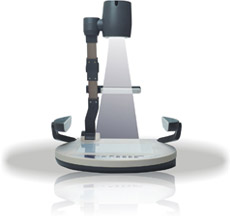
Visual Presenters
Source high-quality visual presenters and document cameras in bulk directly from vetted manufacturers. Designed for importers, AV distributors, and brands seeking OEM/private-label production, our verified suppliers deliver precision optics, reliable connectivity, and competitive wholesale pricing.
Visual presenters—commonly known as document cameras—require a tight integration of optical hardware, mechanical design, and digital connectivity. For volume buyers, the sourcing challenge isn't just finding a factory that can assemble a CMOS sensor and a lens. It is securing a manufacturing partner capable of delivering consistent autofocus performance, stable firmware, and durable articulated joints across thousands of production units without defect rate spikes.
Core Specifications and Optical Hardware
The performance of a visual presenter is dictated by its sensor, image signal processor (ISP), and lens assembly. When specifying requirements with a manufacturer, clarity on these components prevents costly misunderstandings.
- Sensor Selection: The market standard has shifted to 8MP (megapixels) for baseline 4K resolution, with premium models utilizing 13MP or higher sensors from manufacturers like Sony (IMX series) or OmniVision. Sensor size (e.g., 1/3.2-inch vs. 1/2.8-inch) directly impacts low-light performance, which is critical for dimly lit presentation environments.
- Frame Rate & Resolution: A true 4K output should support at least 30fps to avoid motion blur when displaying live demonstrations. Lower-tier ISPs may bottleneck 4K output to 15fps, which is unacceptable for professional AV markets. Specify 60fps for 1080p outputs.
- Optical vs. Digital Zoom: Standard models rely on digital zoom, degrading image quality as magnification increases. Premium models incorporate optical zoom lenses (e.g., 10x or 12x), requiring complex mechanical lens arrays and significantly increasing the BOM (Bill of Materials) cost.
| Feature | Entry-Level (Education) | Professional (Corporate/AV) |
|---|---|---|
| Sensor Resolution | 5MP - 8MP | 13MP+ (True 4K) |
| Zoom Capability | Digital Only | 10x - 17x Optical Zoom |
| Connectivity | USB 2.0 / USB-C | HDMI, USB 3.0, Wi-Fi, Miracast |
| Frame Rate | 15fps at 4K / 30fps at 1080p | 30fps at 4K / 60fps at 1080p |
Struggling to find a supplier that meets your exact optical specifications? Let us match you with a vetted manufacturer.
Talk to our teamMechanical Design and Durability
The physical housing and arm mechanism are frequent points of failure. Manufacturers generally offer two arm styles: gooseneck and articulated (mechanical joint).
Gooseneck designs are cost-effective and flexible but are prone to "droop" over time if the internal metal coil loses tension. Articulated arms use mechanical hinges, which provide superior stability but require precise torque calibration during assembly. If the hinge torque is too loose, the camera head will not hold its position; if too tight, the plastic housing may crack under user strain.
When developing a new product, utilizing specialized OEM/ODM Services ensures that custom tooling for these mechanical joints is engineered for high lifecycle durability.
Quality Control and Line Testing
Visual presenters are highly susceptible to assembly-line variances. A misaligned lens element or a poorly soldered USB port can render a unit defective. Implementing rigorous Quality Control & Inspection protocols is non-negotiable.
Critical QC Checks for Visual Presenters
- Autofocus Speed & Hunting: Test the camera's ability to lock focus swiftly without continuous 'hunting' when objects are moved under the lens.
- Color Rendition: Verify color accuracy using a standard Macbeth chart under varying LED brightness levels.
- Hinge Lifecycle Testing: Require mechanical stress tests (e.g., 5,000+ folding cycles) to ensure torque retention.
- EMI/EMC Compliance: Ensure internal shielding is sufficient to prevent the ISP from causing electromagnetic interference, crucial for CE/FCC certification.
- Firmware Stability: Test continuous video output over USB and HDMI for a minimum of 24 hours to check for thermal throttling or driver crashes.
Before committing to a high-volume production run, conducting thorough Factory Audits helps verify that the supplier has the necessary cleanroom environments for lens assembly and the testing equipment required to validate these metrics.
Typical MOQs, Pricing, and Lead Times
Pricing for visual presenters varies dramatically based on optical zoom capabilities, connectivity options, and housing materials.
Note: Custom tooling for new mechanical designs (ODM) will increase lead times by 30 to 45 days for mold creation and validation.
Ready to optimize your supply chain and negotiate better terms? Speak with our sourcing experts today.
Get a free consultationFrequently Asked Questions
Sourcing visual presenters requires a careful balance of optical precision and mechanical reliability. By defining strict specifications early and holding factories accountable through rigorous in-line testing, buyers can secure high-performance AV equipment that meets professional market standards.
Get Sourcing Help for Visual Presenters
Tell us your requirements and our experts will connect you with verified manufacturers.