USB Flash Drives
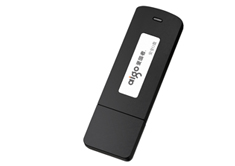
Source bulk USB flash drives from vetted suppliers and manufacturers across Asia. Designed for electronics importers, corporate distributors, and hardware brands seeking reliable OEM and private-label production. Secure competitive wholesale pricing on high-volume storage devices backed by rigorous quality assurance.
Sourcing USB flash drives at scale is an exercise in component verification. The external housing is merely a shell; the true value, speed, and reliability of the drive lie entirely in the NAND flash memory tier and the controller used. For volume buyers, navigating the Asian storage manufacturing market requires strict specification controls to avoid the downgraded or "capacity-upgraded" chips that frequently plague the wholesale tier.
The Core Architecture: NAND Flash and Controllers
A USB flash drive consists of two critical internal components: the NAND flash memory chip (which stores the data) and the controller (which manages data transfer between the NAND and the host device). When negotiating with manufacturers, failing to specify the exact grade of these components will almost certainly result in receiving inferior "ink die" or salvaged parts.
NAND Quality Tiers
Manufacturers source flash memory in different grades. Good Die (Tier 1) chips are fully tested and branded by original makers like Samsung, Toshiba, or Micron. Downgraded Die (often called "ink die" because defective chips are marked with ink on the wafer) have failed some QA tests but are still functional at lower capacities or speeds. Black/Remarked Die are salvaged chips pulled from recycled electronics, offering terrible reliability.
| NAND Architecture | Typical P/E Cycles | Cost Profile | Best Application |
|---|---|---|---|
| SLC (Single-Level Cell) | Up to 100,000 | Premium | Industrial, Mission-Critical Data |
| MLC (Multi-Level Cell) | 3,000 to 10,000 | High | High-End Consumer, Enterprise |
| TLC (Triple-Level Cell) | 300 to 1,000 | Moderate | Standard Promotional, Retail Bulk |
| QLC (Quad-Level Cell) | Under 150 | Lowest | Budget Giveaways, Read-Heavy Use |
Need to secure Tier 1 flash memory for your next bulk order? We verify component sourcing directly at the factory level.
Talk to our teamAssembly Types: PCBA vs. UDP
Factories assemble USB drives using two primary methods, depending on the housing design and performance requirements.
PCBA vs. UDP Assembly
Advantages
- PCBA (Printed Circuit Board Assembly): Better heat dissipation, essential for high-speed USB 3.2 Gen 1/Gen 2 controllers.
- PCBA: Allows for dual-interface designs (e.g., USB-A + Type-C OTG drives).
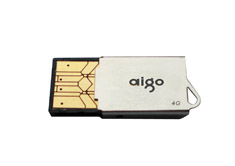
- UDP (USB Disk in Package): Extremely compact, combining the controller and flash into a single sealed unit.
- UDP: Inherently waterproof, shockproof, and dustproof due to the solid epoxy encapsulation.
Disadvantages
- PCBA: Requires larger physical housings; susceptible to water and physical shock damage.
- UDP: Poor heat dissipation makes it unsuitable for sustained high-speed data transfers.
- UDP: Impossible to repair or recover data from if the controller fails.
Quality Control and the "Fake Capacity" Threat
The most prevalent risk when sourcing wholesale USB drives is "upgrade capacity" fraud. Unscrupulous suppliers hack the drive's firmware controller to report a higher capacity to the operating system than the physical NAND chip possesses. For example, an 8GB drive is programmed to display as 64GB. The drive will appear normal until the user attempts to write over 8GB of data, at which point the drive loops back, overwriting and corrupting the earlier files.
Firmware Verification is Mandatory
Never rely on the operating system's property dialogue to verify capacity. Always require H2testw or similar sector-by-sector write/read verification during pre-shipment inspections.
Implementing strict Quality Control & Inspection protocols is non-negotiable. Your QC checklist should include:
Pre-Shipment Inspection Focus Areas
- H2testw full-capacity write/read testing on a randomized statistical sample (AQL).
- CrystalDiskMark testing to verify sustained read/write speeds match the quoted USB 2.0 or 3.0/3.2 specifications.
- Visual inspection of the PCBA to ensure no recycled (remarked) NAND chips are used.
- Insertion and extraction cycle testing for port durability and housing integrity.
Customization and OEM Production
For brands, the external housing is where product differentiation happens. Most factories offer extensive OEM/ODM Services, allowing for custom tooling.
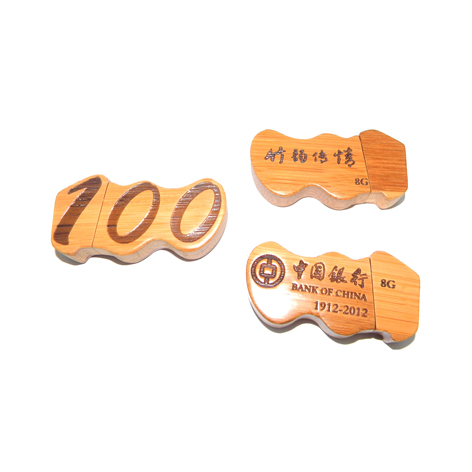
Common housing materials include ABS plastic (cheapest, easiest to color-match via Pantone), zinc alloy (premium weight, supports laser engraving), and custom-molded PVC. PVC is particularly popular for promotional items, as factories can create complex 2D or 3D shapes (like a brand mascot or miniature product) with relatively low tooling costs.
Pricing Dynamics, MOQs, and Lead Times
Unlike most consumer electronics, USB flash drive pricing is highly volatile. Flash memory trades as a commodity, and spot market prices fluctuate daily based on global supply and demand. A quote provided by a manufacturer is typically only valid for 3 to 5 days.
When evaluating suppliers, it is crucial to conduct proper Factory Audits to distinguish between true assemblers with SMT lines and pure trading companies marking up spot-market drives.
Tired of fluctuating quotes and inconsistent chip quality? Let us manage your flash storage supply chain from procurement to final delivery.
Get a free consultationBuyer FAQ
Successfully sourcing USB flash drives requires looking past the outer shell and tightly controlling the bill of materials. By specifying NAND grades, demanding rigorous sector testing, and understanding daily spot-market pricing, volume buyers can secure reliable storage hardware that protects both user data and brand reputation.
Get Sourcing Help for USB Flash Drives
Tell us your requirements and our experts will connect you with verified manufacturers.