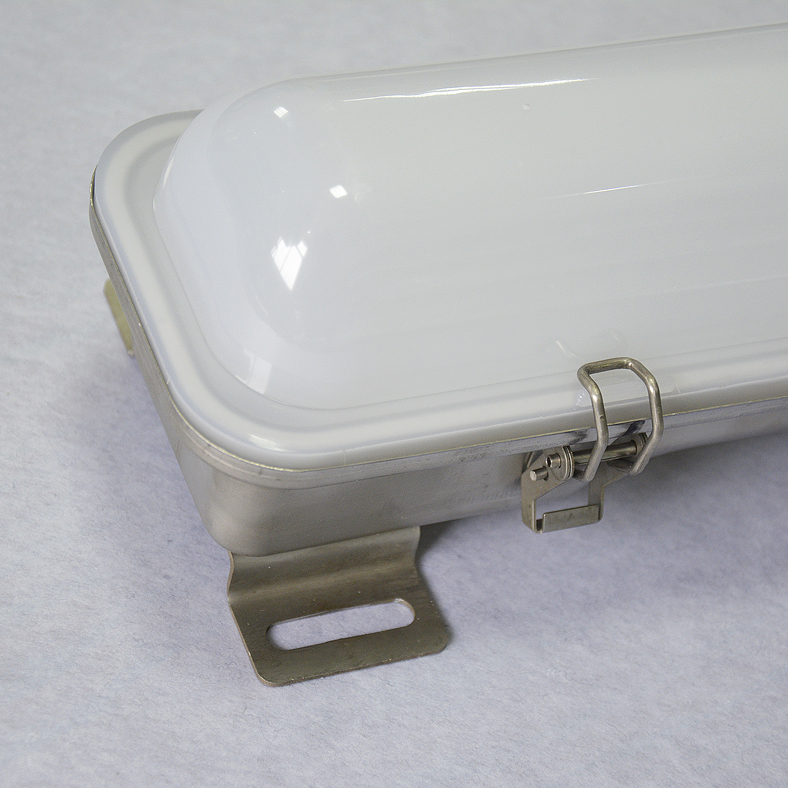
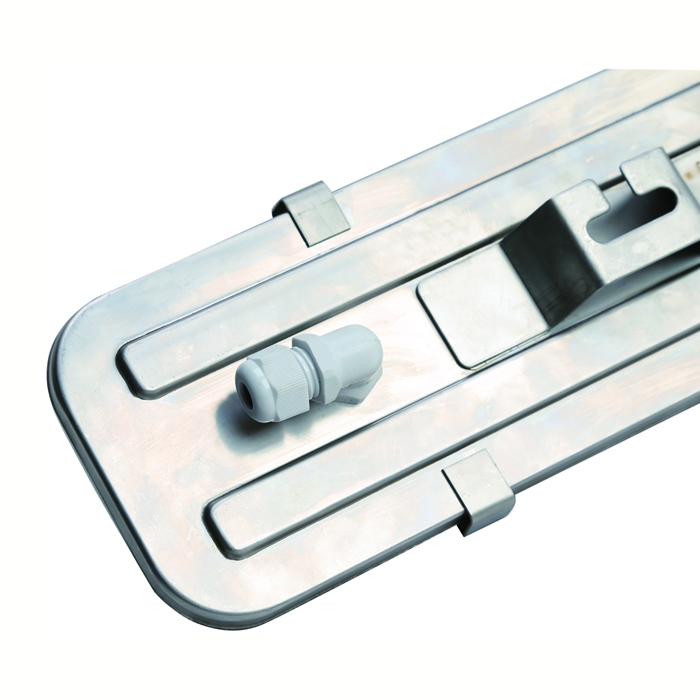
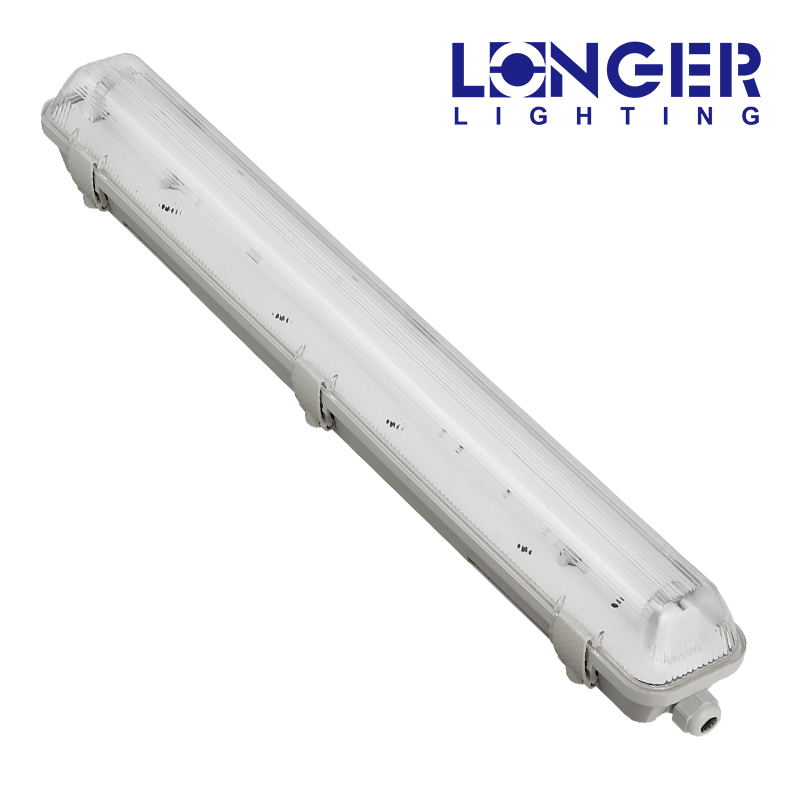
Tri-Proof Lights
Source commercial-grade Tri-Proof Lights directly from vetted manufacturers and suppliers in Asia. Designed for importers, electrical distributors, and lighting brands requiring reliable OEM and private-label production. Secure bulk pricing on IP65, IP66, and IP69K fixtures built for harsh industrial environments.
Sourcing tri-proof lights in bulk presents a specific set of challenges. Because these fixtures are deployed in unforgiving environments—parking garages, food processing plants, car washes, and agricultural facilities—failure rates directly impact your reputation and warranty overhead. The sourcing objective is not simply finding a factory that claims IP65 or IP66 compliance, but verifying that their material selection, extrusion processes, and thermal management will actually sustain a 50,000-hour lifespan without housing degradation or driver failure.
Material Selection: Housing and Extrusion Dynamics
The term "tri-proof" (waterproof, dustproof, and corrosion-proof) relies heavily on the mechanical integrity of the housing. Chinese manufacturers typically offer three main material combinations for the base and diffuser. Specifying the wrong material for your target market's application will lead to premature yellowing, cracking, or chemical degradation.
| Material Combination | Impact Resistance | Chemical Resistance | Best Application |
|---|---|---|---|
| PC Base + PC Diffuser | High (up to IK10) | Moderate | Standard industrial, parking garages, warehouses |
| ABS Base + PC Diffuser | Medium (IK08) | Low | Cost-sensitive indoor applications, mild environments |
| PMMA Base + PMMA Diffuser | Low (IK06) | Excellent (Ammonia-resistant) | Poultry farms, livestock, harsh chemical processing |
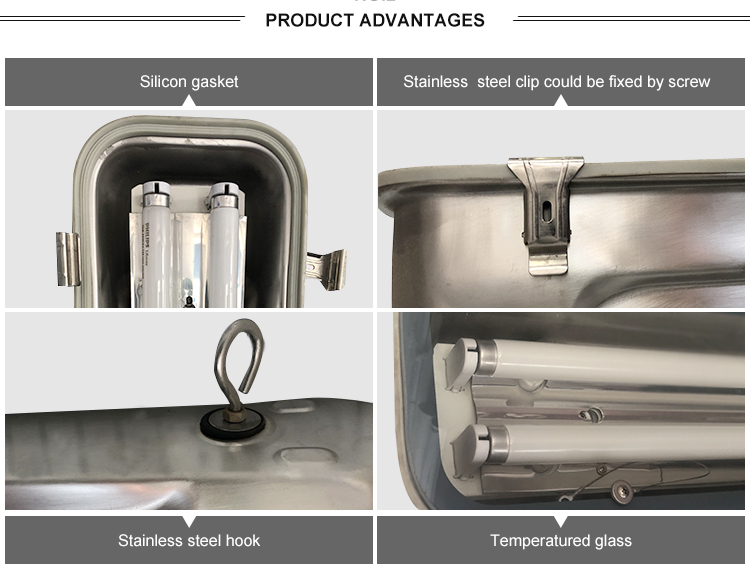
Beyond the primary housing, pay close attention to the sealing gaskets. High-quality fixtures utilize seamless, machine-poured silicone gaskets rather than manually inserted rubber strips, which are prone to shrinking and compromising the IP rating over time.
Need help verifying factory material specs and extrusion quality? We can audit suppliers to ensure they meet your technical requirements.
Talk to our teamCritical Factory Quality Control Checkpoints
When evaluating a manufacturer's capability, their internal testing protocols reveal their true quality standards. A reliable factory should not rely solely on final assembly checks; they must conduct rigorous in-line testing. If you are managing this remotely, implementing robust Quality Control & Inspection procedures is non-negotiable.
Essential Tri-Proof Lighting Factory Tests
- Integrating Sphere Testing: Verifying luminous efficacy (lm/W), color rendering index (CRI), and color temperature consistency.
- IP Rating Verification: Submersion tanks for IP67/IP68 and high-pressure hot water spray booths for IP69K compliance.
- IK Pendulum Impact Testing: Striking the PC diffuser with standardized steel weights to confirm IK08 to IK10 ratings.
- Accelerated Aging Test: A minimum 24-to-48-hour burn-in period at elevated temperatures to identify early driver or LED chip failures.
- Hi-Pot (Dielectric Withstand) Testing: Ensuring electrical insulation integrity, critical for metal-clip or aluminum-backed fixtures.
OEM/ODM Customization and Smart Integrations
For brands looking to differentiate, standard on/off fixtures are often insufficient. Most top-tier factories offer extensive OEM/ODM Services to integrate smart lighting controls directly into the fixture housing.
Common customizations include built-in microwave motion sensors, daylight harvesting photocells, and DALI-2 or 0-10V dimming drivers. Additionally, emergency battery backups (providing 90 to 180 minutes of illumination at reduced wattage) are frequently requested for commercial building compliance. When adding these features, ensure the factory maintains strict Compliance & Testing standards, as integrated batteries and sensors complicate CE, RoHS, UL, and DLC certifications.
Typical MOQs, Pricing, and Lead Times
Pricing for tri-proof lights is highly elastic, driven primarily by the brand of the LED driver (e.g., Mean Well, Osram, Tridonic vs. generic Chinese brands), the luminous efficacy of the LED chips (standard 130 lm/W vs. premium 160+ lm/W), and the thickness of the polycarbonate housing.
When negotiating, be wary of prices that fall significantly below the market average. Cost-cutting in this category usually manifests as thinner PC extrusions (which warp under thermal stress), under-driven generic LED chips, or non-isolated drivers.
Protect your margins and your reputation. Let us negotiate pricing and manage production with pre-vetted lighting manufacturers.
Get a free consultationFrequently Asked Questions
Sourcing reliable industrial lighting requires looking past the spec sheet and understanding the manufacturing tolerances that dictate real-world performance. By validating material inputs and enforcing strict in-line testing, you can secure fixtures that deliver both competitive margins and zero-headache installations. Thorough Factory Audits and active production management remain your best defense against inconsistent quality.
Get Sourcing Help for Tri-Proof Lights
Tell us your requirements and our experts will connect you with verified manufacturers.