Transmission Belts
Source industrial transmission belts directly from vetted manufacturers and suppliers. This catalog is built for importers, industrial distributors, and brands requiring reliable OEM and private-label production in bulk, ensuring high-quality power transmission components at verified factory pricing.
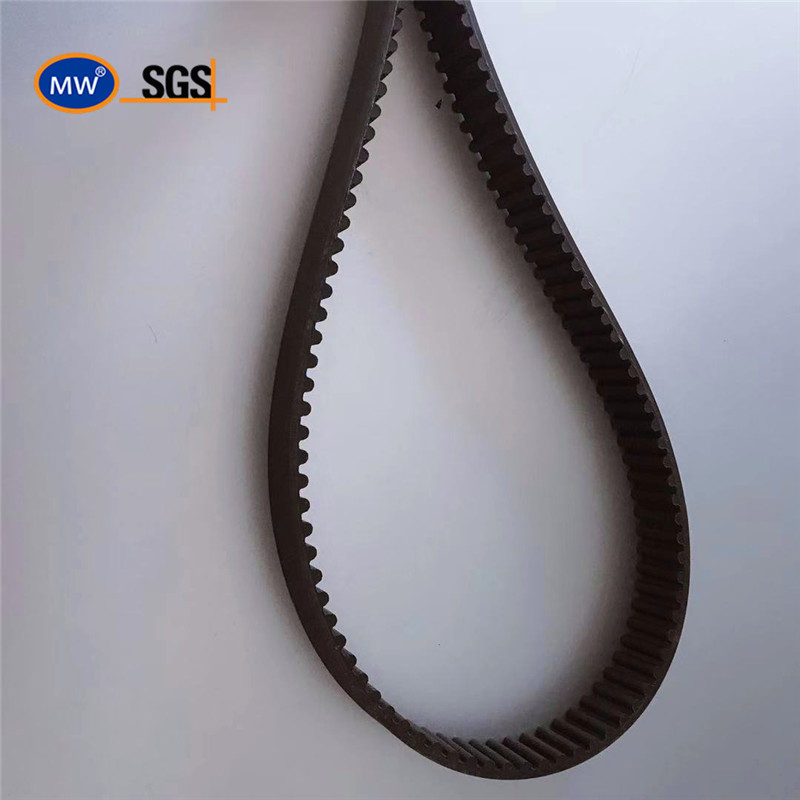
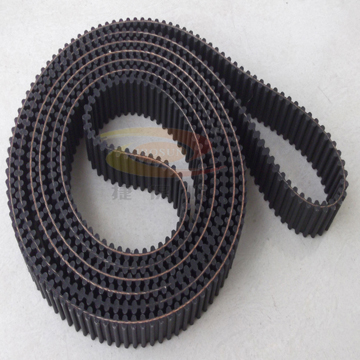
Sourcing industrial transmission belts at volume requires balancing tensile strength, compound durability, and strict dimensional stability. Whether you are procuring standard V-belts for agricultural machinery or custom polyurethane timing belts for precision automation, factory selection dictates product lifespan. A substandard belt doesn't just fail; it causes costly downtime for the end user.
Defining Core Belt Specifications
When communicating with manufacturers, vague specifications lead to inconsistent batches. Professional buyers must dictate the exact material composition of both the base compound and the tensile cord, as these dictate the belt's load capacity, flexibility, and thermal resistance.
| Material Compound | Primary Characteristics | Typical Applications |
|---|---|---|
| Chloroprene (CR / Neoprene) | Standard oil/heat resistance, good flex fatigue | General industrial machinery, HVAC |
| EPDM | Superior temperature range (-40 to 130C), ozone resistant | Automotive, outdoor agricultural equipment |
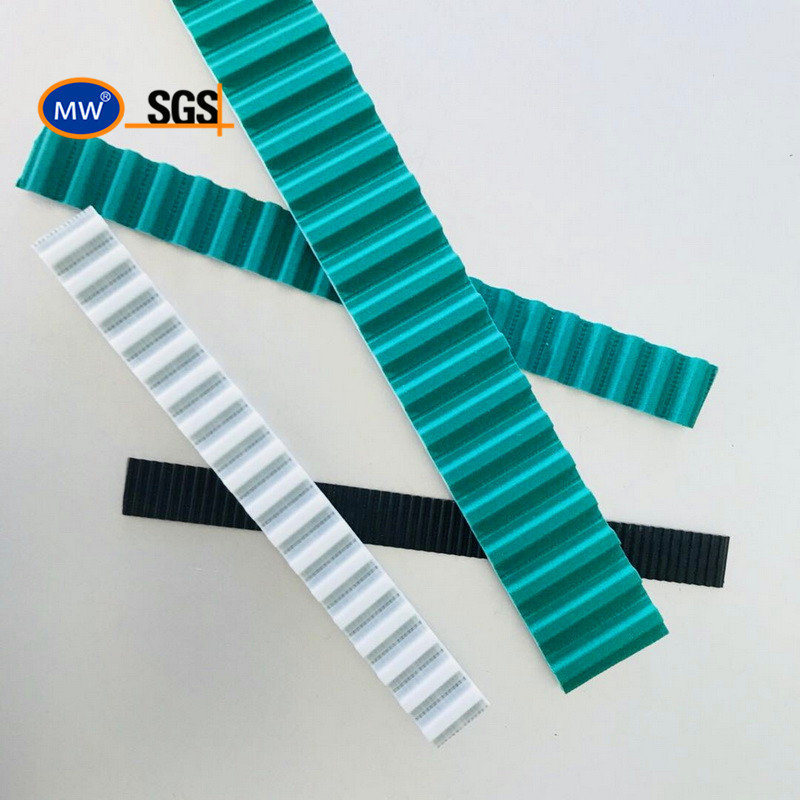
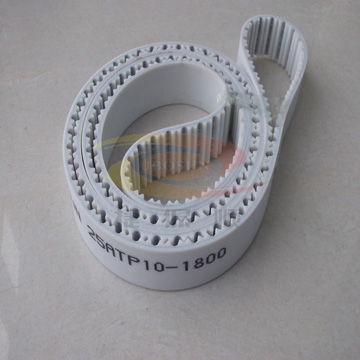
| Polyurethane (PU) | High abrasion resistance, non-marking, rigid | Food processing, precision robotics, packaging |
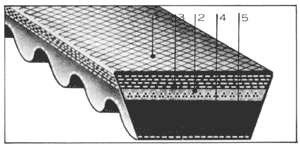
Beyond the base rubber or polymer, the tensile cord material is the backbone of the belt. Standard applications utilize polyester cords, which offer a good balance of strength and slight elasticity to absorb shock loads. For high-torque or heavy-shock applications, aramid (Kevlar) cords are necessary. For synchronous (timing) belts where zero stretch is mandatory, fiberglass or steel cords must be specified.
Need help matching belt specifications to a capable manufacturer? Let's discuss your technical requirements.
Talk to our teamManufacturing Variables and Quality Control
The production of transmission belts—particularly rubber variants—involves calendering, building, vulcanization, and cutting. Quality is easily lost during the building phase if the tensile cords are wound with uneven tension, leading to belts that track poorly or snap prematurely.
To mitigate these risks, conducting thorough Factory Audits before placing high-volume orders is critical. You need to verify that the supplier uses automated tensioning systems rather than manual winding.
Critical Pre-Shipment Inspection Points
- Pitch length tolerance: Must align with ISO or DIN standards for matched sets.
- Cord adhesion testing: Ensuring the tensile cord does not delaminate from the base compound under flex.
- Profile dimensions: Checking the top width, thickness, and angle (e.g., 40 degrees for standard V-belts).
- Surface finish: Inspecting for blisters, porosity, or uneven fabric wrapping on the belt jacket.
Implementing rigorous Quality Control & Inspection during the production run and prior to shipment is the only way to catch dimensional variations before the belts enter your supply chain.
Sourcing Mechanics: MOQs, Pricing, and Lead Times
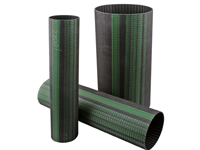
Transmission belts are typically manufactured in wide cylindrical "sleeves" before being cut to the specified width. Therefore, Minimum Order Quantities (MOQs) are rarely based on individual belts; they are based on the yield of a single production sleeve or the minimum batch size of the rubber mixer.
- Typical MOQs: For standard sizes, expect MOQs around 50 to 100 sleeves per size (which can yield hundreds or thousands of individual belts depending on the width). For custom lengths or specialized compounds, MOQs often start at 2,000 to 3,000 meters of total production length.
- Tooling Costs: If you require a proprietary tooth profile or a custom molded ribbed belt, you will need to invest in custom molds. Tooling for standard belt molds typically ranges from $500 to $1,500 per size.
- Lead Times: Standard production runs take 25 to 40 days. If custom compounding or new molds are required, add an additional 15 to 20 days for sampling and approval.
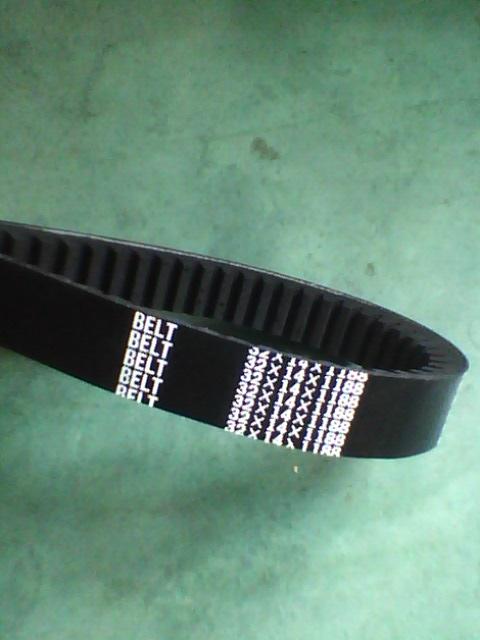
If you are developing a proprietary drive system, utilizing OEM/ODM Services allows you to secure custom branding (e.g., your logo vulcanized or printed on the belt jacket) and tailored performance characteristics.
Ready to optimize your supply chain and negotiate better factory terms? Connect with our sourcing experts.
Get a free consultationFrequently Asked Questions
Successfully sourcing transmission belts requires looking past the unit price and evaluating the factory's compounding expertise and quality control infrastructure. Partnering with suppliers who understand the rigorous demands of industrial power transmission ensures your products perform reliably in the field.
Get Sourcing Help for Transmission Belts
Tell us your requirements and our experts will connect you with verified manufacturers.