Transistors
Source high-quality transistors from vetted suppliers and manufacturers across Asia. This catalog is designed for electronics manufacturers, distributors, and procurement managers buying discrete semiconductors in bulk. Secure competitive pricing and reliable supply for your OEM production lines.
Sourcing discrete semiconductors at scale requires navigating a volatile market of fluctuating lead times, varying wafer yields, and the ever-present risk of die substitution. Whether you are securing supply for consumer electronics, automotive modules, or industrial power supplies, ensuring consistency across millions of units—while keeping BOM costs down—is the primary procurement challenge.
When moving away from broadline catalog distributors to direct factory sourcing, the margin for error shrinks. Success depends on airtight specifications, rigorous facility vetting, and strict pre-shipment testing.
Defining Specifications for Direct Factory Sourcing
Tier-2 and Tier-3 semiconductor fabs in China and Taiwan offer excellent cost-to-performance ratios, often producing exact cross-reference equivalents to major Western brands. However, to avoid receiving substandard silicon, your RFQ must go beyond basic part numbers.
Critical RFQ Parameters for Transistors
- Maximum Ratings: Specify absolute maximums for Collector-Emitter Voltage (Vceo), Continuous Collector Current (Ic), and Power Dissipation (Pd).
- Gain and Switching: Define acceptable ranges for DC Current Gain (hFE) and transition frequency (fT).
- Thermal Characteristics: Specify required Junction Temperature (Tj) limits and thermal resistance.
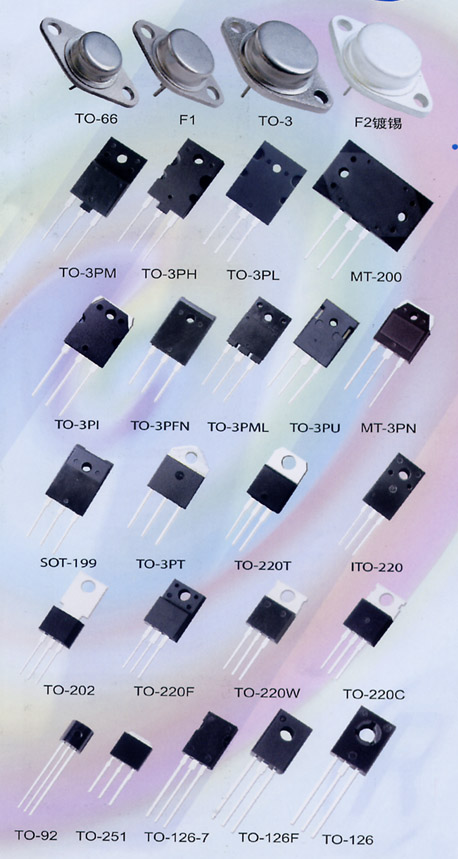
- Packaging Requirements: Exact package type (e.g., SOT-23, TO-220, TO-92) and pinout configuration.
- Tape and Reel Specs: Specify reel diameter and pitch for compatibility with your SMT pick-and-place machines.
Struggling to find reliable cross-reference replacements for allocated parts? Let us help you identify and vet capable semiconductor fabs.
Talk to our teamManufacturing Risks and Quality Control
The physical reliability of a transistor is largely determined during the back-end assembly process—specifically die attachment, wire bonding, and encapsulation. Poorly controlled factories often struggle with voiding in the die attach epoxy or inconsistent wire bond loops, which lead to thermal failures in the field.
Before committing to a high-volume order, running comprehensive Factory Audits is essential. You need to verify that the facility utilizes automated optical inspection (AOI) on their wire bonding lines and maintains strict cleanroom standards.
The Risk of Die Substitution
A common issue with unvetted suppliers is "die shrinking" or substitution. A factory might use a smaller silicon die inside a standard TO-220 package to save costs. It will pass basic low-load testing but fail under maximum thermal dissipation. Rigorous lot testing is required to catch this.
To mitigate these risks, implement strict Quality Control & Inspection protocols. This should include curve tracer verification of electrical characteristics and, for high-reliability applications, destructive physical analysis (DPA) to inspect wire bond integrity.
MOQs, Packaging, and Lead Time Realities
Transistor pricing is highly sensitive to raw material costs (silicon wafers, copper lead frames) and production volume. Buying direct from manufacturers means adhering to specific packaging multiples.
Lead times in the semiconductor market are notoriously cyclical. During allocation periods, lead times can stretch significantly. Smart procurement teams utilize robust Supply Chain Management strategies, establishing buffer stocks and staggered delivery schedules to protect their production lines from sudden shortages.
| Sourcing Method | Cost Efficiency | Lead Time Stability | Customization |
|---|---|---|---|
| Catalog Distributors | Low | High (if in stock) | None |
| Direct Tier-1 Fabs | Moderate | Low (prone to allocation) | High volume only |
| Vetted Tier-2 Asian Fabs | High | Moderate to High | Flexible |
Need to stabilize your component supply chain? We negotiate factory-direct pricing and manage production schedules to keep your lines running.
Get a free consultationFrequently Asked Questions
Transitioning to direct factory sourcing for discrete semiconductors is one of the most effective ways to reduce your overall BOM cost. By strictly defining your electrical parameters, auditing the back-end assembly process, and maintaining rigorous lot testing, you can secure reliable, high-volume supply without compromising on component lifespan.
Get Sourcing Help for Transistors
Tell us your requirements and our experts will connect you with verified manufacturers.