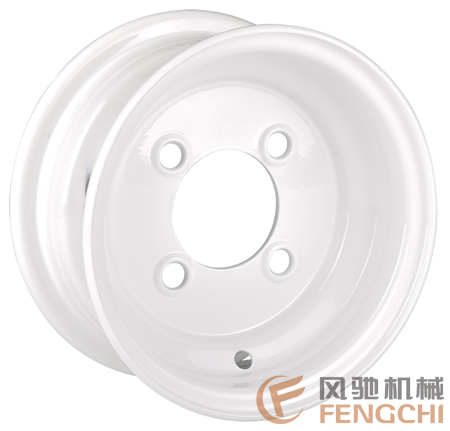
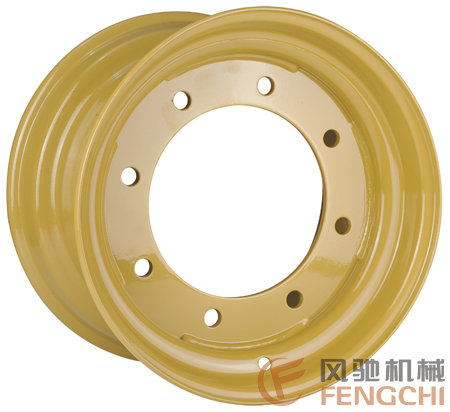
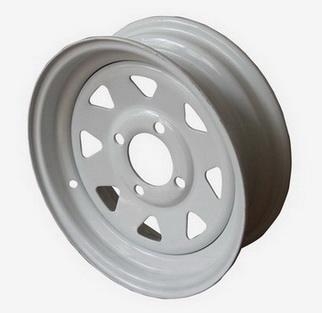
Trailer Wheels
Source high-quality trailer wheels from vetted manufacturers and suppliers built for commercial durability. Designed for importers, distributors, and brands seeking reliable OEM and private-label production in bulk. Secure competitive wholesale pricing direct from the factory.
Sourcing trailer wheels at volume requires balancing strict load capacities with long-term corrosion resistance. A wheel failure under a commercial or agricultural load is catastrophic, meaning your supply chain must be anchored by manufacturers with verified metallurgical controls, precise machining tolerances, and rigorous finishing standards.
Critical Specifications for Bulk Procurement
When negotiating with manufacturers, vague specifications lead to inconsistent production. You must define the exact parameters for every SKU in your order.
- Pitch Circle Diameter (PCD) & Bolt Pattern: The exact measurement of the lug holes. Common configurations include 4-on-4, 5-on-4.5, and 8-on-6.5.
- Load Rating: Must exceed the maximum gross axle weight rating (GAWR) divided by the number of wheels. Commercial trailer wheels often require ratings exceeding 3,500 lbs per wheel.
- Center Bore: The central hole must precisely match the trailer hub to ensure hub-centric mounting, reducing shear stress on the lug studs.
- Offset: Most standard trailer wheels require a zero offset to ensure the load is centered directly over the bearings, though specific commercial applications may require custom positive or negative offsets.
| Material | Manufacturing Method | Primary Application | Corrosion Resistance |
|---|---|---|---|
| Stamped Steel | Stamping & Robotic Welding | Utility, Cargo & Agricultural Trailers | Moderate (requires E-coat + Powder Coat) |
| Aluminum Alloy | Low-Pressure Casting or Forging | Marine, RV & Premium Enclosed Trailers | High (Naturally resistant, clear coated) |
Manufacturing Controls and Factory Validation
The integrity of a trailer wheel is won or lost on the factory floor. For steel wheels, the quality of the continuous weld joining the center disc to the outer rim barrel is critical. Inconsistent penetration or porosity in the weld will lead to radial fatigue failure. For aluminum wheels, porosity during the casting process is the primary risk.
Before committing to a high-volume order, conducting thorough factory audits is essential to verify that the supplier has automated welding robotics, X-ray inspection for aluminum castings, and in-house testing laboratories.
Need to verify a wheel manufacturer's production capabilities? Let our engineers audit their facility before you place a deposit.
Talk to our teamSurface Finishing
Trailer wheels endure harsh environments, from marine saltwater to road de-icing chemicals. A standard liquid paint finish is insufficient. Insist on a two-step finishing process for steel wheels:
- Cathodic Electrodeposition (E-coating): Submerging the wheel to coat all crevices, acting as a rust-preventative primer.
- Powder Coating: A baked topcoat for UV and chip resistance.
Compliance and Quality Assurance
Importing trailer wheels requires adherence to regional safety standards. In the US, wheels must meet DOT (Department of Transportation) markings and SAE J1204 testing protocols for radial fatigue, cornering fatigue, and impact resistance. European markets require TUV certification.
Relying solely on a supplier's word for these certifications is a significant liability. Implement rigorous quality control & inspection protocols, including pre-shipment run-out testing to ensure the wheel is perfectly round and balanced. Additionally, independent compliance & testing should be utilized to verify that the factory's salt-spray resistance claims match reality (typically requiring 500 to 1,000 hours of resistance).
Pre-Shipment Inspection Checklist for Trailer Wheels
- Verify DOT/SAE or TUV stamping on the wheel face or inner barrel.
- Measure PCD, center bore, and offset against engineering drawings.
- Conduct lateral and radial run-out tests (tolerance typically under 0.030 inches).
- Inspect weld seams for spatter, undercut, or incomplete penetration.
- Perform cross-hatch adhesion testing on the powder coat finish.
Pricing, MOQs, and Lead Times
Wholesale pricing for trailer wheels fluctuates based on raw material costs (steel and aluminum indices) and finishing requirements.
For standard steel wheels, Minimum Order Quantities (MOQs) typically range from 200 to 500 pieces per size/bolt pattern. Aluminum wheels often command lower MOQs (100 to 300 pieces) but carry a higher per-unit cost. If you are utilizing OEM/ODM services to develop a custom wheel design or proprietary spoke pattern, expect to pay tooling costs ranging from $2,000 to $5,000 per size, which is often rebated after a certain volume threshold is met.
Struggling to negotiate favorable MOQs or tooling rebates for your custom wheel line? We can manage the sourcing and negotiation process for you.
Get a free consultationFrequently Asked Questions
Sourcing commercial-grade trailer wheels is an exercise in risk management. Success requires looking past the initial unit price to rigorously validate a manufacturer's tooling, metallurgy, and quality control systems. By establishing strict technical specifications and maintaining oversight throughout production, you can build a resilient, compliant supply chain.
Get Sourcing Help for Trailer Wheels
Tell us your requirements and our experts will connect you with verified manufacturers.