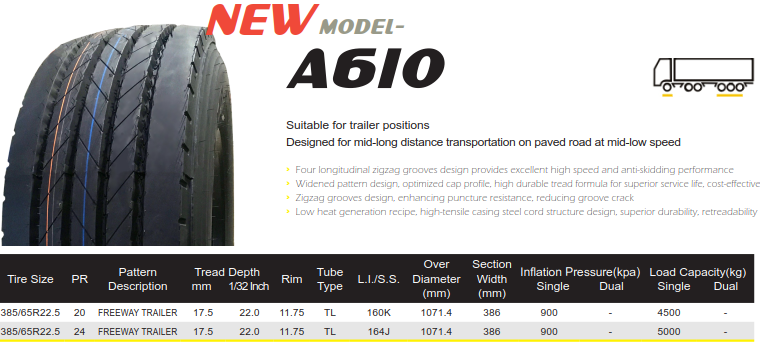
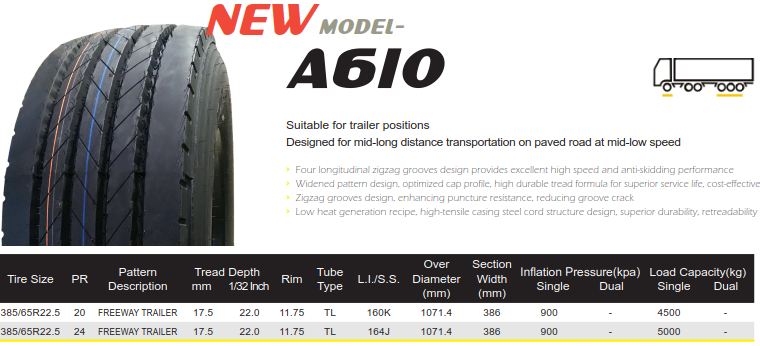
Trailer Tires
Source high-quality Trailer Tires from vetted manufacturers and suppliers in China and Asia. Designed for importers, wholesale distributors, and brands seeking reliable bulk purchasing or custom OEM/private-label production. Explore our network for competitive pricing and strict DOT/ECE compliance.
Trailer tires, designated as Special Trailer (ST), endure fundamentally different mechanical stresses compared to passenger or light truck tires. They are engineered with stiffer sidewalls and heavy-duty compounds to handle high inflation pressures, constant static loads, and severe lateral forces during cornering. Sourcing ST tires in volume requires strict attention to ply ratings, load indexes, and the factory's curing consistency. A failure in any of these areas leads directly to tread separation, blowouts, and severe liability.
Engineering and Specification Requirements
When ordering trailer tires in bulk, specifying the correct construction type and load rating is critical. The market is divided between bias ply and radial tires, each serving distinct application needs.
| Feature | Radial (ST) | Bias Ply (ST) |
|---|---|---|
| Construction | Steel belts running at 90 degrees to the tread | Nylon/polyester cords running diagonally |
| Heat Dissipation | Excellent; ideal for highway speeds and long hauls | Poor; retains heat, limiting speed and duration |
| Sidewall Stiffness | Moderate flex, smoother ride | Extremely rigid, high sway reduction |
| Typical Application | RVs, boat trailers, enclosed cargo trailers | Agricultural, construction, heavy utility trailers |
Load Ranges and Ply Ratings
Modern ST tires use Load Ranges (letters) to denote maximum carrying capacity at specific inflation pressures, corresponding to historical ply ratings.
- Load Range C: 6-ply rated, typically up to 50 PSI.
- Load Range D: 8-ply rated, typically up to 65 PSI.
- Load Range E: 10-ply rated, typically up to 80 PSI.
- Load Range F & G: 12 to 14-ply rated, designed for heavy fifth-wheel RVs and commercial flatbeds, requiring 95 to 110 PSI.
Ensure your tire specifications align with regional compliance and heavy-duty load requirements.
Talk to our teamManufacturing Tolerances and Quality Control
The durability of a trailer tire is won or lost on the factory floor. Variations in compound mixing or uneven vulcanization are the root causes of premature tire failure. Conducting thorough Factory Audits is essential to verify that a manufacturer maintains automated, temperature-controlled curing presses rather than relying on outdated manual timing.
Compound Mixing
Rubber is blended with carbon black, silica, and anti-aging antioxidants. ST tires require a high concentration of UV and ozone protectants because trailers often sit idle in the sun for months.
Calendering & Extrusion
Steel cords and nylon overlays are coated in rubber. The precision of the calendering machine determines the uniformity of the tire's internal structure.
Tire Building
The inner liner, plies, beads, and tread are assembled on a drum. Automated tire building machines (TBMs) are critical here to prevent overlapping splices.
Vulcanization (Curing)
The green tire is pressed into a heated mold. Strict temperature and pressure controls are required to ensure the tread bonds perfectly to the steel belts.
Pre-Shipment Inspection Focus
Visual checks are not enough for commercial-grade tires. When executing Quality Control & Inspection, your inspectors must verify internal integrity.
Critical Tire QC Checks
- X-ray inspection to detect steel belt shifting or trapped air blisters.
- Dynamic balance and uniformity testing (checking for radial runout).
- Verification of DOT/ECE plant codes and date codes molded into the sidewall.
- Bead seating measurements to ensure airtight rims.
Compliance, Private Labeling, and OEM
For brands looking to establish their own tire lines, factories offer extensive OEM/ODM Services. This involves investing in custom sidewall molds that feature your brand name, logo, and required regulatory markings.
Tires are heavily regulated safety items. If you are importing into the United States, the factory must be registered with the Department of Transportation (DOT) and stamp their assigned plant code on the tire. European markets require ECE (E-mark) certification. Utilizing professional Compliance & Testing services ensures that your production batches meet Federal Motor Vehicle Safety Standards (FMVSS) before they leave the port.
Purchasing Mechanics: MOQs, Pricing, and Lead Times
Tire manufacturing is a high-volume, continuous-process industry. Factories optimize their production runs to minimize mold changes, which dictates wholesale purchasing structures.
Pricing is highly volatile and tightly pegged to global commodities—specifically natural rubber, synthetic rubber, and steel. When requesting quotes, ensure the factory specifies the validity period of the price, as raw material fluctuations can shift unit costs week to week.
Optimize your container loads, manage mold investments, and secure reliable supply lines.
Get a free consultationFrequently Asked Questions
Sourcing trailer tires requires balancing aggressive wholesale pricing with zero-tolerance safety standards. By auditing factory curing processes, enforcing strict pre-shipment uniformity tests, and managing DOT compliance effectively, you can secure a reliable, high-margin supply of commercial-grade tires.
Get Sourcing Help for Trailer Tires
Tell us your requirements and our experts will connect you with verified manufacturers.