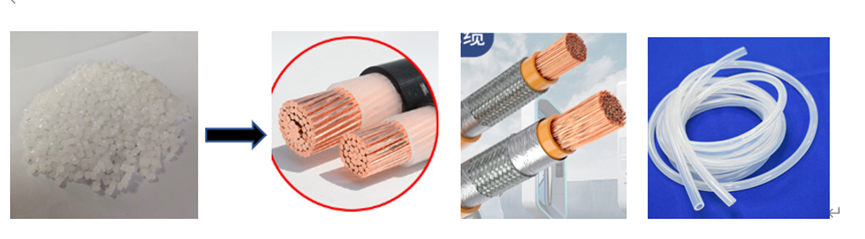
TPV
Source premium TPV (Thermoplastic Vulcanizate) raw materials directly from vetted manufacturers and suppliers. Designed for importers, distributors, and brands requiring bulk quantities for automotive, industrial, and consumer applications. Secure competitive wholesale pricing and reliable factory-direct production.
Thermoplastic Vulcanizate (TPV) bridges the gap between thermoset rubber and standard thermoplastic polymers. By dynamically vulcanizing EPDM rubber within a polypropylene (PP) matrix, TPV delivers the exceptional heat, ozone, and weather resistance of EPDM alongside the rapid processing capabilities of plastics. For bulk buyers, the primary sourcing challenge lies in the factory's compounding process: if the dynamic vulcanization is unstable, the resulting material will suffer from poor rubber dispersion, leading to weak mechanical properties, inconsistent shrinkage, and surface defects during injection molding or extrusion.
Core Specifications to Define
When negotiating with a manufacturer, generic requests for "TPV pellets" will result in wide variations in performance. You must define the exact physical and mechanical properties required for your application.
Key parameters to specify on your purchase order include:
- Compression Set: Crucial for sealing applications. Specify the percentage of permanent deformation allowed after compression at specific temperatures (e.g., 22 hours at 100°C).
- Tensile Strength & Elongation: Determines the material's ability to stretch and withstand stress without breaking.
- Melt Flow Index (MFI): Dictates processing behavior. Extrusion grades require a lower MFI (higher viscosity) for shape retention, while injection molding grades require a higher MFI to fill complex mold cavities.
Manufacturing Quality and Defect Risks
The performance of TPV hinges entirely on the size and distribution of the cross-linked EPDM particles within the PP matrix. In high-quality TPV, these rubber particles are microscopic (typically under 2 microns). Substandard manufacturers often rush the compounding phase or use inferior twin-screw extruders, resulting in larger, poorly dispersed rubber domains. This manifests as weak weld lines, rough surface finishes, and premature failure under mechanical stress.
Conducting thorough factory audits is essential before committing to a new supplier. You need to verify their compounding equipment, temperature control precision, and raw material sourcing (particularly the quality of the base EPDM).
Struggling with inconsistent TPV batches? Let us audit manufacturers and secure reliable production for your supply chain.
Talk to our teamCritical TPV Quality Control Checks
- Rubber phase dispersion consistency (verified via microscopy)
- Moisture content upon delivery (excess moisture causes splay marks)
- Lot-to-lot MFI variation (must remain within tight tolerances)
- Color consistency and UV stability (for exterior-grade compounds)
Furthermore, independent compliance and testing should be utilized to ensure the material meets specific industry standards, such as automotive OEM approvals or RoHS/REACH directives.
Pricing, MOQs, and Lead Times
TPV pricing is heavily influenced by the global commodity markets for EPDM and Polypropylene, as well as the specific gravity and additive package of your required grade. Highly filled grades (higher specific gravity) are generally cheaper by weight but yield fewer parts per kilogram, altering your true cost per unit.
- Minimum Order Quantities (MOQs): For standard black or natural TPV grades, factory MOQs typically range from 1 to 3 metric tons. If you require custom color matching, specialized UV packages, or non-standard Shore hardness blends, expect MOQs to rise to 5 or 10 metric tons to justify the extruder purge and setup time.
- Lead Times: Standard formulations usually ship within 2 to 3 weeks. Custom compounds require an additional 1 to 2 weeks for lab matching and sample approval before mass production begins.
- Packaging: TPV should be packaged in moisture-barrier bags (typically 25kg paper-plastic composite bags) or gaylord boxes with heavy-duty liners to prevent moisture absorption during transit.
Need reliable pricing and rigorous quality oversight for bulk TPV orders? We manage the entire procurement cycle.
Get a free consultationFrequently Asked Questions
Sourcing high-performance TPV requires more than just finding a low price per kilogram; it demands rigorous oversight of the factory's compounding capabilities and strict adherence to technical specifications. By implementing stringent quality control protocols before the material leaves the facility, you protect your downstream manufacturing processes from costly downtime and defective parts.
Get Sourcing Help for TPV
Tell us your requirements and our experts will connect you with verified manufacturers.