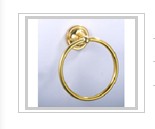
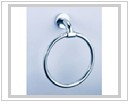
Towel Rings
Source high-quality towel rings from vetted suppliers and manufacturers across Asia. Designed for importers, wholesalers, distributors, and hardware brands seeking reliable OEM and private-label production, our network delivers bulk bathroom accessories built to precise material and finish specifications.
Sourcing towel rings at scale requires balancing aesthetic finishes with mechanical durability. While they appear to be simple fixtures, the difference between a premium product and a high-return liability lies in the unseen details: the integrity of the swivel joint, the thickness of the mounting bracket, and the stability of the plating process. When buying in bulk, specifying the right base materials and surface treatments is critical to ensuring long-term performance in high-humidity bathroom environments.
Core Materials and Manufacturing Methods
The base material dictates not only the unit cost but also the product's weight, durability, and how well it accepts surface finishes. Manufacturers typically utilize one of three primary metals:
| Base Material | Durability | Plating Receptivity | Typical Application |
|---|---|---|---|
| Solid Brass | Very High | Excellent | Premium / Luxury lines |
| Zinc Alloy | Medium | Good (requires copper base) | Mid-market / Commercial |
| Stainless Steel (304) | High | N/A (often brushed or PVD) | Modern / Minimalist lines |
Brass is the industry standard for premium fixtures because it takes electroplating exceptionally well, resulting in a flawless, mirror-like finish. Zinc alloy is highly cost-effective and can be die-cast into complex shapes, but it requires a thick copper undercoating to prevent the final finish from peeling or blistering over time. Stainless steel (specifically grade 304) offers inherent corrosion resistance and is ideal for brushed finishes or Physical Vapor Deposition (PVD) coatings.
Surface Finishes and Coating Integrity
The finish is the most scrutinized aspect of a towel ring. Bathroom environments subject these fixtures to moisture, temperature fluctuations, and chemical cleaners.
- Electroplating: Used primarily for chrome and nickel finishes. Quality is determined by the thickness and number of layers. A standard multi-layer process includes copper, nickel, and a final chrome layer.
- PVD (Physical Vapor Deposition): The preferred method for matte black, brushed gold, and gunmetal finishes. PVD is significantly more durable and scratch-resistant than powder coating or standard electroplating.
To verify finish quality, manufacturers must perform salt spray testing. Ensure your supplier provides Neutral Salt Spray (NSS) or Copper Accelerated Acetic Acid Salt Spray (CASS) test reports. A standard requirement for mid-to-high-end markets is 24 to 96 hours of NSS with no visible corrosion.
Struggling to find a manufacturer with consistent PVD finishes? Let's discuss your specifications and connect you with vetted factories.
Talk to our teamMechanical Design: The Swivel and Mounting System
A towel ring's failure point is rarely the ring itself; it is usually the swivel mechanism or the wall mount.
The swivel joint must feature a high-quality nylon or Teflon gasket. This prevents metal-on-metal grinding, eliminates squeaking, and provides just enough friction so the ring holds its position rather than swinging loosely against the wall.
The mounting system relies on a concealed wall bracket and a set screw (typically an Allen screw). If the wall bracket is stamped from thin, low-grade steel, the towel ring will eventually pull away from the wall under the weight of wet towels. Specify a minimum thickness for the mounting plate and ensure the set screw threads cleanly into the base.
Factory-Level Quality Control
Catching defects before shipment is essential. When conducting quality control inspections, focus on these critical areas:
Pre-Shipment Inspection Focus Areas
- Surface Inspection: Check under standard D65 lighting for pitting, blistering, or uneven plating.
- Swivel Tension: Ensure the ring moves smoothly but does not drop loosely against the wall.
- Hardware Verification: Confirm the inclusion of appropriate wall anchors, screws, and the correct Allen key.
- Thread Integrity: Test the set screw to ensure it tightens fully without stripping the base metal.
- Salt Spray Verification: Review the factory's in-house testing logs for the current production batch.
Before committing to a large order, conducting comprehensive factory audits is highly recommended to verify whether the supplier handles plating in-house or outsources it. Outsourced plating often leads to batch-to-batch color variations, especially with complex finishes like brushed brass or oil-rubbed bronze.
Typical MOQs, Lead Times, and Sourcing Realities
Production parameters for towel rings depend heavily on the level of customization and the chosen finishes.
Factories will often lower the MOQ per SKU if you are ordering a complete bathroom accessory collection (e.g., towel bars, robe hooks, paper holders) in the same finish. If you are developing proprietary designs, utilizing comprehensive OEM/ODM services ensures your tooling and molds remain exclusive to your brand.
Need help negotiating MOQs across multiple bathroom accessory lines? Our sourcing experts can streamline your purchasing strategy.
Get a free consultationFrequently Asked Questions
Successful sourcing of towel rings comes down to strict material specification and rigorous finish testing. By defining the base metal, the exact coating process, and the mechanical tolerances of the mounting hardware upfront, you protect your brand from costly returns and ensure a reliable product lifecycle.
Get Sourcing Help for Towel Rings
Tell us your requirements and our experts will connect you with verified manufacturers.