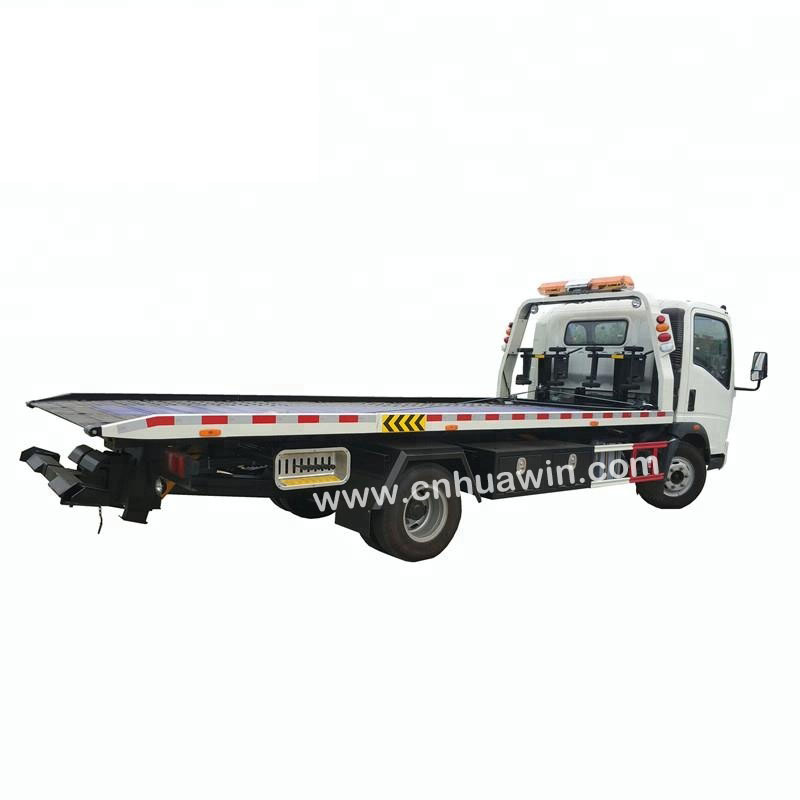
Tow Trucks & Wreckers
Source commercial-grade tow trucks and wreckers from vetted manufacturers and suppliers. Designed for importers, fleet distributors, and equipment wholesalers, this catalog provides direct access to reliable OEM production. Secure competitive bulk pricing on high-capacity recovery vehicles built for demanding operations.
Sourcing heavy-duty recovery vehicles requires balancing chassis reliability with robust hydraulic engineering. When procuring tow trucks and wreckers in volume or developing custom fleet solutions, the primary challenge lies in ensuring the manufacturer's integration of the recovery body with the commercial chassis meets stringent safety and load-bearing standards. A failure in the power take-off (PTO) system or structural welding can sideline a vehicle and create severe liability risks.
Chassis Integration and Upper Body Manufacturing
In the global supply chain for recovery vehicles, most manufacturers specialize in fabricating the "upper body"—the flatbed, boom, underlift, and winch systems—and integrating these onto established commercial chassis (such as Dongfeng, Sinotruk, Shacman, or Isuzu). The critical quality differentiator is how well the factory engineers the sub-frame and hydraulic systems to match the chassis's gross vehicle weight rating (GVWR) and wheelbase.
When evaluating a manufacturer's technical capability, pay close attention to the steel grades used in the boom and underlift. High-tensile steel (such as HG80 or Q345) is mandatory to prevent deformation under maximum load.
Critical Specifications to Define for Suppliers
- Underlift Capacity: Specify both retracted and extended load ratings in kilograms or tons.
- Boom Rating: Define the maximum lifting capacity and maximum extension length.
- Hydraulic Components: Specify the origin of the PTO, multi-way valves, and hydraulic cylinders (e.g., imported Italian or premium domestic brands).
- Winch Specifications: Detail the line pull rating (lbs/kgs) and wire rope diameter/length.
- Deck Dimensions: For flatbed rotators, specify deck length, width, and load angle (ideally under 10 degrees for low-clearance vehicles).
Need help verifying a manufacturer's engineering capabilities? Our team can evaluate supplier technical drawings and hydraulic schematics before you commit.
Discuss your technical requirementsQuality Control in Hydraulic and Structural Systems
The reliability of a wrecker is entirely dependent on its hydraulic system and structural weld integrity. Poorly machined hydraulic cylinders will bypass fluid under load, causing the boom or underlift to slowly drop—a catastrophic failure during a recovery operation.
To mitigate this, stringent in-line and pre-shipment quality control is essential. Inspectors must perform full-capacity load testing prior to shipment.
Welding and Fabrication Standards
Manual welding on primary structural components (booms and sub-frames) introduces human error and inconsistent penetration. Prioritize factories that utilize robotic welding for main load-bearing seams. Conducting thorough factory audits is the most effective way to verify a supplier's fabrication equipment and quality management systems on the ground.
Typical MOQs, Lead Times, and Logistics
Unlike smaller automotive parts, tow trucks and heavy wreckers are high-ticket capital equipment.
- Minimum Order Quantities (MOQs): Most factories accept an MOQ of 1 to 2 units for standard configurations. For extensive OEM/ODM services requiring custom deck designs or specialized boom engineering, the MOQ may rise to 5+ units to absorb engineering costs.
- Production Lead Times: Expect 40 to 65 days for standard builds, depending on chassis availability. If the factory must wait for a specific chassis from the OEM, lead times can extend up to 90 days.
- Shipping & Freight: Standard flatbed tow trucks can sometimes be driven into 40ft High Cube containers if the cab height permits. However, heavy-duty rotators and integrated wreckers require Roll-on/Roll-off (RoRo) vessels or flat rack containers. Coordinating this specialized shipping and freight requires precise dimensional planning and securing.
Complex heavy-vehicle shipping requires careful route and vessel planning. Talk to our logistics experts about securing RoRo space and managing customs clearance.
Get a logistics consultationFrequently Asked Questions
Procuring commercial tow trucks and wreckers demands rigorous attention to structural engineering, hydraulic reliability, and specialized logistics. By clearly defining your load capacities, verifying component origins, and implementing strict testing protocols before the vehicle leaves the factory, you can build a highly profitable and reliable fleet.
Get Sourcing Help for Tow Trucks & Wreckers
Tell us your requirements and our experts will connect you with verified manufacturers.