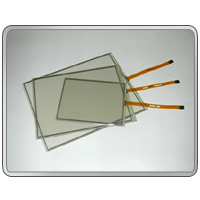
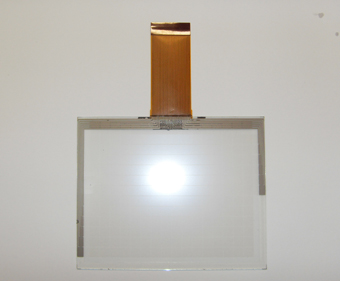
Touch Screens
Source high-quality touch screens from vetted suppliers and manufacturers across Asia. Designed for electronics importers, distributors, and OEM brands, our network delivers reliable bulk production for industrial, commercial, and consumer applications. Partner with us for competitive pricing and rigorous quality control.
Sourcing touch screens at volume requires balancing optical performance, durability, and integration compatibility. The primary challenge isn't just finding a factory that can assemble glass and sensors; it is ensuring consistent yield rates, cleanroom integrity, and stable controller IC supply chains that won't disrupt your production schedule.
Specifying the Right Panel Architecture
When moving from prototype to mass production, your bill of materials (BOM) must clearly define the touch sensor structure and bonding method. Most modern industrial and consumer applications rely on Projected Capacitive (PCAP) technology, but the layer stack dictates performance and cost.
- Cover Glass: Specify thickness, chemical strengthening (e.g., Gorilla Glass, Dragontrail), and surface treatments like Anti-Glare (AG), Anti-Reflective (AR), or Anti-Fingerprint (AF).
- Sensor Structure: Glass-Glass (GG), Glass-Film-Film (GFF), or One Glass Solution (OGS). GFF is standard for lightweight consumer electronics, while GG offers the durability and temperature resistance required for industrial use.
- Controller ICs: The "brain" of the touch panel. Industrial applications often require robust ICs from EETI for water rejection and gloved operation, while consumer devices may use Goodix or ILITEK.
How the touch sensor mates to the TFT LCD display module is a critical sourcing decision that impacts both optical clarity and factory yield rates.
| Metric | Air Bonding (Tape) | Optical Bonding (OCA/OCR) |
|---|---|---|
| Cost & Yield | Lower cost, high yield | Higher cost, lower yield |
| Optical Clarity | Prone to internal reflection | Excellent (No air gap) |
| Durability | Standard | High (Dust and moisture proof) |
Struggling with high defect rates in your optical bonding process? Let us audit your supply chain and secure capable manufacturing partners.
Get a free consultationFactory Capabilities and Quality Control
Touch screen manufacturing is highly sensitive to particulate contamination. A reliable supplier must maintain strict cleanroom environments—typically Class 100 to Class 1000 for optical bonding. When evaluating suppliers, often through rigorous factory audits, pay close attention to their lamination and defoaming equipment.
Defects often emerge after the lamination process, making strict quality control & inspection protocols non-negotiable before shipment.
Critical In-Line & Pre-Shipment Checks
- Visual inspection for OCA bubbles, trapped dust particles, and Newton rings.
- Linearity testing to ensure straight lines drawn on the screen do not wave or break.
- Ghost touch and dead zone mapping across the entire sensor matrix.
- Drop testing and ball-drop tests for IK-rated industrial cover glass.
- FPC pull-strength tests to ensure the flex cable will not detach during assembly.
Customization, MOQs, and Pricing Realities
Off-the-shelf touch panels are rare for specialized hardware. Most B2B buyers require custom cover glass dimensions, silk-screened bezels, or specific FPC (Flexible Printed Circuit) pinouts. Engaging in OEM/ODM services means navigating Non-Recurring Engineering (NRE) fees for tooling.
NRE fees cover the custom glass cutting tools, silk-screen printing meshes, and custom FPC tooling. Your choice of controller IC and bonding method will heavily influence both your unit cost and your minimum order quantities.
Need to negotiate lower MOQs for a custom touch panel design? We can help structure your supplier agreements.
Talk to our teamFrequently Asked Questions
Procuring touch screens at scale is an exercise in managing yield rates and supply chain stability. The true cost of a display component is rarely just the unit price; it is the cost of integration, firmware tuning, and defect mitigation. By partnering with suppliers who maintain pristine cleanrooms and transparent testing data, you protect your production timeline and your product's field reliability.
Get Sourcing Help for Touch Screens
Tell us your requirements and our experts will connect you with verified manufacturers.