Toasters
Source wholesale toasters directly from vetted manufacturers and suppliers in Asia. Designed for importers, appliance distributors, and brands requiring reliable OEM and private-label production, our network delivers high-volume manufacturing with strict adherence to global safety standards.
Sourcing toasters at scale requires balancing thermal performance, electrical safety, and unit cost. Whether you are procuring standard two-slice plastic models for the mass market or developing premium die-cast smart toasters, success hinges on strict control over heating element consistency, browning calibration, and housing insulation. A minor variance in the PCBA timer or mica board wiring can lead to uneven toasting, high return rates, and safety compliance failures.
Core Specifications and Component Selection
When negotiating with a toaster manufacturer, the bill of materials (BOM) drives both the lifespan of the appliance and the final unit price. Buyers must define specifications at the component level to prevent suppliers from quietly downgrading internal parts.
Heating Elements and Internal Mechanics
Most standard toasters utilize Nichrome wire wrapped around mica boards. The density and pattern of this wiring dictate the evenness of the heat distribution. Premium units may utilize quartz heating elements for faster, more consistent radiant heat. You must also specify the carriage mechanism; mechanical levers rely on electromagnets to hold the carriage down, which requires reliable bimetallic strips or electronic PCBA timers to release accurately.
Housing Materials and Thermal Management
Toasters must pass strict "cool touch" regulations in most Western markets. The choice of housing material heavily impacts both the aesthetic and the engineering required to dissipate heat safely.
| Material | Market Segment | Thermal Considerations | Tooling Cost |
|---|---|---|---|
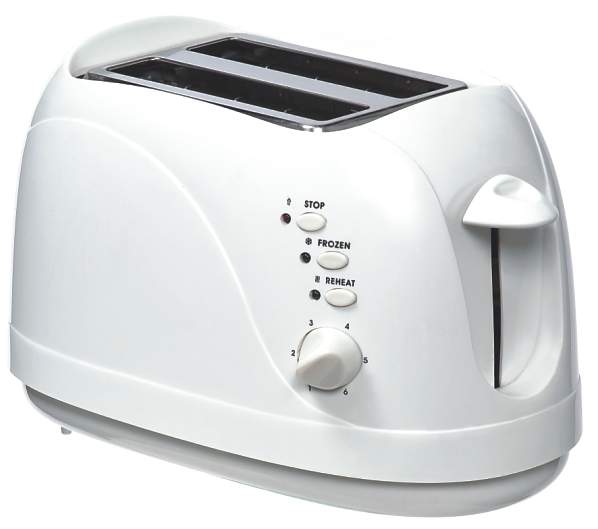
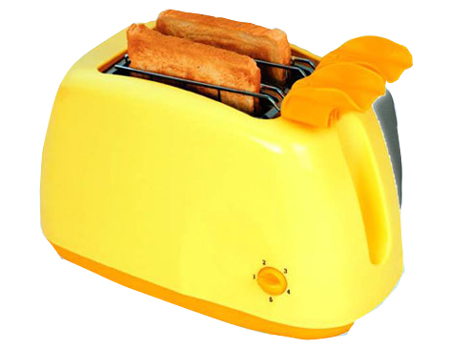
| Polypropylene (PP) | Entry-level / Mass Market | Requires internal heat shielding to prevent melting. | Low |
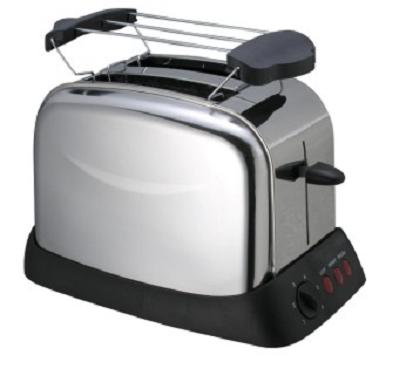
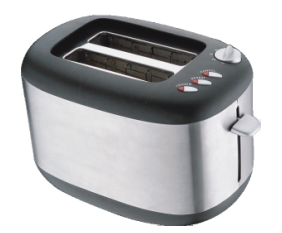
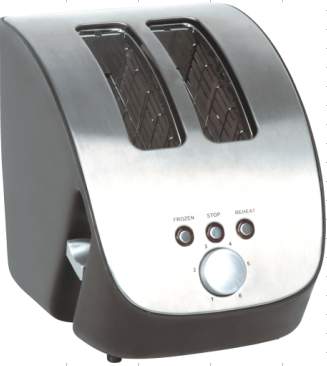
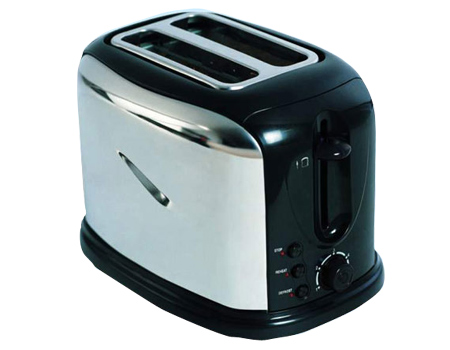
| Stainless Steel (SUS430) | Mid-range | Prone to high surface temperatures; needs dual-wall design. | Medium |
| Die-Cast Aluminum | Premium | Excellent structural integrity; complex thermal isolation needed. | High |
Struggling to balance unit cost with thermal compliance? Let our sourcing engineers review your product specifications.
Talk to our teamQuality Control and Compliance Standards
Toasters are high-draw electrical appliances that operate in close proximity to human hands and combustible materials. Regulatory bodies scrutinize them heavily. Sourcing without a rigorous compliance testing strategy is a massive liability.
For the US market, UL or ETL certification is mandatory, focusing heavily on the UL 1026 standard for household electric cooking appliances. In Europe, CE marking, RoHS, and LVD (Low Voltage Directive) apply. Furthermore, any internal components touching food (like the bread cages) must pass FDA or LFGB food-contact testing.
Critical Factory Inspection Points
Relying solely on final inspection is risky. Effective quality control for toasters must include in-line checks during assembly.
Essential Toaster QC Checks
- Hi-Pot (High Potential) Testing: Ensuring insulation can withstand voltage spikes without leaking current.
- Earth Continuity Testing: Mandatory for Class I metal-housed appliances.
- Browning Consistency Test: Toasting standard white bread across all settings to verify color uniformity.
- Drop and Tilt Testing: Verifying the toaster safely shuts off or remains stable if knocked over.
- Life Cycle Testing: Automating the carriage lever for 5,000 to 10,000 cycles to test electromagnet and spring durability.
Pricing Drivers, MOQs, and Lead Times
Understanding the factory floor reality helps you negotiate better terms and set accurate supply chain schedules. Most toaster manufacturers are located in Guangdong and Zhejiang provinces in China, with varying degrees of automation.
If you are buying off-the-shelf white-label designs, tooling costs are zero, and MOQs can sometimes be negotiated down for standard black or white PP models. However, if you require OEM/ODM services to develop a proprietary shape, expect to invest in custom injection molds or metal stamping dies. The cost of tooling for a custom stainless steel toaster is significantly higher than for a plastic model due to the complexity of the stamping and folding processes.
Ready to scale your appliance line? We manage supplier negotiations, factory audits, and quality control from end to end.
Get a free consultationBuyer FAQ
Successful toaster procurement goes beyond finding a low unit price on a B2B directory. It requires a deep understanding of thermal engineering, electrical safety compliance, and factory-level quality systems. By defining exact specifications and enforcing strict in-line testing, buyers can build a reliable, compliant product line that protects their brand reputation.
Get Sourcing Help for Toasters
Tell us your requirements and our experts will connect you with verified manufacturers.