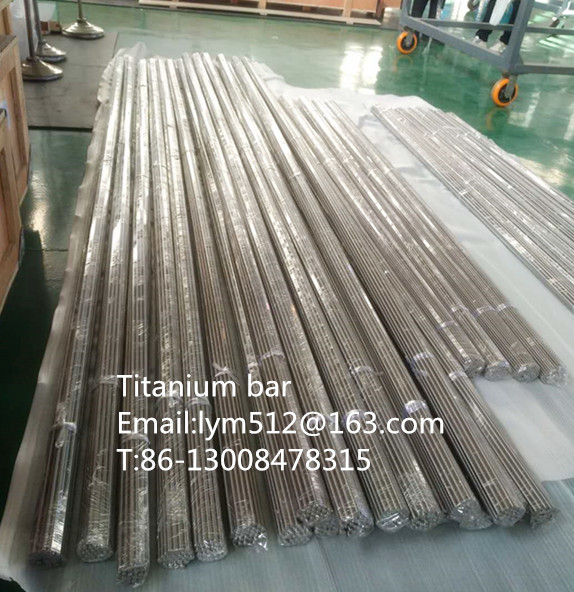
Titanium Bars
Source premium Titanium Bars from vetted suppliers and manufacturers across Asia. Designed for importers, wholesalers, and industrial procurement managers sourcing high-volume, precision-grade materials. Secure reliable bulk pricing for commercial, medical, and aerospace applications.
Sourcing titanium bars in bulk is fundamentally an exercise in risk management. Whether you are procuring material for aerospace fasteners, medical implants, or industrial heat exchangers, the margin for error in chemical composition and internal integrity is zero. Securing a reliable supply chain requires moving past surface-level specifications to understand the mill's melting capabilities, forging processes, and testing rigor.
Specifying Titanium Grades and Standards
The most critical step in procurement is locking down the exact grade, standard, and processing condition. While there are dozens of titanium grades, bulk sourcing typically revolves around Commercially Pure (CP) titanium and alloyed variants.
A standard purchase order must explicitly state the governing specification—such as ASTM B348 for general industrial use, ASTM F136 for medical implants, or AMS 4928 for aerospace applications. Failing to specify the exact standard allows factories to substitute lower-tier material that may fail under stress or regulatory scrutiny.
| Property | Grade 2 (CP Titanium) | Grade 5 (Ti-6Al-4V) |
|---|---|---|
| Alloy Composition | Unalloyed | 6% Aluminum, 4% Vanadium |
| Primary Characteristics | High corrosion resistance, formable | High strength-to-weight ratio |
| Common Applications | Chemical processing, marine | Aerospace, medical implants, automotive |
| Tensile Strength | Approx. 345 MPa | Approx. 895 MPa |
Need to secure consistent, certified titanium bars for your manufacturing lines? Let us match you with mills that meet your exact ASTM or AMS requirements.
Talk to our teamManufacturing Processes and Defect Control
The quality of a titanium bar is determined long before it is machined into a cylinder. The raw titanium sponge must undergo Vacuum Arc Remelting (VAR)—often double or triple melted—to ensure a homogenous ingot free of impurities.
During the forging and rolling phases, temperature control is paramount. If the titanium is forged at incorrect temperatures, it can develop microstructural anomalies like alpha-case (a brittle, oxygen-enriched surface layer) or internal voids.
Because internal defects cannot be seen with the naked eye, relying on visual inspection is inadequate. You must implement strict quality control protocols at the factory level.
Critical Mill Verification and Testing Checks
- Verify the mill uses double or triple VAR melting for aerospace/medical grades.
- Mandate 100 percent Ultrasonic Testing (UT) to detect internal voids and high-density inclusions (HDI).
- Confirm alpha-case removal via peeling, centerless grinding, or machining.
- Require EN 10204 3.1 Mill Test Certificates (MTC) with every batch.
- Conduct independent Positive Material Identification (PMI) before shipment.
To ensure the material meets regulatory standards in your destination market, engaging independent compliance testing for chemical composition and mechanical properties is highly recommended before container loading.
Sourcing Realities: Pricing, MOQs, and Lead Times
Titanium pricing is highly volatile, driven by the cost of raw titanium sponge and the energy-intensive melting processes. Unlike steel or aluminum, titanium bars are rarely held in massive stockpiles by manufacturers; they are typically forged and machined to order based on specific billet availability.
When sourcing from China or broader Asia, distinguishing between a true titanium mill with VAR furnaces and a trading company that merely cuts and polishes purchased billets is critical. Conducting thorough factory audits is the only way to verify true production capacity and traceability.
Bypass trading companies and source directly from vetted titanium mills. We handle price negotiation, capability audits, and QA.
Get a free consultationBuyer FAQ
Procuring titanium bars requires absolute certainty in material traceability and processing standards. By partnering with verified mills and enforcing strict third-party metallurgical testing, you protect your production lines from costly material failures and ensure compliance with end-market regulations.
Get Sourcing Help for Titanium Bars
Tell us your requirements and our experts will connect you with verified manufacturers.