Tablet PCs
Source wholesale tablet PCs directly from vetted manufacturers and suppliers in China and Asia. Designed for importers, distributors, and brands seeking reliable OEM and private-label production, our network delivers high-performance hardware built to your precise specifications and market compliance requirements.
Sourcing tablet PCs in volume requires navigating a highly fragmented supply chain. While Shenzhen remains the undisputed hub for tablet manufacturing, the variance in factory capabilities is immense. Success depends on precisely defining your Bill of Materials (BOM), ensuring firmware stability, and verifying that the assembly environment prevents critical defects like screen delamination or dust intrusion.
Specifying Tablet PCs for OEM Production
When developing a private-label tablet, the spec sheet dictates everything from thermal performance to unit cost. Off-the-shelf casings can be customized, but the internal PCBA (Printed Circuit Board Assembly) and display stack must be carefully selected.
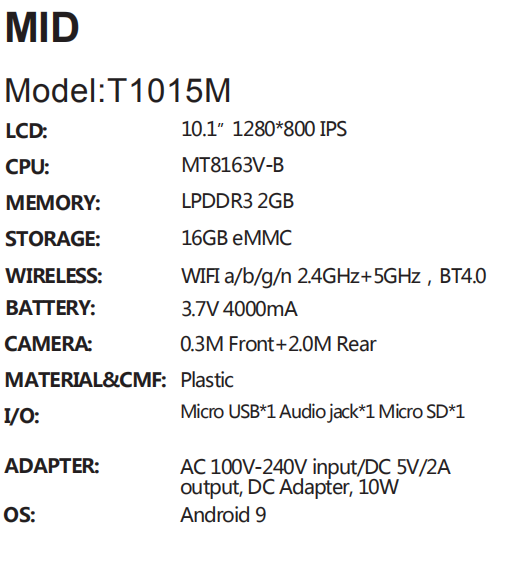
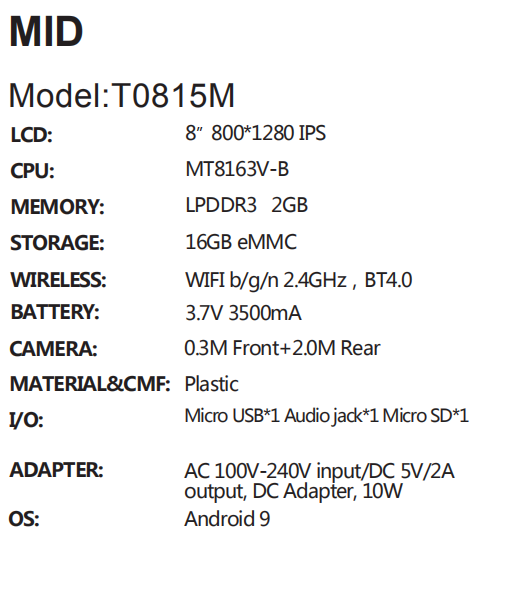
System on Chip (SOC) and Memory
The SOC is the brain of the device. Most white-label factories utilize chipsets from MediaTek, Rockchip, or Unisoc.
- Entry-Level (Education/POS): Rockchip RK3326 or Unisoc SC7731E. Suitable for basic apps, but often limited to older Android versions.
- Mid-Range (Consumer/Enterprise): MediaTek MT8183 or Unisoc T610/T618. Offers reliable octa-core performance for media and standard enterprise applications.
- High-End (Gaming/Rugged): MediaTek Dimensity series or Qualcomm Snapdragon (harder to source for low-MOQ OEMs due to licensing).
Memory (RAM) and eMMC/UFS storage must be paired appropriately to prevent bottlenecking the SOC. Avoid pairing a mid-range SOC with slow eMMC 5.0 storage if UI fluidity is a priority.
| Component | Budget / Education | Mid-Range Consumer | Enterprise / Rugged |
|---|---|---|---|
| Typical SOC | Rockchip RK3566 | MediaTek MT8183 | MediaTek Dimensity 700 |
| RAM / ROM | 2GB / 32GB | 4GB / 64GB | 8GB / 128GB UFS |
| Display Tech | IPS, non-laminated | IPS, fully laminated | OLED or High-Nits IPS |
Display and Touch Panel Construction
The screen is the most expensive component and the highest source of RMA (Return Merchandise Authorization) issues. Buyers must specify the touch panel structure:
- G+G (Glass + Glass): A glass cover sheet bonded to a glass sensor. Highly durable, scratch-resistant, and offers excellent touch sensitivity. Mandatory for enterprise, medical, or high-end consumer tablets.
- G+P (Glass + Plastic): A glass cover with a plastic sensor layer. Cheaper to produce, but prone to warping under thermal stress and offers inferior touch accuracy.
Need help matching component specs to your target price point? Our engineering team can review your BOM.
Discuss your projectManufacturing Quality and Factory Vetting
Tablet production involves two distinct phases: SMT (Surface Mount Technology) for the PCBA, and final assembly. Many suppliers are simply assembly houses that outsource the SMT process.
To ensure consistent quality, you must verify the factory's infrastructure. Screen assembly must occur in a Class 10,000 (or better) dust-free cleanroom. If screens are assembled in standard environments, dust particles will inevitably become trapped between the LCD and the digitizer, leading to high defect rates. Conducting comprehensive factory audits before placing a deposit is non-negotiable.
Critical In-Line QC Checks for Tablets
- Battery aging test (minimum 4-hour charge/discharge cycle)
- Screen backlight bleed and dead pixel inspection in dark-room conditions
- Wi-Fi and Bluetooth antenna calibration (OTA testing)
- Thermal stress testing for CPU throttling
- Drop testing and chassis torsion tests for structural integrity
Even with a vetted factory, implementing strict quality control and inspection protocols prior to shipment is necessary to catch firmware bugs or battery swelling issues before they leave the country.
Compliance and Software: The GMS Hurdle
Hardware is only half the battle. If you are importing Android tablets for consumer markets in North America or Europe, Google Mobile Services (GMS) certification is critical.
Uncertified devices cannot legally pre-install the Google Play Store, Gmail, or Google Maps. GMS certification (via the MADA agreement) requires the factory to pass CTS (Compatibility Test Suite) and GTS (Google Mobile Services Test Suite). Ensure your supplier has a direct relationship with a Google 3PL testing facility. Furthermore, physical hardware must pass rigorous compliance and testing for CE, FCC, and RoHS to clear customs.
MOQs, Lead Times, and Pricing Drivers
Tablet pricing is highly volatile, driven by the spot market for LCD panels and memory chips.
When utilizing OEM/ODM services, be aware that lowering the MOQ often means accepting off-the-shelf PCBA layouts and standard tooling. Customizing the motherboard layout for specific industrial ports (like RS232 or custom POGO pins) will significantly increase initial NRE (Non-Recurring Engineering) costs and require higher production commitments.
Ready to source reliable tablet PCs? Get a transparent breakdown of current factory pricing and lead times.
Talk to our teamFrequently Asked Questions
Managing a tablet PC supply chain requires deep technical oversight, from locking down the BOM to enforcing cleanroom assembly standards. By treating the factory as an assembly partner and taking control of component validation, you protect your brand from costly firmware failures and hardware defects.
Get Sourcing Help for Tablet PCs
Tell us your requirements and our experts will connect you with verified manufacturers.