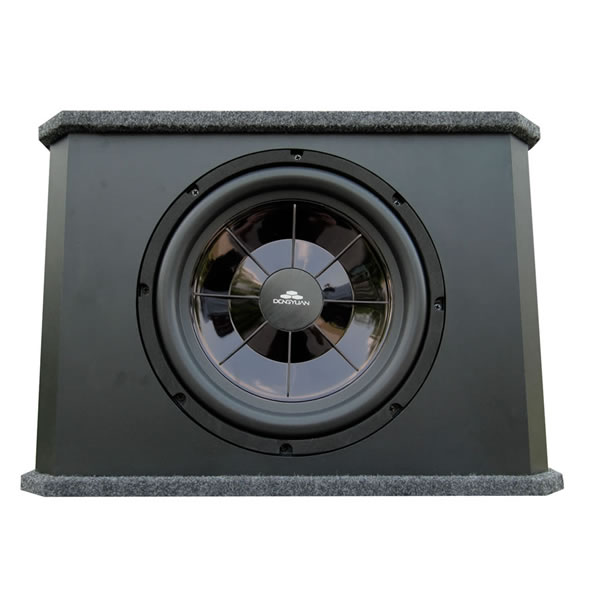
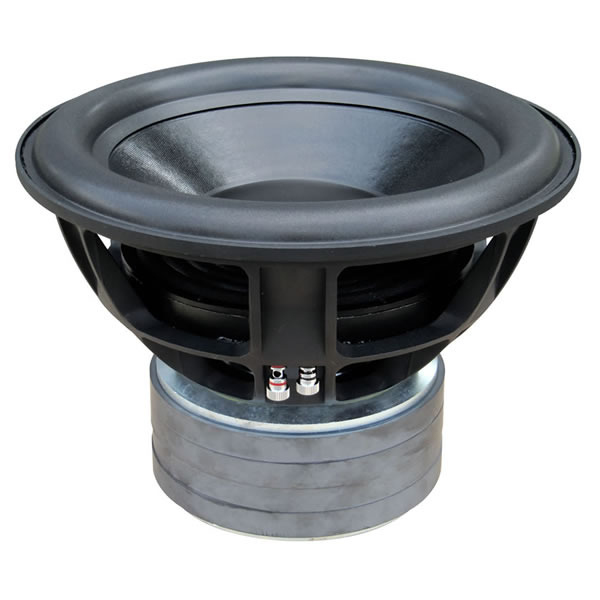
Subwoofers
Source high-performance automotive subwoofers from vetted manufacturers and suppliers in China and across Asia. Designed for importers, distributors, and auto audio brands, our network supports bulk wholesale orders and custom OEM/ODM production to meet your exact acoustic and power specifications.
Sourcing automotive subwoofers at scale requires a strict balance between acoustic performance, thermal power handling, and manufacturing consistency. Whether you are importing standard replacement drivers or engineering high-excursion competition subwoofers, success depends on controlling the bill of materials (BOM) and ensuring factory-level adherence to precise assembly tolerances.
Core Acoustic and Mechanical Specifications
When negotiating with manufacturers, vague specifications lead to inconsistent production runs. You must define the exact components that dictate the driver's electromechanical behavior and durability in harsh automotive environments.
Cone Materials and Acoustic Profiles
The cone material dictates the moving mass and rigidity, directly impacting transient response and tonal quality.
| Material | Acoustic Profile | Durability | Cost Factor |
|---|---|---|---|
| Non-Pressed Paper | Warm, natural bass | Moderate (requires coating for auto use) | Low to Medium |
| Polypropylene (PP) | Tight, controlled response | High (excellent moisture resistance) | Low |
| Carbon Fiber / Kevlar | Fast transient response | Exceptional (high rigidity-to-weight) | High |
Voice Coils and Thermal Management
Power handling (RMS) is largely determined by the voice coil's ability to dissipate heat. Specify the coil former material (aluminum or Kapton) and the winding material. Copper windings offer better conductivity, while copper-clad aluminum wire (CCAW) reduces moving mass for higher efficiency. For high-power applications, dual voice coil (DVC) configurations are standard, allowing installers flexibility in wiring impedance (e.g., 2-ohm or 4-ohm loads).
Developing a custom subwoofer line? Let us help you align your BOM with capable, vetted assembly facilities.
Talk to our teamManufacturing Tolerances and Quality Control
The primary failure points in subwoofer manufacturing are mechanical misalignment and poor adhesive curing. During assembly, the voice coil must remain perfectly centered within the magnetic gap. Even a fraction of a millimeter of deviation will cause coil rub, leading to premature failure.
A reliable factory will utilize precision jigs during the gluing of the spider to the basket and the surround to the cone. Furthermore, adhesive curing times and temperatures must be strictly monitored. If you are scaling up production, implementing professional Quality Control & Inspection is critical to catch these invisible defects before the container is loaded.
Critical Inline QC Checks for Subwoofers
- Voice coil centering and magnetic gap clearance verification
- Adhesive curing temperature and time logs (spider, surround, and dust cap)
- Impedance curve and Thiele/Small (T/S) parameter batch consistency
- High-power sine wave sweep testing to detect mechanical rub or buzz
- Terminal pull-strength and polarity verification
Sourcing Mechanics: MOQs, Pricing, and Lead Times
China remains the dominant hub for automotive loudspeaker manufacturing, with major clusters in Guangdong (Guangzhou, Dongguan) and Zhejiang (Ningbo, Jiashan). These regions offer deep supply chains for magnets (Ferrite and Neodymium), stamped or cast aluminum baskets, and soft parts.
If you are utilizing OEM/ODM Services to launch a private-label line, expect factories to require minimum order quantities based on the tooling and raw material sourcing.
Pricing is heavily influenced by magnet weight and basket type. Stamped steel baskets are economical for low-to-mid power applications (under 500W RMS), while cast aluminum baskets are mandatory for high-excursion, high-power drivers to prevent frame flex.
Beware of Peak Power Claims
Some suppliers inflate power ratings by quoting "Peak" or "Max" power. Always negotiate and test based on continuous RMS power handling. Ensure your supplier has the proper burn-in testing equipment to validate these RMS claims over extended durations.
Need to audit a factory's testing capabilities before placing a bulk order? Our on-the-ground teams can verify their facilities.
Get a free consultationBuyer FAQ
Scaling a subwoofer brand requires moving beyond off-the-shelf catalog items and taking control of your BOM, assembly tolerances, and testing protocols. By partnering with factories that maintain rigorous acoustic and environmental testing standards, you protect your brand's reputation and your bottom line.
Get Sourcing Help for Subwoofers
Tell us your requirements and our experts will connect you with verified manufacturers.