Steel Cables
Source high-strength steel cables in bulk directly from vetted manufacturers and wire rope mills. Designed for industrial importers, distributors, and brands requiring reliable lifting and pulling solutions, our factory-direct network offers custom specifications, rigorous load testing, and competitive wholesale pricing.
Sourcing industrial steel cables (wire ropes) in high volumes requires strict attention to metallurgy, stranding precision, and certified load ratings. Because these components are critical for heavy lifting, pulling, and positioning, failure is not an option. Securing a reliable supply chain means moving beyond surface-level specifications to verify the manufacturer's drawing processes, closing machinery, and internal testing capabilities.
Specifying Steel Cables for Production
When ordering in bulk, vague specifications lead to inconsistent performance. Manufacturers need exact parameters to calculate the correct wire rod grade and drawing requirements.
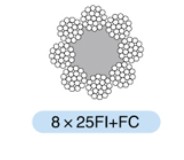
- Construction Profile: Defined by the number of strands and wires per strand (e.g., 6x19, 7x19, 6x36 WS). Higher wire counts increase flexibility but reduce abrasion resistance.
- Tensile Strength Grades: Typically specified in N/mm² (e.g., 1770, 1960, 2160) or legacy terms like IPS (Improved Plow Steel), EIPS, and EEIPS.
- Lay Direction: Right Regular Lay (RRL) is standard for most applications, but Left Lay or Lang Lay may be required for specific winch or crane operations.
- Finish and Treatment: Bright (ungalvanized) for heavily lubricated environments, electro-galvanized or hot-dip galvanized for corrosion resistance, or stainless steel (304/316) for marine applications.
| Core Type | Flexibility | Crush Resistance | Working Environment |
|---|---|---|---|
| Fiber Core (FC) | High | Low | Standard lifting, absorbs lubrication well |
| Independent Wire Rope Core (IWRC) | Lower | High | Heavy loads, high-heat environments |
| Wire Strand Core (WSC) | Lowest | Highest | Static lines, guy wires |
Need help verifying supplier specifications and matching them to your load requirements? Let our sourcing experts assist you.
Talk to our teamManufacturing Quality and Common Defects
The integrity of a steel cable is determined during the wire drawing and stranding phases. Poorly calibrated closing machines or inconsistent wire tension will result in structural flaws that drastically reduce the breaking strength.
Establishing a robust Quality Control & Inspection protocol is essential. In-line inspections should monitor the uniformity of the strand lay length and the application of internal lubrication. Pre-shipment inspections must include destructive testing to verify the Minimum Breaking Load (MBL).
Key Focus Areas for Factory Verification
- Verify the origin and mill certificates of the raw high-carbon steel wire rods.
- Check for uniform galvanization thickness to prevent premature corrosion.
- Inspect for 'birdcaging' or high strands, indicating poor tension control during closing.
- Ensure the internal lubrication is appropriate for the core type and end-use environment.
- Confirm the factory has an in-house tensile testing bed calibrated to international standards.
Relying solely on supplier-provided test certificates carries significant risk. Professional Compliance & Testing services ensure the cables meet standard specifications like ISO 2408, EN 12385, or API 9A before they leave the country.
Wholesale Pricing, MOQ, and Lead Times
Steel cable pricing is highly sensitive to the global cost of high-carbon steel wire rod and zinc (for galvanized variants). Prices are typically quoted per metric ton for larger diameters or per 1,000 meters for smaller gauges.
When negotiating with mills, ensure the quotation specifies the packaging method. Heavy wooden reels or steel spools must be ISPM 15 compliant for export and robust enough to handle the immense weight during transit. Conducting thorough Factory Audits prior to placing large orders ensures the supplier has the actual production capacity and machinery required for your specific cable diameters.
Optimize your steel cable supply chain. We handle factory vetting, price negotiation, and full pre-shipment testing.
Get a free consultationFrequently Asked Questions
Successful procurement of industrial steel cables relies on treating the product as a critical engineered component rather than a simple commodity. By rigorously verifying factory capabilities, enforcing strict metallurgical standards, and demanding independent load testing, buyers can secure reliable, high-performance wire rope at competitive factory-direct pricing.
Get Sourcing Help for Steel Cables
Tell us your requirements and our experts will connect you with verified manufacturers.