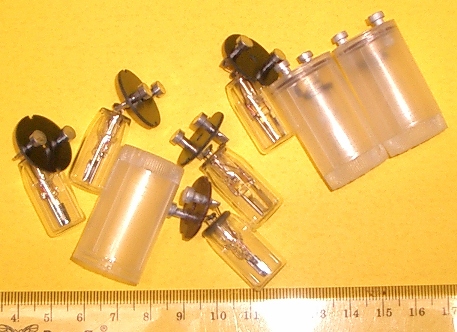
Starters
Source high-quality lighting starters directly from vetted Chinese manufacturers and suppliers. Designed for importers, wholesalers, and lighting brands seeking bulk wholesale pricing and OEM/ODM private-label production. Ensure reliable ignition and strict compliance for your lighting portfolios.
While LED technology dominates new installations, the global installed base of fluorescent and HID lighting remains massive. For wholesalers, facilities management suppliers, and distributors, sourcing reliable lighting starters in bulk is a high-volume, low-margin necessity. Because starters are considered a commodity, the sourcing challenge lies in maintaining strict quality control at scale, ensuring consistent strike voltages, and avoiding the hidden costs of premature failure in the field.
Technical Specifications and Procurement Criteria
When purchasing starters in bulk, precise specification prevents compatibility issues across different regional grids and lamp types. A starter must be perfectly matched to the lamp's wattage and the local mains voltage to ensure proper preheating of the lamp electrodes.
Key specifications to define with your manufacturer include:
- Wattage Range: Starters are typically banded (e.g., 4-22W, 4-65W, or 70-125W). Specifying a "universal" starter often means a 4-65W rating, but performance can degrade at the extremes of this range.
- Voltage: 110-130V (for single 110V operation or series 220V operation) versus 220-240V (single operation).
- Pin Material: Brass pins offer superior conductivity and corrosion resistance. Aluminum pins are cheaper but prone to oxidation and loose connections in older sockets.
- Housing Material: Polycarbonate (PC) is flame-retardant and highly durable, whereas cheaper ABS housings can become brittle under the constant thermal cycling of a light fixture.
| Technology | Glow Switch (Mechanical) | Electronic (Solid State) |
|---|---|---|
| Ignition Method | Bimetallic strip in neon/argon gas | Pulsed electronic circuit (PCB) |
| Lamp Life Impact | Causes flickering on startup; degrades lamp over time | Smooth, flicker-free start; extends tube life |
| End-of-Life Behavior | Often sticks, causing continuous end-glowing | Fails safe; shuts down defective lamps |
| Cost Profile | Highly economical, standard for wholesale | Premium priced, used in specification markets |
Manufacturing Realities and Quality Control
The manufacturing of traditional glow switch starters involves glass blowing, gas filling, and delicate assembly of bimetallic strips. Because the unit cost is pennies, factories rely on high-speed automated assembly. However, automation is only as good as its calibration. A slight misalignment in the stamping machine can lead to weak pin crimps, resulting in dead-on-arrival units.
Thorough Factory Audits are essential to verify that a supplier actually uses automated assembly and testing lines, rather than farming out manual assembly to sub-contractors during peak seasons.
Critical QC Checks for Lighting Starters
- Capacitor Verification: Ensure a high-quality radio interference suppression capacitor is actually installed and soldered correctly.
- Strike Voltage Testing: Sample batches must be tested to ensure ignition occurs within the specified voltage window.
- Pin Pull-Force Test: Pins must withstand standard insertion and extraction forces without dislodging from the canister.
- Endurance Testing: Continuous on/off cycling to verify the bimetallic strip or electronic circuit meets the promised lifespan (often 10,000+ cycles).
To prevent defective batches from leaving the factory, implementing rigorous Quality Control & Inspection protocols before shipment is highly recommended. Catching a batch with missing capacitors at the factory saves you from mass customer returns due to radio frequency interference (RFI).
Struggling with inconsistent starter quality or high defect rates? Let us audit your suppliers and implement strict pre-shipment testing.
Talk to our teamBulk Pricing, MOQs, and OEM Customization
Because starters are inexpensive, the economics of sourcing them rely entirely on volume. Pricing is highly sensitive to raw material costs (specifically copper/brass for the pins and the specific gas mix).
For distributors and brands, starters present an excellent opportunity for private labeling. Utilizing OEM/ODM Services allows you to pad-print your logo, part numbers, and certification marks directly onto the plastic canister, reinforcing brand visibility every time a maintenance technician opens a fixture.
Ready to consolidate your lighting accessory supply chain and secure better volume pricing? We handle negotiation, OEM branding, and logistics.
Get a free consultationFrequently Asked Questions
Sourcing lighting starters effectively is about mastering high-volume logistics and uncompromising quality control. By partnering with audited factories that utilize automated testing, you can secure reliable, compliant products that protect your brand's reputation in the field.
Get Sourcing Help for Starters
Tell us your requirements and our experts will connect you with verified manufacturers.