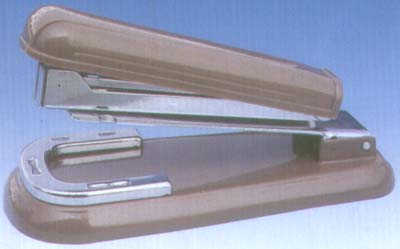
Staplers
Source high-quality staplers from vetted manufacturers and suppliers in China and Asia. This category is designed for importers, office supply wholesalers, and brands seeking reliable OEM and private-label production. Secure competitive bulk pricing and consistent mechanical quality for your procurement needs.
Sourcing staplers at volume requires balancing strict mechanical reliability with aggressive unit costs. While often viewed as a simple commodity, a stapler is a high-cycle mechanical device. A minor variance in spring tension, magazine alignment, or anvil strike geometry immediately results in misfires, jams, and user frustration. For procurement managers and brands, securing a factory capable of maintaining tight stamping tolerances across tens of thousands of units is the primary sourcing challenge.
Core Mechanical Specifications
The performance of a stapler is dictated by the quality of its internal metal components, regardless of the outer housing. When evaluating suppliers, you must look past the cosmetic exterior and specify the exact materials used in the mechanical assembly.
- Magazine and Track: The track that holds standard 24/6 or 26/6 staples must be stamped from cold-rolled steel (typically SPCC) with exact dimensional accuracy. If the track is too wide, staples will buckle; if too narrow, the pusher will bind.
- Pusher Spring: The constant-force spring must maintain consistent tension from the first staple to the last. Low-grade springs lose their temper over time, causing failure to feed.
- Anvil (Strike Plate): The anvil shapes the staple legs. It must be made from hardened steel or high-carbon alloys to withstand thousands of impacts without deforming or scoring.
- Housing and Overmolding: Standard desktop models utilize ABS plastic for the outer shell, often with TPE (Thermoplastic Elastomer) overmolding for ergonomic grips.
| Specification | Standard Desktop | Heavy-Duty Commercial |
|---|---|---|
| Internal Frame | 0.8mm - 1.0mm SPCC Steel | 1.2mm+ SPCC or Die-Cast Zinc |
| Typical Capacity | 20 to 25 sheets (80gsm) | 50 to 200+ sheets (80gsm) |
| Anvil Material | Standard stamped steel | Hardened high-carbon steel |
| Cycle Life Expectancy | 10,000 to 15,000 strikes | 30,000+ strikes |
Need help verifying a factory's mechanical assembly and stamping capabilities before placing a volume order?
Talk to our teamManufacturing Quality Control and Common Defects
The primary manufacturing hubs for office binding supplies are located in Zhejiang and Guangdong provinces. While many factories assemble staplers, the best manufacturers handle their own metal stamping and plastic injection molding in-house to control tolerances.
When establishing your Quality Control & Inspection protocols, inspectors should focus on functional testing rather than just visual checks.
Critical AQL Inspection Points for Staplers
- Jam Testing: Rapid continuous firing of a full strip of staples to check for feed failures.
- Penetration Testing: Stapling the maximum rated sheet capacity (e.g., 20 sheets of 80gsm paper) to ensure clean clinching.
- Anvil Alignment: Visual and mechanical check to ensure the driver blade strikes dead-center on the anvil.
- Plating Adhesion: Cross-hatch testing on the chrome or zinc-plated steel components to prevent premature rusting.
- Drop Testing: Verifying that ABS housings do not crack and internal springs do not dislodge upon impact.
OEM Customization and Private Labeling
For brands looking to differentiate, staplers offer significant customization potential. Engaging in OEM/ODM Services allows you to alter the housing design, incorporate custom Pantone color matching for corporate clients, and apply branding via pad printing or molded-in logos. Note that custom plastic colors require precise masterbatch mixing to ensure consistency across production batches, and custom molds for unique ergonomic shapes will require upfront tooling investments.
Typical MOQs, Pricing, and Lead Times
Pricing for staplers is highly sensitive to raw material costs (specifically steel and ABS resin) and the complexity of the internal mechanism. Factories that offer rock-bottom prices often achieve them by using thinner gauge steel for the internal frame or utilizing recycled plastics for the housing, which severely degrades the product's lifespan.
- Minimum Order Quantities (MOQs): Standard off-the-shelf models usually require an MOQ of 3,000 to 5,000 units. If you are specifying custom Pantone colors for the plastic housing, factories typically push the MOQ to 5,000 or 10,000 units to justify the resin color mixing setup.
- Lead Times: Expect 30 to 45 days for standard production runs. New OEM tooling will add 25 to 40 days to the initial timeline.
To ensure your supplier has the financial stability and equipment to fulfill large contracts consistently, conducting thorough Factory Audits is highly recommended. This confirms whether the supplier is a true manufacturer or merely a trading company assembling outsourced parts.
Looking to negotiate better terms, customize your product line, or consolidate shipments from multiple suppliers?
Get a free consultationFrequently Asked Questions
Sourcing reliable office supplies at scale means looking beyond the plastic shell and focusing on the integrity of the metal components inside. By setting strict mechanical tolerances and enforcing rigorous functional testing, you can secure a product that performs flawlessly in the end-user's hands. If you need support managing supplier vetting, quality assurance, or logistics, our team is ready to assist.
Get Sourcing Help for Staplers
Tell us your requirements and our experts will connect you with verified manufacturers.