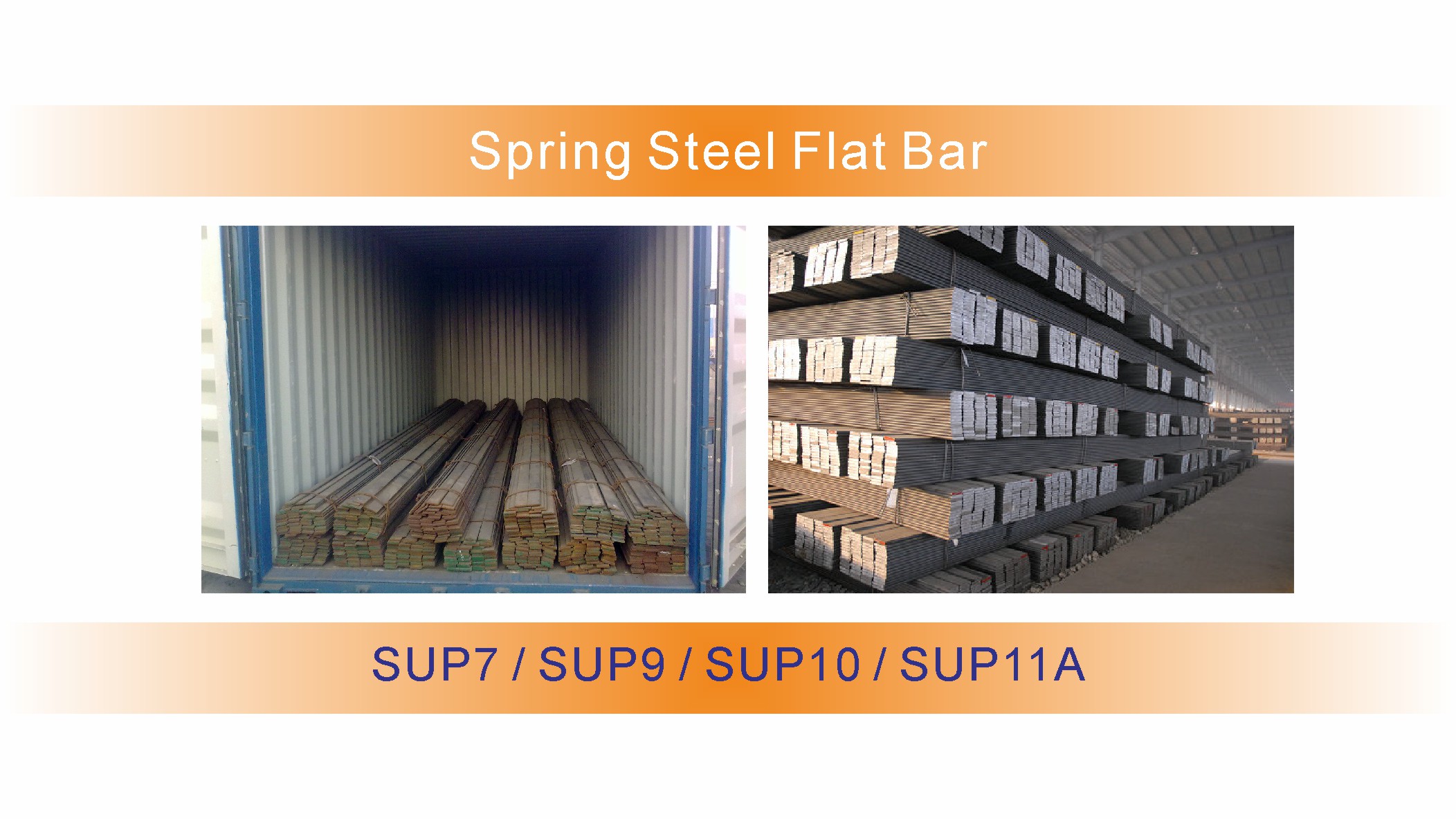
Spring Steel
Source high-yield spring steel from vetted suppliers and manufacturers across Asia. Designed for importers, wholesalers, and industrial procurement managers, our network provides bulk access to precision-rolled strips, coils, and wire. Secure reliable production for your demanding high-fatigue applications.
Sourcing spring steel in commercial volumes requires strict control over metallurgy and processing. Whether you are procuring high-carbon strips for precision stamping or alloy steel wire for heavy-duty coil springs, the core requirement is consistent yield strength and fatigue resistance. A minor deviation in carbon content, or poor temperature control during rolling, can lead to premature failure in the end product. Navigating the Asian steel market means distinguishing between top-tier mills capable of aerospace tolerances and secondary producers prone to surface defects.
Specifying Spring Steel: Grades and Delivery Conditions
To get accurate quotes and avoid catastrophic product failures, you must specify both the chemical composition (grade) and the exact delivery condition (annealed vs. hardened).
Common Grade Families
The choice of grade dictates the material's hardenability, operating temperature range, and fatigue life.
| Material Type | Common Grades | Key Characteristics | Typical Applications |
|---|---|---|---|
| High Carbon | 1070, 1075, 1095 | Cost-effective, high yield strength, lower hardenability | Flat springs, clock springs, saw blades |
| Silicon-Manganese | 9260 | Excellent fatigue life, high impact resistance | Automotive leaf springs, heavy equipment |
| Chromium-Vanadium | 6150 | High temperature resistance, deep hardening, tough | Valve springs, high-stress industrial coils |
Delivery Condition: Annealed vs. Hardened & Tempered
How you intend to process the steel dictates the state in which it must be delivered:
- Spheroidized Annealed: The steel is softened to allow for complex stamping, bending, or forming. After your factory forms the part, it must undergo a separate heat treatment (quenching and tempering) to achieve spring properties.
- Hardened and Tempered (Pre-hardened): The steel has already been heat-treated at the mill to its final spring hardness. It is ready for flat blanking or very shallow bends, but cannot endure sharp radii without snapping.
Manufacturing Defects and Quality Control
Spring steel is highly susceptible to notch sensitivity—meaning even microscopic surface imperfections can act as stress concentrators, leading to fatigue cracking under cyclic loading. When sourcing from overseas mills, physical verification is non-negotiable.
Critical Quality Checks for Spring Steel
- Decarburization Limits: Verify that surface carbon loss is within acceptable limits (typically under 1.5% of material thickness), as decarb destroys fatigue life.
- Non-Metallic Inclusions: Ensure the steel is clean; slag or oxides in the matrix cause micro-cracking.
- Surface Finish: Check for pits, scratches, or rolling marks that act as stress risers.
- Dimensional Tolerance: Strict thickness consistency is required, as minor variations drastically alter the final spring rate.
- Edge Condition: Specify if you need slit edges, deburred edges, or fully rounded edges to prevent edge cracking during forming.
Relying solely on a supplier's provided Mill Test Certificate (MTC) is a common pitfall. Implementing independent Quality Control & Inspection before the material leaves the facility ensures that the coils or wire you receive actually match the MTC and are free of surface defects.
Struggling with inconsistent steel quality or fatigue failures? Let us audit your supply chain and implement strict metallurgical controls.
Talk to our teamSupplier Verification and Factory Capabilities
Not all suppliers listing spring steel are actual mills; many are trading companies or slitting centers. While service centers are useful for low MOQs and custom slitting, they do not control the primary melting and rolling processes.
When evaluating a manufacturer, you must look at their cold-rolling precision, their continuous heat-treatment lines, and their in-house testing equipment (spectrometers, tensile testers, and metallography labs). Conducting thorough Factory Audits helps you determine whether a supplier is a primary producer with strict ISO 9001/IATF 16949 quality systems or a secondary trader buying surplus coils.
Pricing, MOQs, and Lead Times
Spring steel pricing fluctuates based on global iron ore and coking coal markets, as well as the cost of alloying elements like vanadium and chromium.
When negotiating, remember that ultra-low prices usually indicate compromises in raw material cleanliness (high inclusions) or rushed heat treatment. Engaging a partner for professional Product Sourcing can help you benchmark pricing across pre-vetted mills to ensure you are paying fair market value for genuine, high-grade material.
Ready to secure a reliable supply of commercial spring steel? We negotiate pricing and manage MOQs directly with top-tier Asian mills.
Get a free consultationFrequently Asked Questions
Sourcing spring steel is highly technical; success depends entirely on the metallurgical integrity of the material and the precision of the rolling process. By partnering with experienced sourcing professionals, you can bypass substandard traders, verify mill capabilities, and secure the exact mechanical properties your production demands.
Get Sourcing Help for Spring Steel
Tell us your requirements and our experts will connect you with verified manufacturers.