Solar Trackers
Source high-performance solar trackers from vetted manufacturers and wholesale suppliers. Built for utility-scale developers, distributors, and brands seeking OEM production, our network delivers reliable single-axis and dual-axis tracking systems engineered to maximize energy yield and withstand harsh environmental conditions.
Sourcing solar trackers in bulk requires navigating a complex intersection of heavy structural steel fabrication and precise electromechanical engineering. A tracker's viability isn't just about the theoretical yield increase; it hinges on its ability to survive 25 years of wind loading, temperature extremes, and corrosive environments without catastrophic motor failure or structural fatigue.
Key Engineering Specifications for Bulk Procurement
When specifying tracker systems with a manufacturer, the technical requirements must align with the target installation environment. Off-the-shelf solutions rarely fit utility-scale topographies perfectly.
- Tracking Range & Accuracy: Single-axis trackers typically offer a tracking range of plus or minus 60 degrees. Verify the tracking accuracy (usually standard at 0.5 to 2 degrees) to ensure optimal alignment with the sun's trajectory.
- Wind Stow Speed: Critical for structural survival. Standard systems stow at 18 to 22 meters per second. Projects in cyclone-prone regions require custom engineering for higher stow speeds and modified torque tube thicknesses.
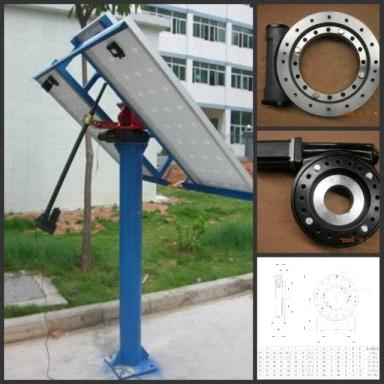
- Drive Mechanism: Slew drives offer robust torque for multi-row linked systems, while linear actuators are common in decentralized, single-row architectures. The choice impacts both maintenance schedules and terrain adaptability.
- Controller Power: Specify whether the NC/PLC controllers are self-powered (via a dedicated small PV string and lithium battery backup) or AC-powered from the grid. Self-powered units reduce trenching and cabling costs.
Manufacturing Quality and Factory-Level Risks
The primary failure points in solar trackers rarely stem from the fundamental design; they originate on the factory floor during metal treatment and component assembly.
- Steel Processing & Anti-Corrosion: The structural integrity relies on the steel grade (commonly Q235B, Q355B, or high-tensile equivalents) and the hot-dip galvanization (HDG). HDG thickness must exceed 65 microns (often up to 85 microns for coastal or high-humidity environments) to prevent premature rusting. Zinc-Aluminum-Magnesium coatings are also becoming a premium standard for superior corrosion resistance at lower coating weights.
- Actuator and Bearing Sealing: Motors, slew drives, and spherical bearings must achieve an IP65 or IP67 rating. Poor gasket installation or substandard machining tolerances lead to moisture ingress, sand accumulation, and rapid mechanical failure.
- Electronics Reliability: The tracking controller PCB must be conformal coated to resist condensation and thermal cycling in the field.
Critical Factory Quality Checks
- Verify steel mill certificates for yield strength and chemical composition before fabrication.
- Measure hot-dip galvanization thickness using a digital coating thickness gauge.
- Conduct accelerated aging and salt spray tests on drive components and fasteners.
- Validate IP ratings on all motors and control boxes via water ingress testing.
To mitigate these risks before production finishes, conducting rigorous Factory Audits is essential to verify the supplier's in-house machining capabilities and QA protocols. Furthermore, implementing strict Quality Control & Inspection prior to container loading prevents costly on-site assembly failures.
Ensure your tracker supplier meets utility-grade quality standards. Speak with our sourcing engineers.
Get a free consultationMOQs, Pricing Drivers, and Lead Times
Solar tracker manufacturers operate on project-based economies of scale. Understanding their production constraints helps in negotiating better terms.
- MOQs: Minimum order quantities are rarely based on a unit count. Instead, factories typically require a minimum project size, often starting at 500kW to 1MW, or a minimum of one 40-foot High Cube (40HQ) container to justify custom structural production runs and setup times for the roll-forming machines.
- Pricing: Costs are highly sensitive to global steel commodity prices, which make up the bulk of the system's weight. Advanced features like bifacial tracking algorithms, self-powered controllers, and heavy-duty slew drives increase the per-watt cost but often deliver a lower Levelized Cost of Energy (LCOE) over the project lifespan.
- Lead Times: Standard production takes 30 to 45 days after drawing approval. Custom structural engineering for specific terrain slopes or non-standard panel sizes can extend this to 60 days.
| Component | Standard Specification | Premium / Harsh Environment |
|---|---|---|
| Steel Coating | HDG 65 microns | HDG 85+ microns or Zn-Al-Mg alloy |
| Drive Type | Standard Linear Actuator | Enclosed Slew Drive (IP67) |
| Control System | Astronomical time-based | Closed-loop AI with bifacial optimization |
Because tracker systems consist of dense, heavy steel components (tubes, posts, purlins) alongside delicate electronics, coordinating the Shipping & Freight requires careful container loading plans to maximize weight limits without crushing the control units or damaging the galvanized finishes.
Need accurate pricing and freight estimates for your next utility project? Let us manage the supplier negotiations and logistics.
Talk to our teamFrequently Asked Questions
Procuring solar trackers at scale is less about buying an off-the-shelf product and more about partnering with a manufacturer capable of rigorous, project-specific engineering. By validating structural materials, enforcing strict electromechanical tolerances, and managing the heavy logistics, you can secure systems that deliver true long-term yield. If you need support executing a complex tracker procurement strategy, our team is ready to help.
Get Sourcing Help for Solar Trackers
Tell us your requirements and our experts will connect you with verified manufacturers.