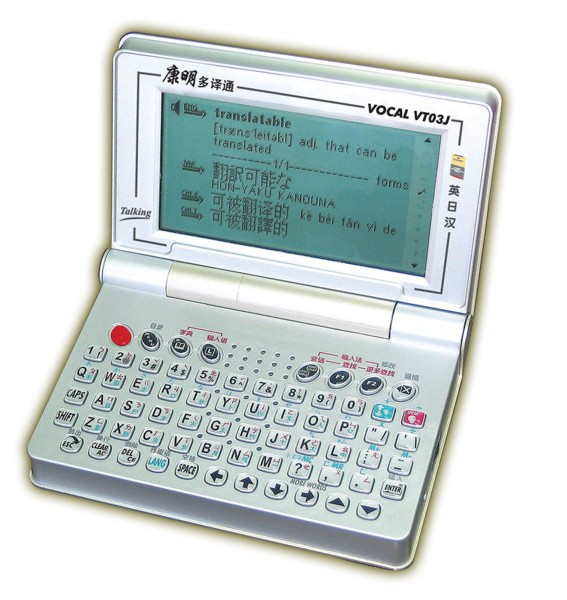
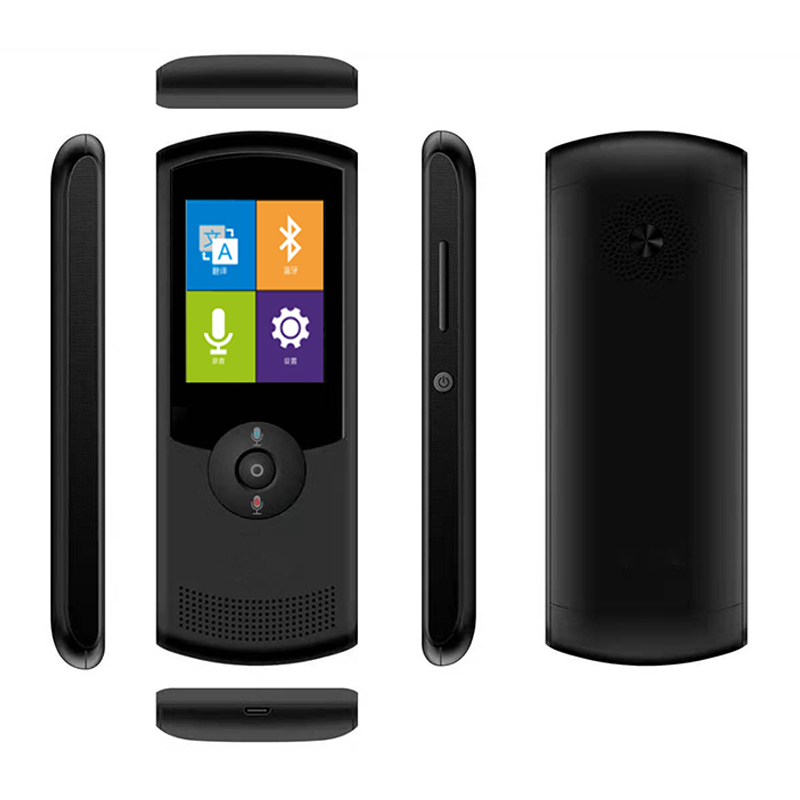
Smart Translators
Source Smart Translators directly from vetted manufacturers and suppliers. This catalog is designed for importers, electronics distributors, and consumer brands looking for wholesale procurement or custom OEM and private-label production. Compare factory-direct pricing and capabilities for high-volume orders.
Sourcing smart translators requires navigating a complex supply chain where hardware quality is only half the equation. A successful product relies heavily on acoustic engineering—specifically directional microphone arrays and noise cancellation—paired with stable firmware and reliable API licensing for translation engines. When buying in bulk or developing a custom device, understanding the intersection of hardware specifications and software integration is critical to avoiding high return rates.
Core Hardware and Software Specifications
The performance of a smart translator hinges on its ability to isolate spoken audio in noisy environments and process it with minimal latency. Off-the-shelf white-label models often cut corners on acoustic processing, relying on basic single-microphone setups that fail in real-world travel scenarios.
When evaluating factory prototypes, pay close attention to the digital signal processor (DSP) and the microphone array.
| Specification | Entry-Level / White-Label | Premium OEM/ODM |
|---|---|---|
| Microphone Array | Single or dual standard mic | Quad-mic array with active DSP noise cancellation |
| Translation Engines | Free/Basic APIs (often unstable) | Licensed commercial APIs (Google, Nuance, iFlytek) |
| Offline Capability | None, or 1-2 basic languages | Neural NPU for 10+ languages offline |
| Connectivity | Wi-Fi only | Global 4G LTE (eSIM) + Wi-Fi |
| Response Latency | Over 1.5 seconds | Under 0.5 seconds |
Need help identifying factories with proven acoustic engineering and stable API licensing? We can help you vet capable suppliers.
Talk to our teamManufacturing and Quality Control Checkpoints
Assembly of smart electronics involves precise tolerances, especially around the microphone housing. Improper sealing or poor acoustic chamber design can introduce internal resonance, severely degrading voice recognition accuracy.
Implementing rigorous Quality Control & Inspection during production is essential. Standard visual inspections are not enough; functional testing must simulate real-world usage.
Critical Factory QC Checkpoints
- Acoustic calibration: Testing microphone sensitivity in simulated 70dB+ ambient noise environments.
- Network stability: Verifying eSIM provisioning and switching speed across different frequency bands.
- Battery drain testing: Ensuring power management firmware does not cause excessive drain during standby.
- Screen responsiveness: Checking the IPS/OLED touch panels for dead zones and UI latency.
- Firmware OTA capability: Confirming over-the-air update mechanisms are functional before leaving the factory.
Additionally, any device with Wi-Fi or cellular capabilities must meet strict regulatory standards for your target market. Partnering with a factory that understands Compliance & Testing for CE (Europe), FCC (USA), and RoHS is non-negotiable to prevent customs seizures.
Customization and OEM/ODM Sourcing
If you are building a proprietary brand, you must decide between private-labeling an existing factory mold or developing a custom unit. Many factories offer OEM/ODM Services, allowing you to customize the outer casing, UI/UX, and language packages.
For custom firmware, clarify who owns the software IP and how translation engine API costs are handled. Some manufacturers bundle a one-year API license into the unit cost, while others require you to secure and integrate your own API keys.
Typical MOQs, Pricing, and Lead Times
Volume requirements and production timelines vary significantly based on the level of customization.
Planning a bulk order or custom translator project? Let us handle supplier negotiation and production oversight.
Get a free consultationFrequently Asked Questions
Successfully sourcing smart translators requires balancing hardware durability with software reliability. By partnering with manufacturers who excel in acoustic engineering and secure API integration, you can deliver a premium device that performs flawlessly in the field.
Get Sourcing Help for Smart Translators
Tell us your requirements and our experts will connect you with verified manufacturers.