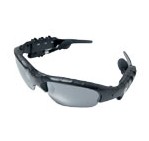
Smart Glasses
Source high-quality Smart Glasses directly from vetted manufacturers and wholesale suppliers. Built for importers, electronics distributors, and consumer tech brands seeking reliable OEM and private-label production, our network delivers scalable manufacturing solutions with strict quality oversight.
Sourcing smart glasses requires balancing complex electronics miniaturization with ergonomic eyewear design. Whether you are developing Bluetooth audio sunglasses or heads-up display (HUD) frames, the core manufacturing challenge lies in integrating batteries, micro-PCBs, and directional audio components into slim temple arms without compromising weight, durability, or user comfort.
Technical Specifications & Component Integration
Successful smart eyewear production hinges on strict weight management and heat dissipation. Standard optical frames weigh between 15 and 25 grams; smart glasses must incorporate additional hardware while staying under the 45-gram threshold to remain comfortable for all-day wear.
When evaluating factory capabilities, pay close attention to their component sourcing and PCB layout expertise. The temple arms must house the mainboard, Bluetooth chipset (typically Realtek or Qualcomm for audio variants), and lithium-polymer batteries.
| Specification | Bluetooth Audio Glasses | AR / Display Glasses |
|---|---|---|
| Target Weight | 30 to 45 grams | 50 to 80 grams |
| Battery Capacity | 100mAh to 150mAh | 300mAh to 500mAh+ |
| Primary Chipset | Qualcomm / Realtek | Snapdragon AR series |
| Key Challenge | Directional sound leakage | Heat dissipation & optics |
Navigating PCB miniaturization and factory selection? Let's discuss your smart eyewear project.
Talk to our teamManufacturing Challenges and Quality Control
The most critical failure point in smart glasses manufacturing is the hinge mechanism. Because the battery is often housed in one temple arm and the mainboard in the other, delicate wiring must pass directly through the folding hinges. Poorly engineered hinges or subpar wire housing will lead to circuit failure after repeated folding.
To mitigate this, stringent Quality Control & Inspection protocols must be established before mass production begins.
Critical Factory Testing Protocols
- Hinge Fatigue Testing: Minimum 10,000 to 20,000 fold cycles to verify wire integrity.
- Directional Audio Calibration: Measuring sound leakage at a 0.5-meter radius.
- IP Rating Verification: IPX4 or IPX5 testing for sweat and rain resistance.
- Drop Testing: 1.2-meter drop test onto steel or concrete surfaces.
- Lens Impact Resistance: FDA drop-ball testing compliance for the optical lenses.
Batteries present another major compliance hurdle. Since lithium-polymer batteries sit directly against the user's temples, thermal management is paramount. Ensure your factory conducts rigorous aging tests and that the final product undergoes proper Compliance & Testing to secure CE, FCC, RoHS, and UN38.3 certifications.
Customization: White-Label vs. OEM/ODM
When bringing smart glasses to market, buyers typically choose between modifying existing factory molds (white-labeling) or developing custom frames from scratch.
If you utilize existing factory molds, customization is usually limited to frame color, lens type (e.g., polarized, blue-light blocking, photochromic), and branding. This path requires significantly lower upfront investment.
For brands requiring unique frame designs or proprietary hardware integration, OEM/ODM Services are necessary. Custom frame development requires new injection molds for TR90 or acetate materials, which incurs tooling costs. Furthermore, altering the temple shape requires complete re-engineering of the internal PCB layout, extending the Product Development timeline by several months.
Typical Pricing, MOQs, and Lead Times
Pricing and Minimum Order Quantities (MOQs) in the smart eyewear sector depend heavily on the level of customization and the sophistication of the internal components.
Unit costs for entry-level Bluetooth audio glasses typically range from $12 to $25, depending on the chipset, battery quality, and lens material. Advanced models featuring bone conduction audio, premium TR90 frames, or photochromic lenses will push unit costs into the $30 to $50 range. AR and display glasses operate on an entirely different cost structure, often starting well above $100 per unit due to the expensive optical engines and micro-displays.
Need accurate pricing and lead times for your specific volume requirements?
Get a free consultationFrequently Asked Questions
Sourcing smart glasses is an exercise in managing trade-offs between battery life, audio quality, and frame aesthetics. By partnering with manufacturers who possess deep expertise in both consumer electronics and optical engineering, you can secure a product that performs reliably in the field.
Get Sourcing Help for Smart Glasses
Tell us your requirements and our experts will connect you with verified manufacturers.