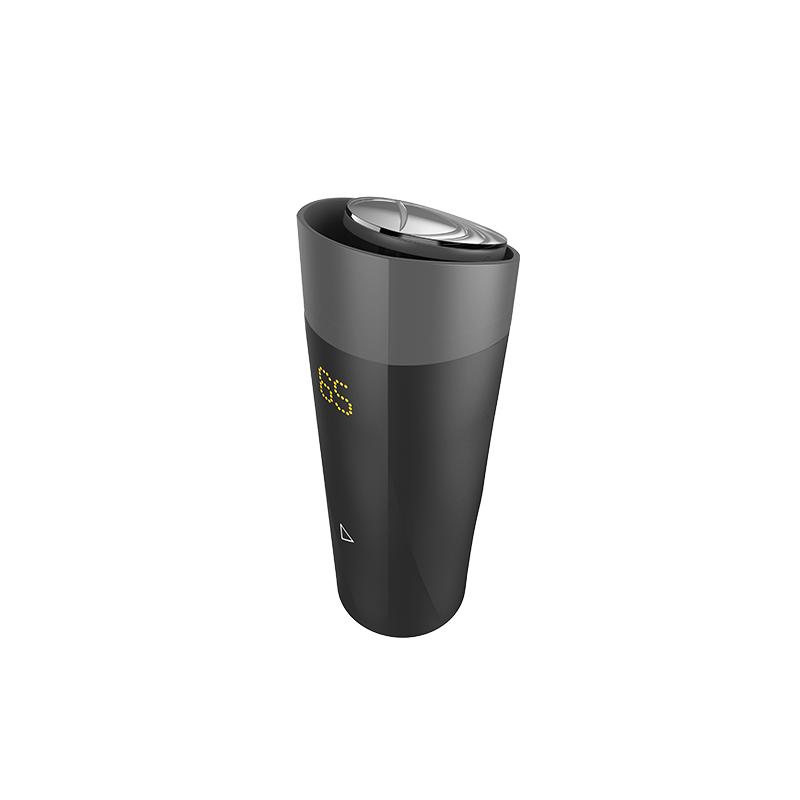
Smart Drinkware
Source Smart Drinkware from vetted suppliers and manufacturers across Asia. This category serves importers, wholesalers, and brands looking for reliable OEM and private-label production of connected hydration products. Secure competitive pricing and scalable manufacturing for your volume orders.
Sourcing smart drinkware requires bridging two distinct manufacturing disciplines: traditional vacuum-insulated hardware and consumer electronics. The primary challenge for volume buyers is finding a factory that excels at both. A supplier might have excellent stainless steel stamping and vacuum sealing capabilities but lack the cleanroom environments and engineering oversight required for reliable PCB assembly and battery integration.
Core Specifications & Component Selection
When developing or selecting a smart drinkware product, the bill of materials (BOM) dictates both the failure rate and the unit cost. Off-the-shelf "white label" models often compromise on sensor accuracy or battery lifecycle to hit a lower price point.
Key Technical Variables
- Temperature Sensing: Standard models use basic contact thermistors. Premium models utilize non-contact infrared sensors or high-precision NTC thermistors integrated directly into the inner wall for real-time accuracy.
- Connectivity Modules: If the product pairs with an app, specify the Bluetooth standard (BLE 4.2 vs. BLE 5.0). BLE 5.0 offers better power efficiency, which is critical given the limited physical space for battery cells in the base of a tumbler or bottle.
- Power & Charging: Lithium-polymer (Li-Po) pouch cells are common, but cylindrical cells (like 18650s) offer better longevity if the design allows for the footprint. Magnetic pogo-pin charging or Qi wireless charging are heavily preferred over USB-C ports, as physical ports create severe vulnerabilities for water ingress.
| Subsystem | Standard Specification | Premium OEM Application |
|---|---|---|
| Inner Vessel | Food-grade 304 Stainless Steel | Medical-grade 316 Stainless Steel |
| Waterproofing | IPX5 (Splash resistant) | IPX7 (Submersible base) |
| Display | Basic segmented LED | OLED touch matrix |
| Sterilization | None | UV-C LED integrated in cap |
Need to align your smart drinkware specifications with the right factory? Let us help you identify capable electronics and hardware manufacturers.
Talk to our teamManufacturing Vulnerabilities & Quality Control
The highest defect rates in smart drinkware occur at the mating point between the electronic base and the insulated vessel. Because these products are washed frequently, structural integrity is paramount.
During Factory Audits, verify that the supplier has dedicated ultrasonic welding or specialized potting processes to seal the electronic compartments. Standard glue application is insufficient for long-term waterproofing and will lead to RMA spikes when the electronics short out after a few washes.
Critical In-Line & Pre-Shipment Inspections
- Vacuum Integrity Testing: Ensuring the heat required for PCB potting did not compromise the vacuum seal between the steel walls.
- Water Ingress Testing: Submersion tests for IPX7 claims on fully assembled units, specifically checking the charging interface.
- Thermal Accuracy Calibration: Verifying the digital readout matches the actual liquid temperature within a tolerance of plus or minus 1 degree Celsius.
- Battery Cycle Testing: Ensuring charge retention and verifying overcharge protection circuits are functioning correctly.
If you are customizing the firmware or app integration, implementing rigorous Quality Control & Inspection at the factory level is non-negotiable before the goods are containerized.
Navigating Compliance & Certifications
Smart drinkware is heavily regulated because it is both a food-contact item and an electronic device with a lithium battery. You cannot rely on a factory's generic CE mark; certifications must often be held in the importer's name or verified for the specific production run.
- Food Contact: FDA (US) or LFGB (Europe) testing for the inner stainless steel, silicone gaskets, and any Tritan/plastic components.
- Electronics: FCC Part 15 (US) or CE RED (Europe) for the Bluetooth/wireless components.
- Hazardous Substances: RoHS compliance for the PCB and internal wiring.
- Battery Transport: UN38.3 certification is mandatory for shipping lithium batteries via air or ocean freight.
Partnering with a sourcing team that manages Compliance & Testing ensures your shipment isn't held at customs due to missing battery declarations or invalid materials testing reports.
Typical MOQs, Tooling, and Lead Times
Because smart drinkware requires electronics procurement, lead times are generally longer than standard drinkware. Factories must source ICs, displays, and batteries before assembly can begin.
When utilizing OEM/ODM Services, expect to pay NRE (Non-Recurring Engineering) fees if you require custom PCB layouts, proprietary app development, or unique display housings.
Planning a custom smart drinkware run? We manage the entire process from tooling negotiation to final PCB assembly and freight.
Get a free consultationFrequently Asked Questions
Sourcing smart drinkware successfully means managing a complex BOM and enforcing strict waterproofing standards on the assembly line. By defining exact component specifications and verifying factory capabilities early, you can avoid the high defect rates that plague lower-tier suppliers.
Get Sourcing Help for Smart Drinkware
Tell us your requirements and our experts will connect you with verified manufacturers.