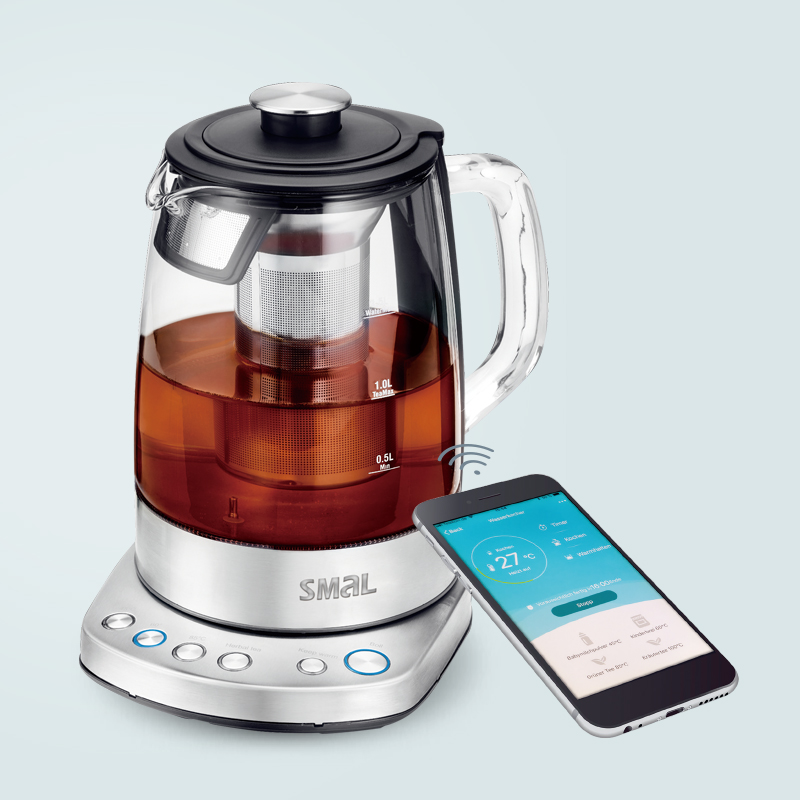
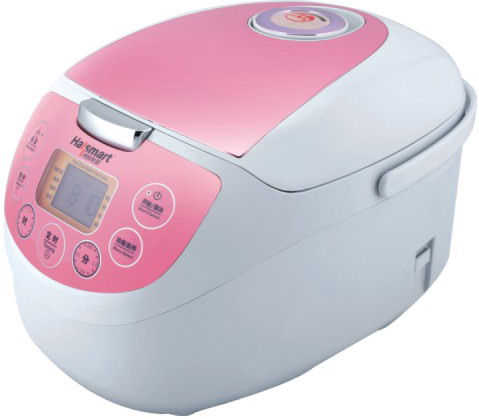
Smart Cookers
Source high-quality Smart Cookers from vetted manufacturers and suppliers in Asia. Designed for importers, wholesale distributors, and appliance brands seeking scalable OEM/ODM production, this catalog features bulk-ready intelligent cooking appliances built to exact international safety, food-contact, and wireless connectivity standards.
Sourcing smart cookers bridges traditional thermal engineering with IoT connectivity. The core manufacturing challenge isn't simply achieving consistent heat distribution; it is ensuring that sensitive PCBAs, Wi-Fi modules, and digital displays survive long-term exposure to extreme heat and pressurized steam. For volume buyers, specifying the right internal architecture upfront prevents costly field failures and connectivity drops down the line.
Core Technologies: Heating and Connectivity
The defining features of a smart cooker dictate its bill of materials (BOM) and assembly complexity. When negotiating specifications with suppliers, you must define the heating element technology and the IoT ecosystem architecture.
Induction Heating (IH) vs. Thermal Plates
Entry-level and mid-tier cookers rely on cast aluminum heating plates, while premium models utilize Induction Heating (IH) for faster, more precise temperature control. IH requires copper coil assemblies and more robust power management on the PCBA.
| Specification | Thermal Heating Plate | Induction Heating (IH) |
|---|---|---|
| Heat Distribution | Bottom-heavy, prone to hot spots | Uniform 360-degree heating |
| Temperature Precision | Standard (+/- 5 degrees Celsius) | High (+/- 1 degree Celsius) |
| Power Efficiency | Moderate | High (faster heat transfer) |
| Unit Cost Impact | Baseline | Adds premium to unit cost |
IoT Modules and App Ecosystems
Most Chinese manufacturers utilize third-party IoT modules—most commonly Tuya—to handle Wi-Fi and Bluetooth connectivity. Tuya provides a stable, white-label app environment that drastically reduces software development costs. If your brand requires a proprietary app ecosystem, you will need suppliers capable of custom API integration and firmware development. Navigating these software requirements is a core part of comprehensive OEM/ODM Services when bringing a connected appliance to market.
Need help vetting suppliers for custom IoT integration and reliable IH manufacturing?
Talk to our teamManufacturing Vulnerabilities and Quality Control
A smart cooker's lifespan is dictated by how well its electronics are isolated from its cooking environment. Steam ingress and thermal cycling are the primary culprits for premature failure.
When evaluating a factory's assembly line, pay close attention to how they handle the NTC (Negative Temperature Coefficient) thermistors and the main control board. The PCBA must feature adequate conformal coating to resist moisture. Furthermore, the inner pot's non-stick coating (typically PTFE or ceramic) must be applied in a dust-free environment and cured at precise temperatures to prevent flaking.
Critical QC Checkpoints for Smart Cookers
- PCBA potting and conformal coating integrity (moisture resistance).
- NTC thermistor calibration across 40 to 150 degree Celsius ranges.
- Lid hinge fatigue testing (minimum 15,000 mechanical cycles).
- Inner pot coating adhesion (cross-hatch testing post-boil).
- Pressure release valve actuation and fail-safe testing.
Implementing rigorous Quality Control & Inspection protocols during production—not just pre-shipment—is essential to catch issues like poor soldering on the Wi-Fi module or uneven thermal paste application before units are fully assembled.
Regulatory Compliance and Certifications
Smart cookers sit at the intersection of electrical safety, food safety, and wireless transmission, requiring a complex matrix of certifications.
- Electrical Safety: UL or ETL (North America), CE and CB scheme (Europe).
- Food Contact Materials (FCM): FDA compliance (US) or LFGB (Europe) for the inner pot coating, silicone seals, and steam valves.
- Wireless Transmitters: FCC Part 15 (US) or RED (Europe) for the Wi-Fi/Bluetooth modules.
Relying on a factory's existing certificates is risky; certificates are often tied to specific BOMs. If you change the pot coating or the Wi-Fi module, the certification may be invalidated. Proper Compliance & Testing ensures your specific production run meets market regulations.
Pricing, MOQs, and Lead Times
The small kitchen appliance sector in hubs like Shunde and Zhongshan operates on tight margins and high volumes. Customization level is the primary driver of MOQ and lead time.
Tooling for a completely custom exterior housing typically requires an investment of tens of thousands of dollars and adds 30 to 45 days to the initial development timeline. For brands looking to move faster, modifying the CMF (Color, Materials, Finish) of an existing reliable mold is a highly effective strategy.
Optimize your procurement strategy and negotiate better terms with top-tier appliance manufacturers.
Get a free consultationFrequently Asked Questions
Successfully sourcing smart cookers requires balancing advanced IoT functionality with rugged thermal engineering. By prioritizing PCBA protection, rigorous food-safe material verification, and stable wireless ecosystems, you can deliver a connected appliance that performs reliably in the modern kitchen.
Get Sourcing Help for Smart Cookers
Tell us your requirements and our experts will connect you with verified manufacturers.