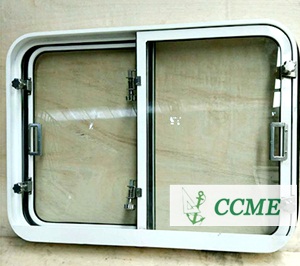
Sliding Windows
Source premium sliding windows directly from vetted manufacturers and wholesale suppliers. Built for importers, distributors, and construction procurement managers, our network offers scalable OEM/ODM production, competitive bulk pricing, and strict quality control for commercial and residential real estate projects.
Sourcing sliding windows at scale requires balancing thermal performance, structural integrity, and architectural aesthetics. Whether specifying for high-rise residential developments or commercial retrofits, the primary challenge lies in aligning factory capabilities with strict regional building codes while maintaining cost-efficiency across large production runs.
Profile Extrusions and Material Specifications
The foundation of any high-performing sliding window is the frame profile. Buyers must clearly specify the material grade, wall thickness, and thermal management systems to ensure compliance with regional energy codes (such as NFRC in North America or CE requirements in Europe).
For aluminum profiles, standard commercial applications typically require 6063-T5 aluminum alloy with a minimum wall thickness of 1.4mm to 2.0mm, depending on the wind load requirements of the destination market. If energy efficiency is a priority, thermally broken aluminum using PA66 nylon polyamide strips is non-negotiable. For uPVC variants, UV resistance is the critical metric; profiles destined for high-UV environments like Australia or the Middle East must contain adequate titanium dioxide (TiO2) to prevent yellowing and embrittlement.
| Material Profile | Thermal Performance | Structural Strength | Typical Application |
|---|---|---|---|
| Thermally Broken Aluminum | High (with PA66 strips) | Excellent (large spans) | Premium residential & commercial |
| Standard Aluminum | Low (high transfer) | Excellent | Mild climates & industrial |
| uPVC (Multi-chamber) | Superior | Moderate (needs steel core) | Mass-market residential |
Navigating regional building codes and factory capabilities can be complex. Let us help you match your exact specifications with the right manufacturing partner.
Talk to our teamGlazing and Hardware Mechanics
The glass unit and the sliding hardware dictate both the energy efficiency and the user experience of the window. When specifying double or triple glazing (IGUs), you must detail the spacer type (warm edge vs. aluminum), the gas fill (Argon or Krypton, requiring a fill rate over 90 percent), and the Low-E coating positioning (typically on surface 2 or 3).
Hardware is the most common point of failure in sliding windows. Heavy sashes require precision-engineered rollers (often tandem stainless steel or heavy-duty nylon) and robust tracks. Relying on default factory hardware can lead to premature failure. Specify recognized international brands (like Roto, Hoppe, or Siegenia) or high-tier domestic Chinese equivalents (like Kinlong or Hopo) to ensure longevity.
Critical Quality Control Checks
Catching defects before the windows are crated is vital, as post-shipment remediation is nearly impossible. Implementing strict quality control and inspection protocols at the factory level ensures your specifications are met.
Pre-Shipment Inspection Focus Areas
- Corner joint integrity: Check for seamless welding on uPVC or precise crimping and gluing on aluminum.
- Weatherstripping: Ensure EPDM or silicone gaskets are continuous and properly seated, avoiding cheap PVC seals.
- Roller operation: Test sash movement under simulated load for smooth, frictionless gliding.
- IGU sealing: Verify the primary (butyl) and secondary (silicone/polysulfide) sealants are uniformly applied without gaps.
- Coating thickness: Measure powder coating (minimum 60-80 microns) or anodizing thickness (minimum 15-25 microns).
For buyers entering new markets or stringent regulatory environments, arranging proper compliance and testing for air infiltration, water penetration, and structural wind loads is a necessary step before mass production begins.
Sourcing Mechanics: Pricing, MOQs, and Logistics
Sliding window pricing is highly volatile, driven by aluminum ingot market rates, glass specifications, and custom extrusion tooling. Most reputable factories operate with Minimum Order Quantities (MOQs) based on square meterage rather than unit count.
Logistics for sliding windows demand specialized handling. Glass is heavy and fragile, requiring robust export packaging—typically fumigated wooden crates or steel A-frames. Efficient container loading is an art; poorly loaded containers result in high breakage rates. Coordinating shipping and freight with partners experienced in oversized, fragile building materials is critical to protecting your margins.
Looking to optimize your landed costs? We can analyze your current BOM and logistics setup to identify efficiencies in your supply chain.
Get a free consultationFrequently Asked Questions
Successfully sourcing sliding windows in volume is less about finding the lowest unit price and more about rigorous specification management and risk mitigation. By thoroughly defining your profile, hardware, and glass requirements—and enforcing those standards on the factory floor—you can secure architectural-grade products that protect your project's timeline and reputation.
Get Sourcing Help for Sliding Windows
Tell us your requirements and our experts will connect you with verified manufacturers.