Slaughtering Equipment
Source industrial slaughtering equipment from vetted manufacturers and wholesale suppliers. Designed for agricultural machinery importers, procurement managers, and distributors, our network provides high-capacity abattoir machinery built to strict food safety standards. Ensure compliance and reliability for your bulk orders.
Sourcing industrial slaughtering equipment requires balancing high-throughput efficiency with uncompromising food safety standards. For procurement managers and equipment distributors, finding manufacturers capable of delivering hygienic, durable machinery that withstands aggressive daily washdowns is the primary challenge. Success in this category hinges on verifying material authenticity, sanitary design principles, and heavy-duty motor reliability before the machinery ever leaves the factory floor.
Critical Specifications and Material Selection
In abattoir environments, equipment is subjected to blood, animal fats, and harsh chemical cleaning agents. Specifying the correct materials and electrical protections is non-negotiable for longevity and compliance.
- Stainless Steel Grades: Structural frames and contact parts must be constructed from austenitic stainless steel. While SUS304 is the industry standard for most general processing areas, SUS316 is required for blood processing zones, rendering tanks, and areas exposed to high-saline or highly acidic byproducts.
- Ingress Protection (IP): Motors, control panels, and sensors must be rated for high-pressure, high-temperature washdowns. Specify IP66 as an absolute minimum, with IP69K highly recommended for direct-wash zones.
- Surface Finish: Food-contact surfaces must have a surface roughness (Ra) of 0.8 micrometers or lower to prevent bacterial adhesion.
| Material / Component | Standard Specification | Premium / High-Risk Area Spec |
|---|---|---|
| Steel Grade | SUS304 | SUS316L |
| Motor Protection | IP66 (Washdown duty) | IP69K (High-temp/pressure resistant) |
| Weld Finish | Pickled and passivated | Mechanically polished (Ra ≤ 0.8µm) |
| Pneumatics | Standard enclosed | Corrosion-resistant stainless bodies |
Ensure your equipment meets strict food safety and washdown standards with our vetted manufacturing network.
Talk to our teamManufacturing Quality and Sanitary Design
The difference between a reliable supplier and a high-risk one often comes down to their fabrication techniques. Poor welding or improper structural design creates harbor points for pathogens like Listeria and Salmonella, rendering the equipment non-compliant with HACCP and ISO 22000 standards.
When evaluating a manufacturer, you must look beyond the spec sheet and into their fabrication floor. Continuous TIG welding is required; spot welding or leaving open crevices is unacceptable in sanitary design. Tubular frames should be completely sealed, and horizontal surfaces should be minimized or pitched to allow water drainage.
Conducting rigorous Factory Audits is essential to verify a supplier's welding capabilities, their adherence to sanitary design principles, and their ability to source authentic food-grade components. Furthermore, ensure the factory can provide the necessary documentation for Compliance & Testing, such as CE or UL certifications for electrical panels and NSF or FDA compliance for food-contact belts and polymers.
Factory Evaluation Checklist for Slaughtering Machinery
- Verify continuous, polished TIG welds on all structural and contact surfaces.
- Ensure total absence of hollow, unsealed structural tubing (harbor points).
- Confirm IP66/IP69K certifications for all motors and electrical enclosures.
- Check for pitched horizontal surfaces that facilitate rapid water drainage.
- Review material test reports (MTRs) to confirm SUS304/SUS316 authenticity.
Buying Mechanics: Lead Times, MOQs, and Pricing
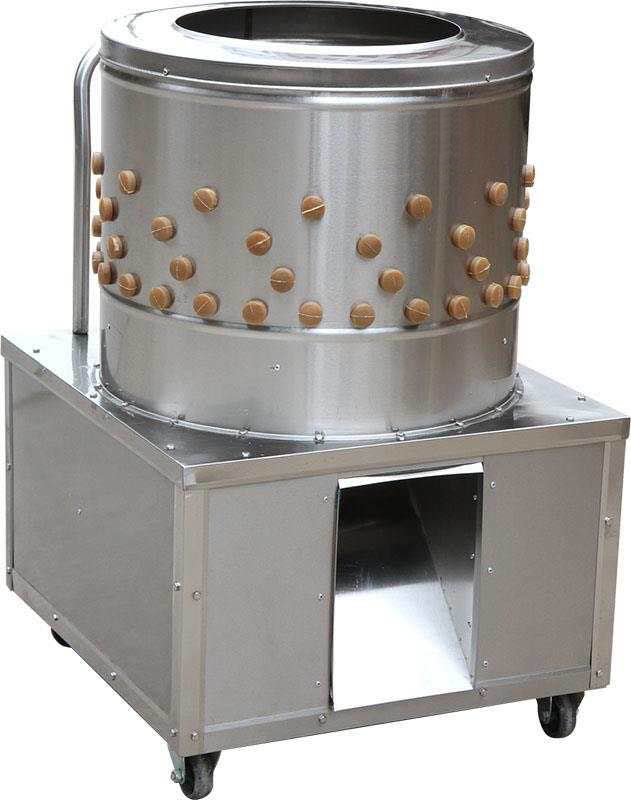
Procuring slaughtering equipment is highly project-specific. While individual modular machines (like dehairing machines, splitting saws, or scalding tanks) can be purchased in smaller volumes, complete line installations require extensive engineering and layout planning.
- Minimum Order Quantities (MOQs): For individual machines, MOQs are typically 1 to 5 units depending on the size and customization required. For full processing lines, the MOQ is effectively one complete project.
- Lead Times: Standard modular equipment usually requires 30 to 45 days. Custom-engineered lines, including overhead rail systems and automated evisceration modules, typically require 60 to 120 days from drawing approval to completion.
- Pricing Drivers: The primary cost variables are the steel grade (SUS316 adds significant cost over SUS304), the origin of the motors/PLCs (imported European/Japanese components vs. domestic Chinese equivalents), and the degree of automation.
Because of the complexity of these machines, executing a Factory Acceptance Test (FAT) prior to shipment is critical. Utilizing professional Quality Control & Inspection services ensures that load testing, safety interlock verification, and sanitary weld inspections are completed before the container is loaded.
Streamline your procurement process and ensure rigorous pre-shipment FAT with our on-the-ground engineering support.
Get a free consultationFrequently Asked Questions
Sourcing slaughtering equipment is a high-stakes investment where poor manufacturing can lead to catastrophic hygiene failures and costly facility downtime. By focusing on sanitary design, verifiable material grades, and rigorous pre-shipment testing, importers can secure reliable, high-performance machinery. Partnering with experienced sourcing professionals ensures your equipment is built to specification and performs flawlessly under the harshest operational conditions.
Get Sourcing Help for Slaughtering Equipment
Tell us your requirements and our experts will connect you with verified manufacturers.