Shoemaking Machine Parts
Source high-grade shoemaking machine parts from vetted suppliers and manufacturers. This catalog serves industrial distributors, procurement managers, and machinery wholesalers sourcing bulk replacement components or OEM production parts. Access factory-direct pricing for reliable, precision-engineered footwear machinery components.
Shoemaking machinery operates under high mechanical stress, continuous cycling, and strict tolerances. Whether you are sourcing heavy-duty sewing hooks, lasting machine pincers, skiving blades, or cutting dies, the reliability of these parts directly impacts factory uptime and footwear quality. Sourcing industrial machine parts in volume requires strict attention to metallurgical properties, machining precision, and the supplier's internal quality management.
Material Selection and Machining Precision
The primary failure mode for shoemaking machine parts is premature wear or deformation due to inadequate material selection or improper heat treatment. High-wear components like skiving knives and roughing wheels require high-speed steel (HSS) or tungsten carbide, while structural linkages often rely on forged carbon steel.
When evaluating manufacturers, verify their heat treatment capabilities. A factory may use the correct alloy, but if their quenching and tempering processes are inconsistent, the resulting parts will suffer from brittle fractures or rapid edge degradation.
| Component Type | Typical Material | Critical Specification | Manufacturing Focus |
|---|---|---|---|
| Cutting & Skiving Blades | HSS / Tungsten Carbide | Rockwell Hardness (HRC 60-65) | Edge retention and grinding angle |
| Lasting Pincers & Jaws | Forged Alloy Steel | Tensile strength, grip texture | Surface hardening and anti-slip profiling |
| Heating Elements | Ni-Cr Alloy / Ceramic | Watt density, thermal uniformity | Insulation resistance and lifespan |
| Sewing & Stitching Hooks | Titanium-coated Steel | Friction coefficient, tolerance | Micro-polishing and coating adhesion |
Need to match a specific OEM tolerance or material grade? Let us connect you with audited precision machining facilities.
Talk to our teamVerifying Supplier Capability
The Chinese industrial manufacturing sector is vast, but not all CNC machining or stamping facilities understand the specific operational demands of footwear machinery. Relying on trading companies often obscures the true origin and capability of the factory floor.
To ensure consistent bulk production, serious buyers utilize comprehensive Factory Audits to verify a supplier's equipment list, focusing on the presence of multi-axis CNC centers, in-house heat treatment, and coordinate measuring machines (CMM) for tolerance verification.
Critical QC Checks for Shoemaking Machine Parts
- Dimensional accuracy verification using CMM against original CAD files.
- Surface hardness testing (Rockwell/Brinell) to confirm heat treatment efficacy.
- Micro-roughness (Ra) measurement on friction-bearing surfaces.
- Coating thickness and adhesion testing for titanium or Teflon-coated parts.
Catching a micro-fracture or a tolerance deviation of 0.05mm after the parts have been shipped to your facility is a costly error. Implementing rigorous Quality Control & Inspection protocols before the container leaves the factory is non-negotiable for industrial components.
Buying Mechanics: MOQs, Lead Times, and Pricing
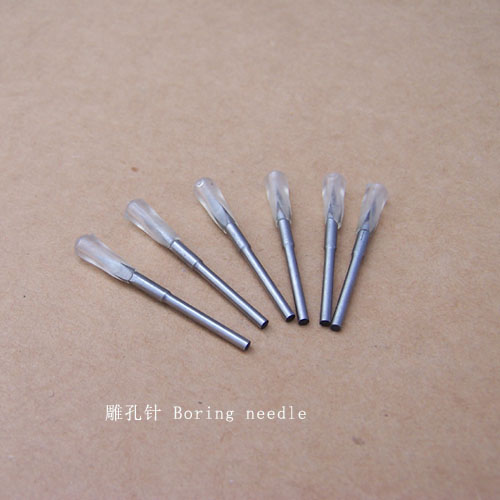
Pricing for shoemaking machine parts is driven primarily by the raw material index, machining time, and tooling costs. Standardized consumable parts (like standard needles or basic heating tubes) benefit from economies of scale, while custom OEM components require upfront investment in molds or CNC programming.
When planning your procurement cycle, factor in the time required for sample validation. First-article inspection (FAI) is critical when moving a high-volume part to a new supplier. If you are consolidating parts from multiple specialized factories (e.g., sourcing blades from one facility and electronics from another), proper Product Sourcing and consolidation strategies will significantly reduce your landed costs.
Managing multiple component suppliers and strict quality requirements? Discover how our end-to-end sourcing management keeps your supply chain predictable.
Get a free consultationFrequently Asked Questions
Procuring industrial machinery parts in volume is an exercise in risk management. Success depends on moving past surface-level pricing and rigorously validating the metallurgical and machining capabilities of the factory floor. By establishing strict quality parameters and maintaining oversight throughout production, you can secure reliable components that keep production lines moving.
Get Sourcing Help for Shoemaking Machine Parts
Tell us your requirements and our experts will connect you with verified manufacturers.