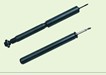
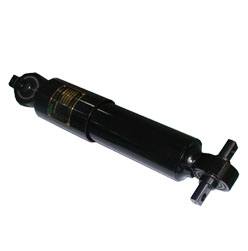
Shock Absorber
Source industrial shock absorbers from vetted suppliers and manufacturers across Asia. Designed for importers, distributors, and automation brands requiring bulk OEM and private-label production, our network delivers precision damping components engineered for high-cycle machine tool applications and heavy-duty manufacturing environments.
Industrial shock absorbers are critical components in machine tool equipment, automation systems, and linear motion assemblies. By safely decelerating moving masses, they prevent impact damage, reduce structural vibration, and allow machinery to operate at higher cycle speeds. Sourcing these components in bulk requires moving beyond basic dimensions to evaluate fluid dynamics, seal integrity, and machining tolerances. A failure in a single shock absorber can lead to catastrophic damage in a high-speed CNC gantry or pneumatic assembly.
Specifying Machine Tool Shock Absorbers
When procuring industrial shock absorbers, matching the damping profile to the specific kinetic energy of the application is paramount. Buyers must define exact parameters for their manufacturers to ensure the internal orifice design provides linear deceleration.
Self-Compensating vs. Adjustable
Manufacturers typically produce two primary categories of industrial shock absorbers. Selecting the right type dictates the complexity of the internal machining and the resulting unit cost.
| Design Type | Internal Mechanism | Application Profile | Cost & Sourcing Impact |
|---|---|---|---|
| Self-Compensating | Multiple fixed orifices | Varying effective weights and speeds | Higher initial engineering cost, lower per-unit cost at scale |
| Adjustable | Single adjustable metering dial | Fixed applications requiring precise tuning | Higher per-unit cost, standard off-the-shelf availability |
Manufacturing Tolerances and Seal Integrity
The lifespan of an industrial shock absorber—often rated in millions of cycles—is heavily dependent on the surface finish of the piston rod and the quality of the dynamic seals. Substandard machining on the piston rod (surface roughness exceeding Ra 0.2) will rapidly degrade the seal, leading to hydraulic fluid leakage and a complete loss of damping capability.
When evaluating a factory's production capabilities, verify their grinding and polishing processes. High-end manufacturers utilize centerless grinding followed by hard chrome plating to ensure the rod can withstand continuous friction without micro-scoring. Additionally, the outer tube must be precision-machined from high-carbon steel and treated (often via nitrocarburizing or nickel plating) to resist corrosion in harsh machine-shop environments exposed to cutting fluids.
Struggling with inconsistent damping or fluid leaks from your current supplier? Let us connect you with vetted manufacturers equipped with in-house cycle testing and strict quality controls.
Talk to our teamTo prevent premature failure, rigorous Quality Control & Inspection is non-negotiable. Inspectors should verify dimensional accuracy, thread pitch tolerances, and conduct sample leak testing before any batch leaves the factory.
Critical Factory-Level Inspections
- Piston rod surface roughness and chrome plating thickness validation.
- Seal material verification (NBR for standard, FKM for high-temp environments).
- Dynamic cycle testing on sample units to verify energy absorption curves.
- Thread pitch gauge testing on the outer body to ensure seamless installation.
- Hydraulic fluid viscosity checks at varying temperature ranges.
Pricing, Lead Times, and MOQs
The market for machine tool shock absorbers is highly segmented based on precision and durability. Standard, self-compensating metric shock absorbers (e.g., M14 or M20 sizes) are often produced in highly automated runs, keeping costs low. Custom damping profiles or specialized materials require dedicated engineering and setup.
- Standard Off-the-Shelf: MOQs typically range from 500 to 1,000 units per size. Lead times are generally 25 to 35 days.
- Custom OEM Configurations: If you require custom stroke lengths, non-standard threads, or proprietary damping curves, expect MOQs of 2,000 units or more. Lead times extend to 45 to 60 days to account for prototyping and tooling.
If you are developing a proprietary line of automation accessories, leveraging professional OEM/ODM Services ensures your specific energy capacity requirements are accurately translated into the factory's CNC programming.
Need competitive pricing on bulk orders without sacrificing cycle life? We negotiate directly with top-tier Asian manufacturers to secure favorable terms and reliable lead times.
Get a free consultationValidating Supplier Capabilities
Not all pneumatic or hardware factories are equipped to produce high-cycle shock absorbers. The critical differentiator is testing infrastructure. A reliable supplier must have dynamic drop-test rigs and lifecycle testing machines on-site. Relying on comprehensive Factory Audits before placing a volume order allows you to verify that the supplier actually machines the critical components in-house rather than simply assembling cheap, outsourced parts.
Sourcing industrial shock absorbers requires a careful balance of precision engineering and cost-effective manufacturing. By focusing on seal quality, rod finishing, and rigorous cycle testing, buyers can secure components that protect expensive machine tools and keep automation lines running smoothly. Partnering with experienced sourcing professionals ensures your supply chain is built on verified factory capabilities and strict quality assurance.
Get Sourcing Help for Shock Absorber
Tell us your requirements and our experts will connect you with verified manufacturers.