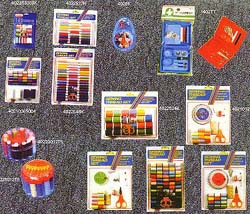
Sewing Threads
Source high-quality Sewing Threads from vetted suppliers and manufacturers across Asia. Designed for importers, wholesalers, and apparel brands seeking reliable bulk production or custom OEM manufacturing. Secure competitive pricing and consistent quality for your garment processing and industrial sewing supply chains.
Sourcing sewing threads in commercial volumes requires balancing tensile strength, colorfastness, and machine performance. A weak, poorly twisted, or improperly lubricated thread does not just snap—it causes costly machine downtime, skipped stitches, and ultimately, garment rejects. Securing a reliable supply chain means moving past generic trading companies to partner with specialized spinning mills capable of consistent raw material processing and precise dye lot matching.
Specifying Sewing Threads for Bulk Production
When approaching manufacturers, vague specifications lead to inconsistent production. Professional buyers must define the material composition, construction (spun, core-spun, continuous filament), and accurate sizing metrics.
| Thread Type | Construction & Characteristics | Typical Applications |
|---|---|---|
| Spun Polyester | Staple fibers twisted together. Economical, matte finish. | General apparel, knits, wovens |
| Core-Spun Poly | Continuous filament core wrapped in staple fiber. High strength. | Denim, heavy garments, high-speed sewing |
| Nylon Bonded | Continuous filament treated with resin. Extreme abrasion resistance. | Leather goods, footwear, upholstery |
Beyond material, you must specify the thread size using standard industry metrics. The most common system used by Asian manufacturers is Tex (the weight in grams of 1,000 meters of thread) or the Ticket Number (derived from the metric count). Understanding whether your factory uses Tex, Denier, or Ticket is crucial for accurate sampling.
Need help finding a spinning mill capable of matching your exact Tex, strength, and colorfastness requirements?
Talk to our teamManufacturing and Quality Control Checkpoints
The difference between premium thread and a cheap substitute is often found in the finishing processes. Even if the raw polyester staple fiber is identical, poor factory execution will ruin the final product.
Verifying a supplier's production capabilities requires thorough factory audits to inspect their twisting machinery, dye house capacity, and winding equipment.
Critical Quality Control Parameters
- Tensile Strength & Elongation: Testing the breaking point to ensure it withstands high-speed sewing tension.
- Colorfastness (ISO 105): Verifying resistance to washing, rubbing (crocking), and light exposure.
- Twist Balance: Ensuring the thread does not curl or kink when unwound from the cone.
- Silicone Lubrication Ratio: Checking for an even coating (typically 3 to 5 percent) to reduce needle friction heat.
Catching inconsistent lubrication or off-shade dye lots before they leave the factory is vital. Implementing rigorous pre-shipment quality control and inspection ensures your bulk order performs flawlessly on the production floor.
Pricing, MOQs, and Lead Times
Thread pricing is heavily influenced by raw material index costs (like petroleum for polyester), the complexity of the dye process, and the chemical finishes applied.
Custom Pantone matching is standard practice, but it dictates minimum order quantities. Because factories must fill industrial dye vats to maintain color consistency, custom colors often require a minimum of 50 to 100 kilograms of thread per shade. For brands requiring branded cones, custom labels, or specific retail packaging, utilizing OEM/ODM services ensures your branding is executed perfectly at the source.
Struggling with high MOQs on custom dye lots or inconsistent thread strength? Let us negotiate with top-tier manufacturers on your behalf.
Get a free consultationFrequently Asked Questions
Finding the right sewing thread supplier goes beyond comparing unit prices per cone. It requires a deep understanding of textile engineering and factory capabilities to ensure your supply chain remains resilient and your production lines run without interruption.
Get Sourcing Help for Sewing Threads
Tell us your requirements and our experts will connect you with verified manufacturers.