Separation Equipment
Source industrial-grade separation equipment directly from vetted manufacturers and wholesale suppliers. Designed for importers, distributors, and process engineering firms, our network provides bulk purchasing and OEM/private-label production for chemical, pharmaceutical, and wastewater applications.
Sourcing separation equipment from overseas manufacturers requires strict alignment between your process engineering parameters and the factory’s machining capabilities. Whether you are procuring decanters, high-speed disc stack separators, or heavy-duty filter presses, the margin for error is non-existent. A misaligned specification in metallurgy, dynamic balancing, or drive systems can lead to catastrophic equipment failure, process contamination, or severe safety hazards.
For buyers importing chemical machinery in volume, success depends on identifying suppliers with genuine in-house engineering expertise rather than those simply assembling off-the-shelf components.
Specifying Metallurgy and Surface Finish
The most critical cost driver in separation equipment is the material of construction for wetted parts. Standard carbon steel or base-level stainless steel (SS304) is sufficient for municipal wastewater, but aggressive chemical processes require advanced metallurgy. When negotiating with manufacturers, you must mandate material test reports (MTRs) to verify alloy composition, as substituting cheaper grades is a common cost-cutting tactic.
| Application Tier | Typical Material | Surface Finish (Ra) | Common Use Case |
|---|---|---|---|
| Standard Industrial | SS304 / Carbon Steel | 3.2 μm | Wastewater, Mining, Sludge |
| Corrosive Chemical | Titanium / Hastelloy C | 1.6 μm | Acid recovery, Chlor-alkali |
| Sanitary / Pharma | SS316L | Under 0.4 μm (Electropolished) | Biotech, APIs, Food & Bev |
Beyond the raw material, the quality of sanitary welds and the final surface finish dictate whether the equipment can meet GMP or FDA standards. If you are leveraging OEM/ODM Services to build proprietary equipment designs, specify exact welding standards (e.g., ASME Section IX) and require profilometer testing during final inspection.
Need help verifying a manufacturer's machining and metallurgical capabilities?
Discuss your equipment specsManufacturing Tolerances and Dynamic Balancing
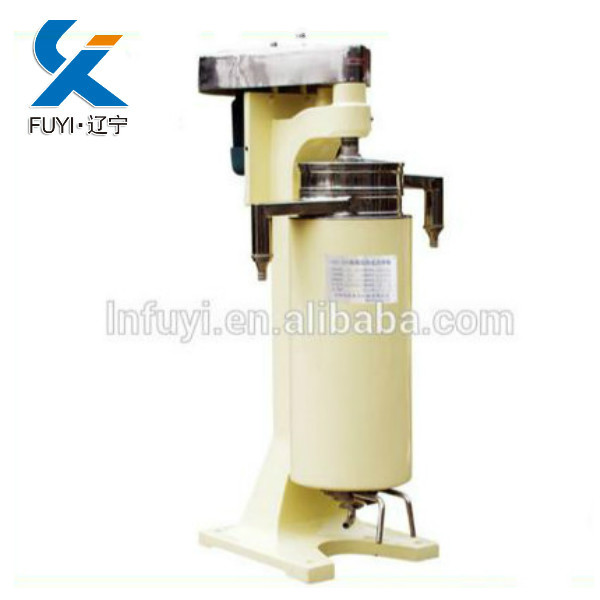
High-speed rotating equipment, such as centrifuges, relies entirely on precision machining and dynamic balancing. Imbalance causes excessive vibration, which rapidly destroys bearings and mechanical seals. High-end manufacturers utilize multi-plane dynamic balancing machines for the bowl and scroll assemblies, typically balancing to ISO 1940-1 standards (Grade G2.5 or better).
When evaluating a factory, look past their showroom. You need to verify their CNC lathe capacity, their balancing equipment, and their quality management systems. Conducting rigorous Factory Audits before placing a deposit is the only reliable way to confirm a supplier can handle heavy industrial tolerances.
Critical Factory Acceptance Test (FAT) Checkpoints
- Dynamic balancing reports for the rotating bowl/assembly (ISO 1940-1 standard).
- Vibration analysis at maximum operating RPM (measured in mm/s).
- Bearing temperature rise under continuous load (should not exceed 40°C above ambient).
- Verification of electrical control panel compliance (CE/UL marks, correct VFD programming).
- Hydrostatic pressure testing for sealed vessels and filter press manifolds.
Drive Systems and Electrical Compliance
Do not accept generic domestic motors and bearings for export-grade separation equipment. Specify internationally recognized brands for critical components. Bearings should be SKF, NSK, or FAG. Motors should be ABB, Siemens, or WEG, particularly if you require specific efficiency ratings (IE3/IE4) or explosion-proof certifications.
If your equipment will operate in hazardous environments, ensure the factory understands ATEX (Europe) or Class/Division (North America) standards. Many suppliers claim to offer "explosion-proof" motors, but their domestic Ex d certifications do not automatically translate to international compliance.
Pricing, MOQ, and Lead Time Realities
Industrial separation equipment is highly capital-intensive and rarely kept in stock. Pricing is heavily indexed to global commodity prices for stainless steel and specialized alloys.
Because of the sheer size and weight of this machinery, logistics planning must begin during the design phase. Large filter presses or industrial decanters often require Out of Gauge (OOG) shipping, flat racks, or specialized industrial crating. Coordinating Shipping & Freight early prevents costly delays when the equipment is ready to leave the factory floor.
Ensure your next machinery purchase is negotiated, inspected, and shipped flawlessly.
Get a sourcing consultationBuyer FAQ
Procuring separation equipment requires navigating complex engineering specifications and significant capital risk. By mandating strict component sourcing, enforcing rigorous dynamic balancing standards, and conducting thorough on-site inspections, buyers can secure world-class chemical machinery at highly competitive price points.
Get Sourcing Help for Separation Equipment
Tell us your requirements and our experts will connect you with verified manufacturers.