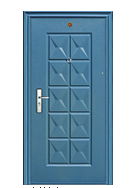
Security Doors
Source high-quality Security Doors directly from vetted manufacturers and wholesale suppliers. Designed for importers, distributors, and construction procurement managers, this category connects you with factories capable of high-volume production, OEM customization, and certified security standards.
Sourcing security doors in bulk requires balancing structural integrity, aesthetic finish, and stringent safety standards. The core challenge for volume buyers is ensuring that a manufacturer's specified steel thickness, internal reinforcement, and locking mechanisms match what actually rolls off the production line, container after container.
Technical Specifications & Material Selection
The structural foundation of a security door dictates its market positioning and protective capabilities. Buyers must strictly define the gauge of the steel, the type of infill, and the complexity of the locking system.
Manufacturers typically use cold-rolled steel or galvanized steel. Galvanized steel offers superior rust resistance, making it essential for exterior applications, particularly in humid or coastal environments.
| Application Grade | Door Leaf Thickness | Frame Thickness | Typical Infill |
|---|---|---|---|
| Standard Residential | 0.5mm - 0.8mm | 1.0mm - 1.5mm | Honeycomb Paper |
| Commercial / Exterior | 0.8mm - 1.0mm | 1.5mm - 1.8mm | Rock Wool / Polyurethane |
| High Security / Vault | 1.2mm - 2.0mm | 2.0mm and above | Steel Mesh + Fireproof Board |
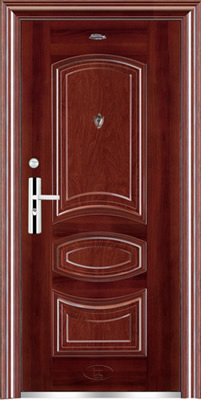
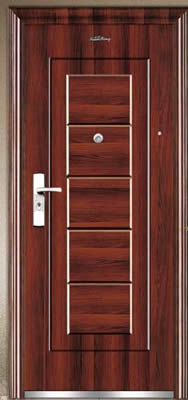
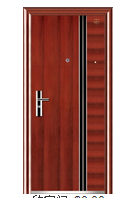
Beyond the steel itself, the surface treatment process is critical. A proper phosphating process followed by high-quality powder coating or heat transfer printing (for wood-grain finishes) prevents premature corrosion and fading.
Need help verifying factory capabilities and material specifications? We manage the technical vetting process from start to finish.
Talk to our teamManufacturing Process & Quality Control
Quality is won or lost in the fabrication and finishing stages. Inconsistent welding can lead to structural weakness, while poor hinge alignment causes operational failure and compromised security. Validating a factory's production line often requires rigorous Factory Audits before placing high-volume orders.
Critical Factory Floor Checks
When overseeing production or conducting Quality Control & Inspection, pay close attention to the following areas:
Security Door Inspection Points
- Micrometer verification of steel thickness before and after surface treatment.
- Inspection of multi-point locking mechanisms for smooth engagement without binding.
- Validation of hinge reinforcement plates (must be welded securely to the frame).
- Adhesion testing of the powder coating or heat transfer film (cross-cut test).
- Acoustic and thermal insulation verification of the infill material.
Sourcing Mechanics: MOQs, Pricing, and Lead Times
Pricing for security doors is heavily tied to global steel commodity prices, the complexity of the locking hardware, and the chosen surface finish. Because these are bulky, heavy items, shipping economics dictate that orders are almost always calculated by container load.
If you are developing proprietary designs, custom sizing for specific regional markets, or integrating smart-lock technology, leveraging OEM/ODM Services is necessary. Keep in mind that custom stamping dies for unique door panel patterns will require upfront tooling costs and extended initial lead times.
Optimize your container loads, negotiate better terms, and ensure seamless delivery with our end-to-end supply chain support.
Get a free consultationFrequently Asked Questions
Successfully sourcing security doors in bulk is ultimately an exercise in disciplined specification and container optimization. By tightly controlling material tolerances and overseeing the surface treatment process, you can deliver a product that meets both aesthetic expectations and rigorous security demands.
Get Sourcing Help for Security Doors
Tell us your requirements and our experts will connect you with verified manufacturers.