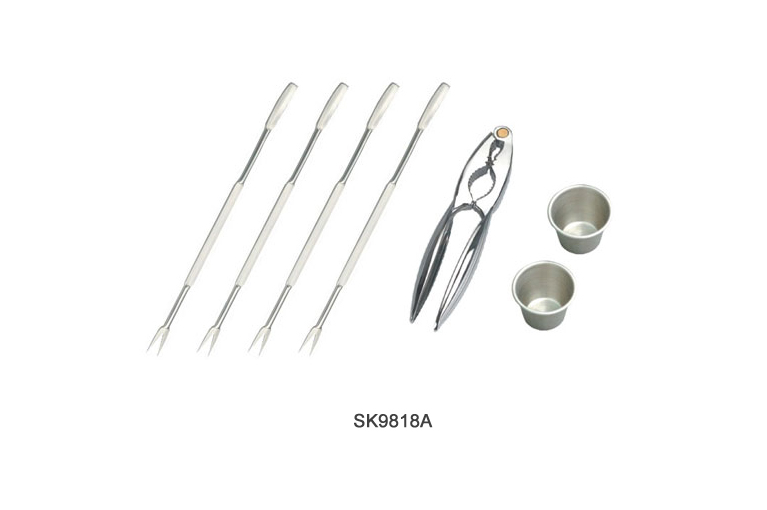
Seafood Tools
Source premium Seafood Tools from vetted suppliers and manufacturers across Asia. This category serves importers, wholesalers, distributors, and brands seeking reliable OEM/private-label production for high-volume kitchenware markets. Connect directly with factories capable of meeting strict material compliance and quality standards.
Sourcing seafood tools in bulk requires balancing mechanical strength with strict food-grade material requirements. Because these implements face high physical stress and constant exposure to salt and moisture, sub-standard materials will quickly lead to hinge failures, bending, or corrosion. Navigating the manufacturing landscape—primarily centered in hubs like Yangjiang, China—means verifying that factories can consistently deliver the required steel grades, precision assembly, and flawless finishing.
Material Specifications and Metallurgy
The core of any durable seafood tool is its material composition. Buyers must specify exact grades rather than accepting generic "stainless steel" or "metal" designations on a pro forma invoice. The choice directly impacts both the unit cost and the product's lifespan in harsh, salty environments.
| Material Grade | Corrosion Resistance | Typical Processing | Market Positioning |
|---|---|---|---|
| 304 Stainless Steel | Excellent | Forging / Stamping | Premium & Commercial |
| 430 Stainless Steel | Moderate | Stamping | Consumer / Mass Market |
| Zinc Alloy | Low (relies on plating) | Die-casting | Heavyweight Consumer |
| 420J2 Stainless | Good (High hardness) | Forging | Shears & Cutting Tools |
Zinc alloy is frequently used for crackers due to its heavy, substantial feel and lower raw material cost. However, it requires flawless chrome plating; if the plating chips under the stress of cracking shells, the underlying zinc will rapidly pit and corrode when exposed to seafood juices. For premium lines, solid forged 304 stainless steel is the standard.
Struggling to verify the steel grades your current supplier is using? Let our sourcing experts connect you with factories that provide transparent material certifications.
Talk to our teamManufacturing Processes and Structural Integrity
The manufacturing method dictates the structural integrity of the tool. Heavy-duty items like crackers are typically die-cast or drop-forged, while picks, forks, and scoops are stamped from sheet metal.
When developing a custom line through OEM/ODM Services, pay close attention to the hinge mechanisms on crackers and shears. A common point of failure in poorly manufactured tools is the rivet. Factories cutting corners will use lower-grade steel for the rivet than for the body, leading to galvanic corrosion and eventual mechanical failure.
Finishing and Polishing
Finishing is a highly labor-intensive process that heavily influences the final price. Mirror polishing requires multiple passes on buffing wheels. If the polishing is rushed, microscopic pits remain on the surface, which become breeding grounds for bacteria and starting points for rust. Electrolytic polishing is often employed for intricate tools to ensure a smooth, passive surface.
Quality Control and Defect Prevention
To maintain brand reputation, rigorous Quality Control & Inspection must be implemented before shipment. Seafood tools have specific functional requirements that standard AQL inspections might miss if not explicitly briefed.
Critical Inspection Points for Seafood Tools
- Hinge Action: Must operate smoothly without excessive lateral play (wobble).
- Rivet Material: Verify the rivet matches the body material grade to prevent galvanic corrosion.
- Plating Adhesion: For zinc alloy tools, conduct cross-hatch adhesion testing to ensure plating will not flake into food.
- Edge Smoothness: Ensure stamped picks and forks are fully deburred with no sharp edges on the handles.
- Salt Spray Testing: Verify corrosion resistance claims (typically 24 to 48 hours depending on the market standard).
Furthermore, any tool coming into contact with food must pass relevant regulatory standards. Whether you are importing to the US (FDA standards) or Europe (LFGB standards, which are notably stricter regarding heavy metal migration), working with a partner who understands Compliance & Testing is non-negotiable.
Buying Mechanics: MOQs, Pricing, and Lead Times
Understanding the operational realities of seafood tool manufacturers helps in negotiating better terms and planning inventory.
Pricing is highly sensitive to the global cost of nickel (for 304 stainless) and labor costs for polishing. When reviewing quotes, ensure that the polishing standard (e.g., machine polish vs. hand mirror polish) is explicitly stated, as this can cause a 20 to 30 percent variance in unit price between seemingly identical items.
Ready to scale your kitchenware purchasing? We handle supplier vetting, price negotiation, and quality assurance on the ground in Asia.
Get a free consultationFrequently Asked Questions
Securing reliable seafood tools in volume is about looking past the cosmetic finish and validating the underlying metallurgy and mechanical assembly. By establishing clear specifications and enforcing strict quality control protocols at the factory level, buyers can eliminate the defect risks associated with high-stress kitchen implements.
Get Sourcing Help for Seafood Tools
Tell us your requirements and our experts will connect you with verified manufacturers.